 Our single B-cell derived recombinant rabbit monoclonal antibodies have vastly improved reliability and reproducibility.



 Cart (0)


Glaucoma is a leading cause of irreversible vision loss worldwide, yet the underlying molecular mechanisms remain unclear. One widely held theory has been that oxidative DNA damage—caused by reactive oxygen species—plays a central role in the mitochondrial DNA (mtDNA) mutations linked to glaucoma. If true, this would suggest antioxidant therapies could help slow disease progression.
A research study published in Scientific Reports put this idea to the test by analyzing mtDNA mutations directly in ocular fibroblast tissue from glaucoma patients, comparing the results with matched blood samples. A key part of the study was measuring whether oxidative DNA damage could explain the mutations observed.
How Oxidative DNA Damage Was Studied
To evaluate oxidative stress, the team measured 8-hydroxy-2'-deoxyguanosine (8-OHdG), one of the most widely recognized biomarkers of oxidative DNA damage. This was done using EpigenTek’s EpiQuik™ 8-OHdG DNA Damage Quantification Direct Kit, which enabled sensitive, direct detection of 8-OHdG levels in DNA isolated from both ocular tissue and blood.
This assay provided a critical readout: if oxidative stress were driving glaucoma-related mutations, elevated levels of 8-OHdG would be expected.
The DNA Damage Findings
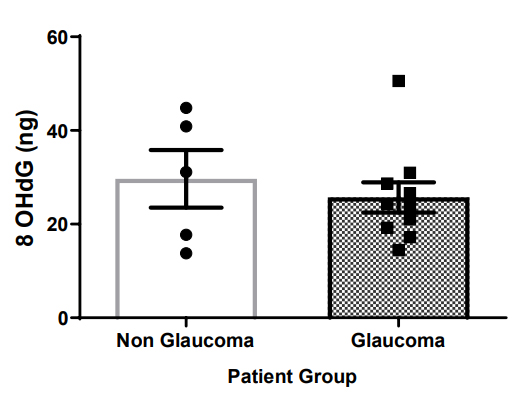
The analysis revealed something unexpected: while ocular tissue carried more somatic mtDNA mutations than blood, these mutations did not show evidence of oxidative DNA damage. Instead, the mutations were largely transition mutations, most consistent with replication errors rather than oxidative stress.
This finding suggests that oxidative damage may not be the dominant force shaping mtDNA changes in glaucoma tissue, challenging a long-held assumption in the field.
Broader Study Results
The DNA damage testing was one key component of the study, but the overall findings were broader. Researchers discovered that ocular tissue carries a heavier burden of somatic mtDNA mutations than blood, including potentially pathogenic variants that cannot be detected systemically. This tissue-specific pattern underscores why it is essential to study the eye directly when investigating glaucoma mechanisms.
Why Studying Oxidative DNA Damage Matters
The oxidative DNA damage results are important because they directly challenge a long-standing assumption in glaucoma research. By showing that replication errors — not oxidative stress — are the likely source of mtDNA mutations, the study shifts focus toward mitochondrial replication fidelity and tissue-specific mechanisms as key drivers of disease.
At the same time, the broader results highlight that blood alone cannot fully capture the mutational landscape of glaucoma, reinforcing the importance of examining disease-relevant tissues directly.
Recap and Takeaway
By using the EpiQuik™ 8-OHdG DNA Damage Quantification Direct Kit, researchers demonstrated that oxidative DNA damage is not elevated in glaucoma tissue, suggesting replication errors are the more likely source of mtDNA mutations. More broadly, the study showed that these mutations are unique to ocular tissue and potentially pathogenic, offering new insights into the molecular basis of glaucoma.
To help researchers study DNA damage, EpigenTek offers a full range of oxidative DNA/RNA damage kits and assays to support your work — from quantification and immunodetection to repair activity analysis. Contact us for pricing or more information.



