 Our single B-cell derived recombinant rabbit monoclonal antibodies have vastly improved reliability and reproducibility.



 Cart (0)


Systemic lupus erythematosus (SLE) is a complex autoimmune disease that affects millions worldwide. It causes the immune system to mistakenly attack the body’s own tissues, leading to fatigue, joint pain, skin rashes, kidney damage, and neurological complications. Despite decades of research, the underlying mechanisms that trigger or worsen lupus remain only partly understood.
One promising avenue of investigation is epigenetics—the molecular changes that regulate genes without altering DNA sequences. In lupus, abnormal epigenetic changes, particularly in histones (the proteins that package DNA), are thought to fuel chronic inflammation. When immune cells undergo an unusual type of cell death called NETosis, they release networks of DNA and proteins known as neutrophil extracellular traps (NETs). Within these NETs, histones are chemically modified, and one such modification—citrullinated histone H3 (H3Cit)—has been linked to lupus activity.
What the Researchers Wanted to Know
A team at the Medical University of Lublin, Poland set out to test whether levels of citrullinated histone H3 in patients’ blood could be correlated with specific clinical characteristics of lupus. They wanted to understand if measuring H3Cit could provide doctors with a reliable biomarker—one that might help track disease progression, identify complications, or even guide treatment strategies.
How the Research Was Done
The study included 80 patients diagnosed with SLE. Researchers collected blood samples and measured the concentration of citrullinated histone H3. To do this, they used EpigenTek’s EpiQuik™ Circulating Histone H3 Citrullination ELISA Kit, which provided a sensitive and reproducible way to quantify histone modifications directly from serum.
The process involved adding patient serum samples and known standards to a 96-well plate, incubating with detection antibodies, and developing a colorimetric signal that could be read on a microplate photometer. Alongside this, patients underwent routine laboratory testing for autoantibodies, complement proteins, and blood cell counts. Statistical methods were then used to link H3Cit levels with symptoms and lab findings.
What the Study Revealed
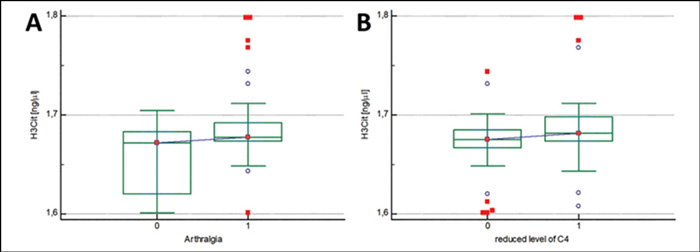
The researchers found that higher levels of citrullinated histone H3 (H3Cit) were linked to several key features of lupus. Patients who experienced joint pain (arthralgia) showed significantly higher H3Cit levels compared to those without pain. Similarly, reduced levels of complement component C4—an important marker of immune system activation—were correlated with elevated H3Cit. The team also observed a positive relationship between H3Cit levels and anti-dsDNA antibodies, one of the hallmark indicators of lupus. Beyond these associations, increased H3Cit was connected to neurological symptoms such as seizures and to hepatomegaly, or enlarged liver. Together, these findings highlight the potential of H3Cit as a valuable biomarker for monitoring disease activity and complications in lupus.
Why Histone Quantification Matters
Histone modifications—such as methylation, acetylation, or citrullination—act like molecular “switches” that control whether genes are turned on or off. Measuring these changes in patients provides direct insight into disease mechanisms
EpigenTek’s Histone Modification Quantification Kits are designed to make this process straightforward and accessible. They allow researchers to measure a wide range of histone modifications—including methylation, acetylation, and phosphorylation—using convenient colorimetric or fluorometric readouts. By applying these tools, scientists can uncover how epigenetic changes contribute to diseases like lupus, cancer, and neurological disorders, ultimately paving the way for targeted therapies.
This study highlights how histone modification analysis can deepen our understanding of complex autoimmune diseases. By using our EpiQuik™ Circulating Histone H3 Citrullination ELISA Kit, the researchers were able to link abnormal histone modifications to lupus symptoms and lab findings. For both scientists and clinicians, histone quantification opens new opportunities—not just for better diagnostics, but also for identifying potential therapeutic targets.



