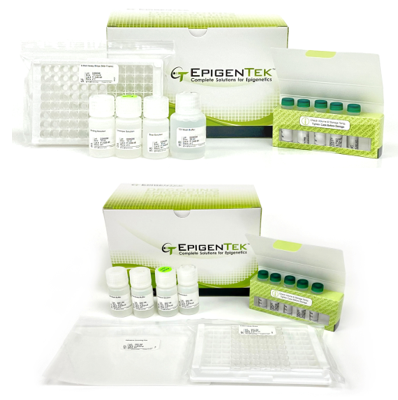
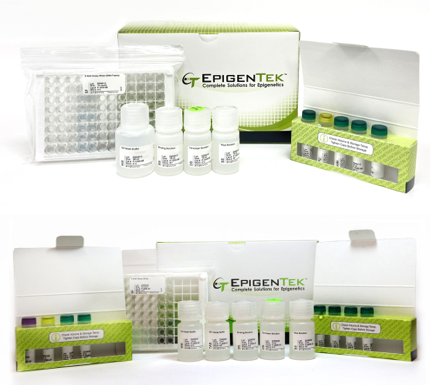
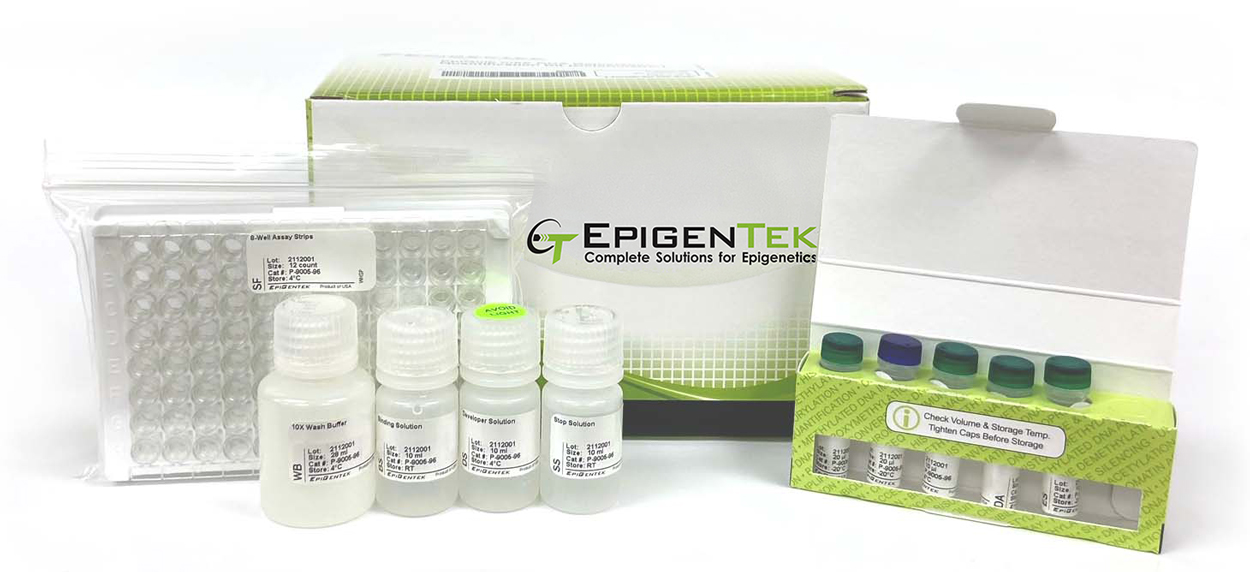
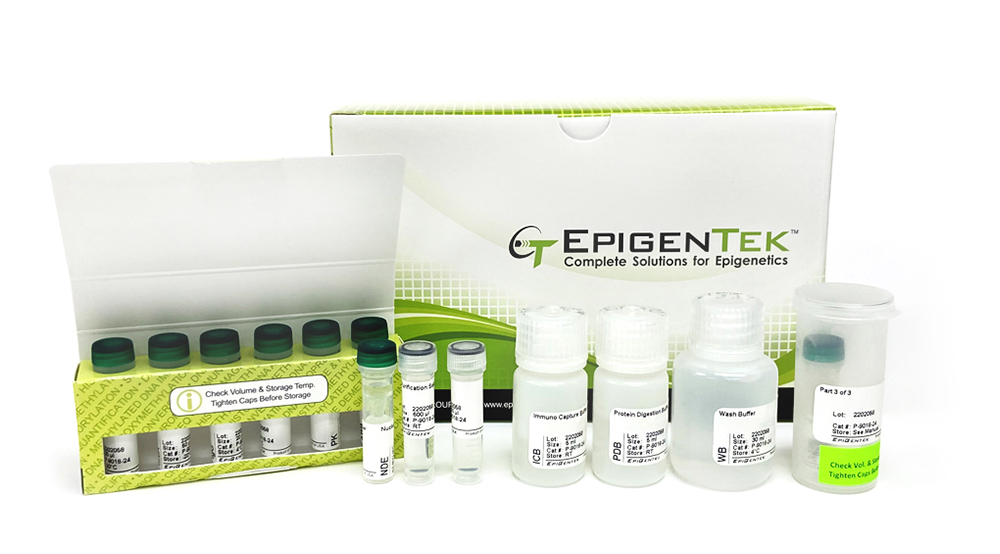
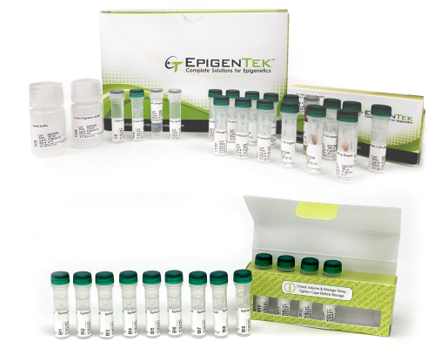
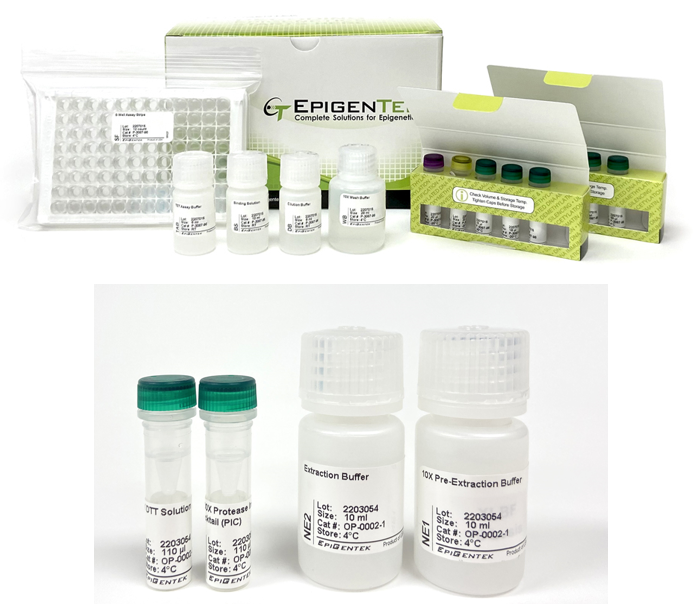
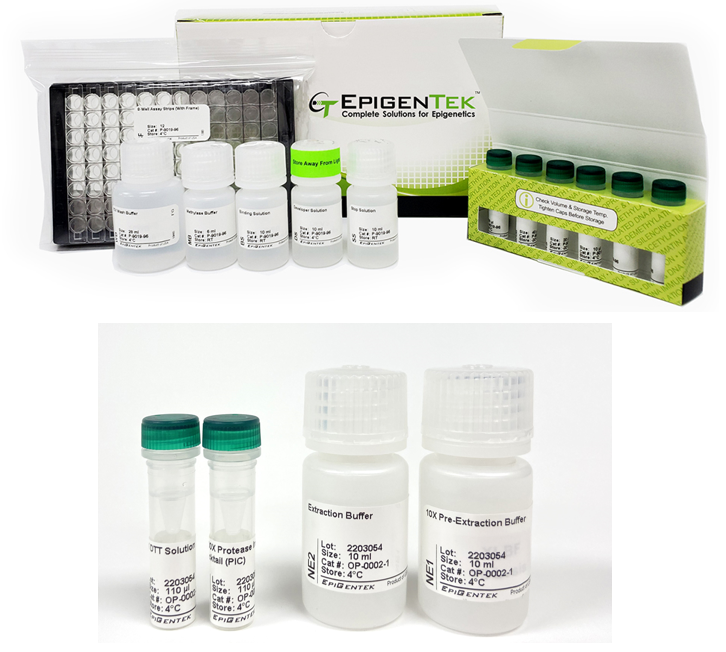
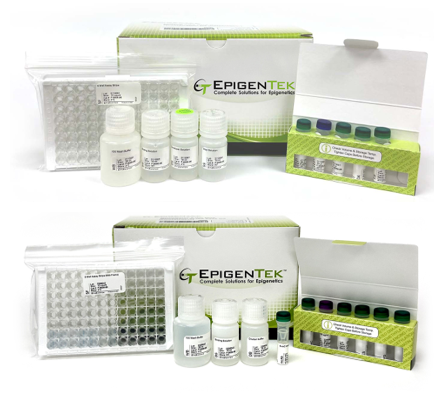
Explore popular assays across DNA methylation, RNA modification, histone analysis, and chromatin research.
Trusted Assays
Well-cited kits researchers return to most for core applications and publishable results.
Workflow Focused
Pre-built bundle paths make it easier to move from an initial assay into the next experimental step.
Budget Friendly
Purchase kits as a bundle to maximize your lab budget, or reach out to us for a quote.
Why Researchers Choose EpigenTek
Quality GuaranteeThe EpigenTek Guarantee policy ensures 100% working results as advertised. Otherwise we will replace it or refund it.
Speed & SimplicityProducts are developed for easier workflows and shorter procedures, helping labs generate results faster without unnecessary complexity.
ConvenienceA broad catalog plus complementary bundle options makes it easier to source connected assays and reagents from one supplier.
Popular Epigenetic Assays by Workflows & Research Area
DNA methylation controls gene activity by adding chemical marks to DNA, most commonly at cytosine residues. It is one of the core epigenetic mechanisms behind development, cell identity, and disease-associated gene regulation.
Fast global 5-mC and 5-hmC screeningAny-species DNA methylation analysisEasy path to RRBS and WGBS
Combine a global methylation readout with DNMT activity to assess whether methylation changes may be associated with altered methyltransferase function.
RNA modification adds regulatory marks to RNA after transcription and helps control splicing, stability, localization, and translation. It is a fast-growing area of epigenetics because these reversible marks influence how gene expression is executed at the RNA level.
Fast entry into epitranscriptomicsWorks across mRNA and non-coding RNAFrom screening to enrichment, seq, and enzyme assays
Histone modifications are chemical marks on histone proteins that help determine how tightly DNA is packaged and how accessible genes are. They are central to epigenetics because they shape chromatin state, transcriptional activity, and broader gene regulation programs.
Specific H3/H4 histone mark coverage in one runNo expensive instrumentation requiredConnect PTM patterns to HDAC/HAT and demethylase activity
Chromatin studies examine how DNA is packaged with proteins and how that packaging influences accessibility, interaction, and transcriptional control. Chromatin structure determines whether regulatory regions are open, occupied, or silenced.
Ultra low-input starting materialsFast intact-cell chromatin workflowsHigh enrichment for accurate NGS







 Cart (0)