Celebrate our 20th year anniversary with gifts on purchases above $300, plus a free 2026 calendar!




 Cart (0)




Uterine fibroids are non-cancerous growths in the uterus that affect millions of women, often causing pain, heavy bleeding, and fertility problems. A study published in Cell Proliferation used lab-grown three-dimensional organoids—tiny “mini-tissues” made from patient cells—to better understand why fibroids form and how they grow. These organoids acted like real fibroids, showing excess tissue buildup and sensitivity to hormones like estrogen.
The Role of DNMT in Gene Control
One of the key biological players the researchers investigated was DNA methyltransferase (DNMT), an enzyme that controls whether genes are turned “on” or “off.” DNMT does this by placing small chemical tags, called methyl groups, on DNA. This process, known as DNA methylation, doesn’t change the DNA itself but can silence important genes that keep cells healthy. Because fibroids involve abnormal cell growth and tissue buildup, scientists suspected that DNMT activity might be higher in fibroid tissue, shutting down protective genes and fueling the disease.
How EpigenTek’s DNMT Kit Was Used
To test this idea, the researchers used EpigenTek’s EpiQuik™ DNMT Activity/Inhibition ELISA Easy Kit. The kit allowed them to directly measure DNMT activity inside fibroid organoids and compare it to normal uterine tissue. The results confirmed their suspicion: fibroid organoids showed significantly higher DNMT activity. This finding highlights DNMT as a key driver of fibroid development and a potential target for new therapies.
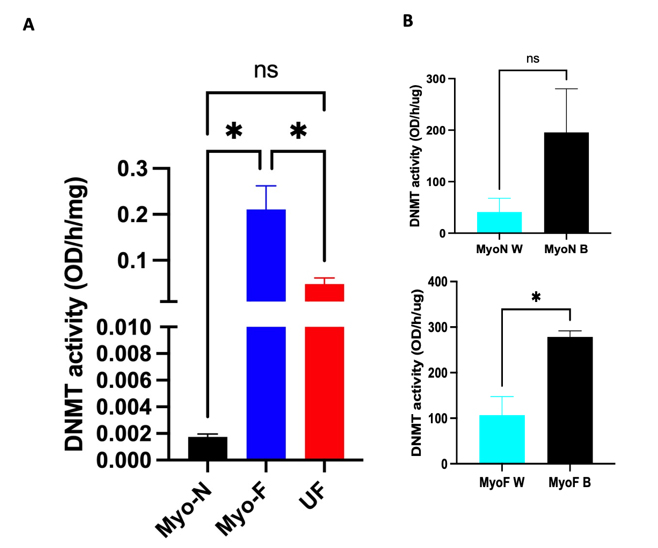
Wider Results from the Study
Beyond DNMT activity, the study uncovered several additional insights from the fibroid organoids. The organoids showed a clear buildup of extracellular matrix (ECM), including high levels of collagen and fibronectin, which mirrors the scar-like tissue found in patient fibroids. They also expressed estrogen receptors and responded to hormone stimulation, behaving much like fibroids inside the body. Interestingly, the researchers noted differences in tissue stiffness depending on the population the cells came from, offering a potential explanation for why fibroids tend to be more severe in certain groups. The model was also useful for testing external factors: vitamin D treatment reduced fibrotic markers, while exposure to phthalates—chemicals commonly found in plastics—made the fibroid-like features worse.
The Impact of DNMT
Studying DNMT is important because it connects our genes to the environment. When DNMT activity is too high, it can silence critical genes that normally keep cell growth in check. By linking DNMT activity directly to fibroid organoids, this study provides strong evidence that targeting DNMT or the pathways it controls could help develop new treatments to slow or even prevent fibroid growth.
Study Implications
Taken together, these findings highlight how organoid models can closely replicate real fibroid biology and provide new ways to study both genetic and environmental influences. By confirming that DNMT activity is elevated in fibroids, the study points to epigenetic regulation as a central factor driving fibroid development. This creates opportunities to design therapies that specifically target DNMT or related pathways, potentially leading to better treatments that go beyond symptom management and address the underlying disease mechanisms.
Why Choose EpigenTek’s DNMT Kits
The success of this study depended on accurately measuring DNMT activity, and that’s where the EpiQuik™ DNMT Activity/Inhibition ELISA Easy Kit proved invaluable. Designed for simplicity, sensitivity, and consistency, our DNMT kits allow researchers to measure enzyme activity directly from samples with minimal hands-on time.
Whether you’re studying fibroids, cancer, or other diseases where DNA methylation plays a role, EpigenTek provides trusted, ready-to-use solutions that accelerate discovery. We also offer a wide selection of DNMT and DNA Demethylase assay kits to support diverse research needs—contact us today to explore the right solution for your studies.