


 Cart (0)



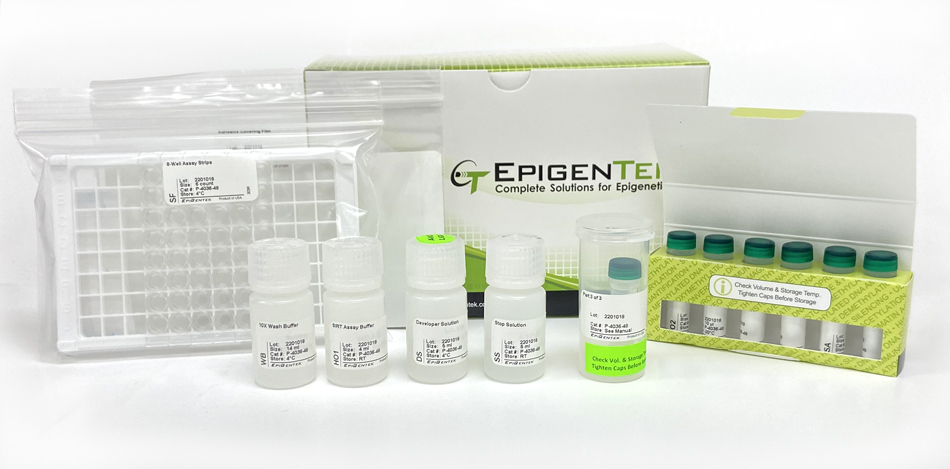
Epigenase™ Universal SIRT Activity/Inhibition Assay Kit
Versatile, ELISA-like assay for SIRT enzyme activity and inhibition measurement—offering a fast workflow, broad sample compatibility, and accurate, reproducible results.
Streamlined Workflow with High-Sensitivity SIRT1 Activity Detection
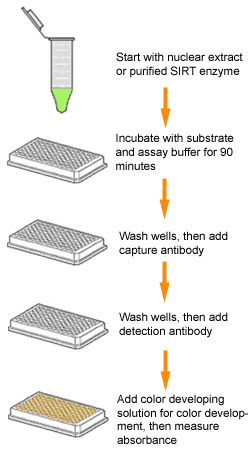
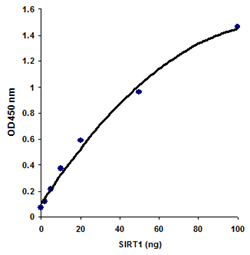
The Epigenase™ Universal SIRT Activity/Inhibition Assay Kit (Colorimetric) provides a fast, sensitive, and reliable solution for measuring SIRT enzyme activity and inhibition across multiple isoforms (SIRTs 1–7) and sample types.
- Fast & flexible: Results within 3.5 hours with strip-well format for manual or high-throughput use.
- Accurate & low background: Minimizes interference from DMSO, thiols, trypsin, and lysyl endopeptidases.
- Direct & innovative: Detects deacetylated products directly, rather than peptide cleavage.
- Broadly compatible: Works with nuclear extracts and purified enzymes.
- Highly sensitive: Detects activity from as little as 1 ng of purified SIRT enzyme.
- Quantitative: Includes deacetylated histone standard for specific activity quantification.
This powerful kit streamlines SIRT activity and inhibition analysis, delivering the accuracy, sensitivity, and convenience needed to advance epigenetic research.
Compare SIRT Activity/Inhibition Assay Kits
Featured in the World’s Leading Scientific Journals:
Our Epigenase™ Universal SIRT Activity/Inhibition Assay Kit is trusted by leading researchers and highly cited in top-tier publications with high impact factors, fueling groundbreaking discoveries.

Impact factor: 22.9
Hu J et. al. (Feb 2023). Core-predominant gut fungus Kazachstania slooffiae promotes intestinal epithelial glycolysis via lysine desuccinylation in pigs. Microbiome.

Impact factor: 8.7
Liu Y et. al. (Jul 2023). An Fgr kinase inhibitor attenuates sepsis-associated encephalopathy by ameliorating mitochondrial dysfunction, oxidative stress, and neuroinflammation via the SIRT1/PGC-1α signaling pathway. J Transl Med.
Impact factor: 6.6
Sinha S et. al. (Feb 2021). Sulforaphane-Cisplatin Combination inhibits the stemness and metastatic potential of TNBCs via down regulation of Sirtuins-mediated EMT signaling axis. Phytomedicine.
Impact factor: 6.0
Wang X et. al. (Dec 2024). Nitazoxanide alleviates experimental pulmonary fibrosis by inhibiting the development of cellular senescence. Life Sci.
Get ready for fast, sensitive SIRT activity quantification
View Product DetailsFrequently asked questions
What does the Epigenase Universal SIRT Activity/Inhibition Assay measure?
It quantifies NAD+-dependent deacetylase activity of SIRT enzymes and detects inhibition by directly measuring deacetylated end products in a colorimetric 96-well microplate format.
Which SIRT isoforms and sample types are compatible?
The kit supports SIRTs 1–7 and works with nuclear extracts, cultured cells, tissues, or purified enzymes from any species.
How long does the protocol take from start to finish?
Typical hands-on plus incubation time is about 3.5 hours.
What is the assay’s sensitivity?
It can detect as little as 1 ng of purified SIRT enzyme.
How does the kit minimize chemical interference?
The readout detects deacetylated products directly, reducing interference from DMSO, thiol-containing reagents, trypsin, and cellular lysyl endopeptidases that can affect cleavage-based assays.
Is the format suitable for inhibitor screening?
Yes. The strip-well 96-well format supports manual or high-throughput inhibitor screens with typical enzyme usage of about 5–50 ng per assay point.
What controls or standards are included?
A deacetylated histone standard is provided for generating a standard curve and reporting specific activity.
How many samples can I run per plate?
Up to 96 wells are available per plate. The exact sample count depends on your standard curve, controls, and chosen replicates.
What equipment do I need?
Standard ELISA tools: single/multi-channel pipettes, a plate washer or manual wash setup, and a microplate reader for colorimetric detection.
How should I report results and compare runs?
Use the provided standard to derive a calibration curve, then calculate specific activity for samples and inhibitors. Maintain consistent replicate layout and include controls to compare runs.




