HDAC: Understanding Histone Deacetylases and Their Role in Epigenetics
HDAC: Understanding Histone Deacetylases and Their Role in Epigenetics
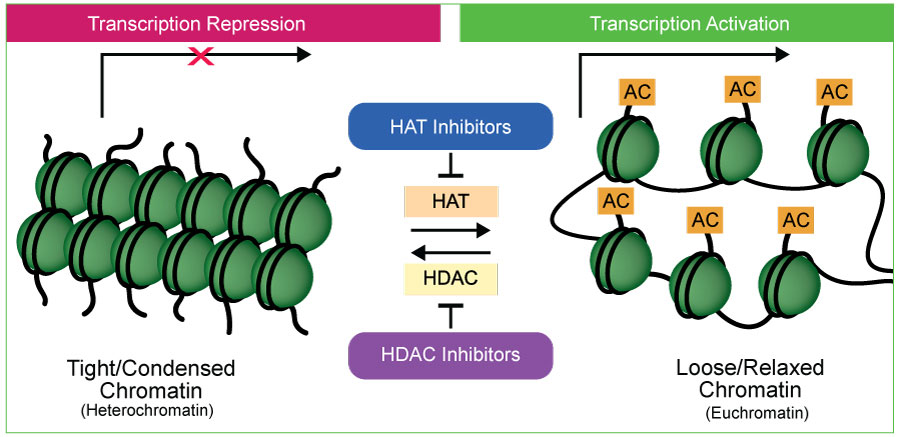
Histone Deacetylases (HDACs) play a crucial role in regulating gene expression through epigenetic mechanisms. HDACs remove acetyl groups from histone proteins, leading to chromatin condensation and transcriptional repression. This process is essential in various biological processes, including cell cycle regulation, development, and differentiation.
What is HDAC?
HDACs are a family of enzymes that remove acetyl groups from lysine residues on histone proteins. This deacetylation process tightens chromatin structure, leading to the repression of gene transcription. There are several classes of HDACs, each with distinct functions and roles in the cell.
HDAC Antibodies
HDAC antibodies are essential tools for detecting the presence and activity of HDACs in various samples. Here is a list of antibodies for HDAC enzymes 1 through 10:
HDAC1 Antibody: Used to study the expression and function of HDAC1 in different tissues.
HDAC2 Antibody: Detects HDAC2, which plays a key role in transcriptional regulation and cancer research.
HDAC3 Antibody: Targets HDAC3, involved in nuclear receptor-mediated repression.
HDAC4 Antibody: Important for research on skeletal muscle differentiation and development.
HDAC5 Antibody: Often used to study heart disease and muscle function.
HDAC6 Antibody: Used for studying the function of HDAC6, particularly in tubulin deacetylation.
HDAC7 Antibody: Plays a role in immune cell development and is studied using HDAC7 antibodies.
HDAC8 Antibody: Important for understanding the role of HDAC8 in smooth muscle cell contraction and developmental disorders.
HDAC9 Antibody: Essential for research in cardiovascular diseases and developmental biology.
HDAC10 Antibody: Involved in cell cycle progression and DNA damage response, making it a significant target for cancer research.
HDAC Activity Assay Kits
To assess HDAC activity, researchers commonly use HDAC activity assay kits. These kits are designed to measure the deacetylase activity of HDACs in a variety of sample types. The EpiGentek HDAC Activity/Inhibition Direct Assay Kit is a popular choice, providing a straightforward and sensitive method for detecting HDAC activity.
HDAC and HAT: Balancing Act in Chromatin Regulation
Histone Acetyltransferases (HATs) and HDACs work in tandem to regulate chromatin structure and gene expression. While HDACs remove acetyl groups to repress transcription, HATs add acetyl groups to relax chromatin and activate gene expression. Understanding the balance between these two enzymes is crucial for deciphering the complexities of gene regulation.
Conclusion
HDACs are central to the regulation of gene expression through their role in modifying chromatin structure. The study of HDACs and their inhibitors has profound implications in areas such as cancer research, neurobiology, and developmental biology. Whether you are studying specific HDAC enzymes or looking to measure HDAC activity, Epigentek offers a range of products to support your research.
Frequently Asked Questions
What is the role of HDACs in gene expression?
HDACs remove acetyl groups from histone proteins, leading to chromatin condensation and transcriptional repression. This process is essential for regulating gene expression.
What are HDAC antibodies used for?
HDAC antibodies are used to detect the presence and activity of specific HDAC enzymes in various research applications, including cancer and developmental biology.







 Cart (0)