Learn whether ChIP-Seq or ChIP-qPCR are the right solutions for your research, common issues, and our assay kits which address these problems
As the name suggests, ChIP-Seq is the combination of chromatin immunoprecipitation (one of the most popular methods used to study protein-DNA interactions) and next generation sequencing. Thus, forming a powerful approach for identifying genome-wide DNA binding sites of transcription factors and other proteins. ChIP-seq offers enhanced data quality to chromatin immunoprecipitation followed by microarray (known as ChIP-chip). Its advantages include less noise, higher resolution, higher genome coverage, and a wider dynamic range.
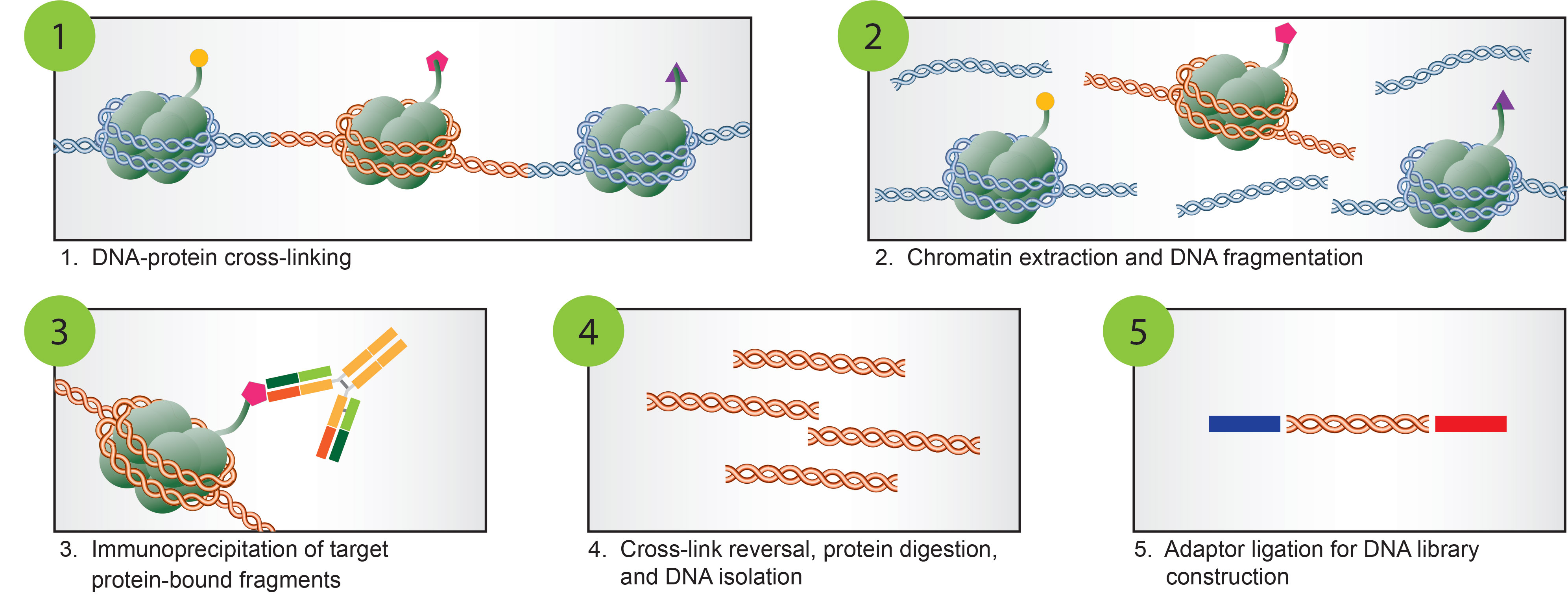
In the process of ChIP-seq, proteins are typically cross-linked to their bound DNA by formaldehyde treatment. Cells/tissues are then lysed/homogenized, and chromatin is sheared and immunoprecipitated with a specific antibody. The immunoprecipitated DNA is then used as the input for a next-generation sequencing library prep protocol, where it is sequenced and analyzed for enriched DNA binding sites. Although most of the papers published so far have been analyzed on the Illumina platform, ChIP-seq can be performed on any next-generation sequencer.
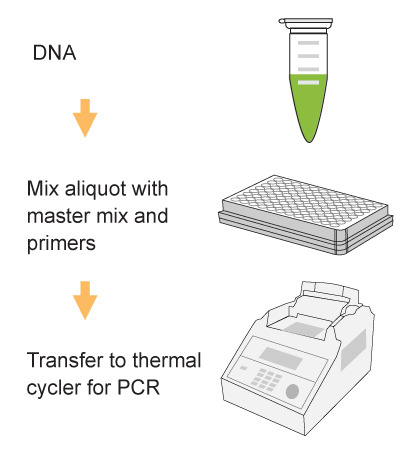
Another method that is used to investigate protein-DNA interaction at known genomic binding sites is ChIP combined with quantitative PCR or ChIP-qPCR. In ChIP-qPCR, similar steps are followed for immuno-enriched DNA fragments to be identified and quantified using widely available PCR or qPCR reagents and technologies. Due to the nature and popularity of PCR, ChIP-qPCR is a good choice if speed and more affordability are priorities for your labs’ needs.
The main issues around assays for both ChIP-Seq and ChIP-qPCR are that kits tend to be expensive and difficult to use, given their complexity. Luckily, EpiGentek offers various inexpensive, convenient solutions for both PCR & NGS, including full package kits to construct high quality DNA libraries from low quantity or difficult samples or run qPCR analysis. For ChIP-Seq, our widely-used EpiNext ChIP-Seq High-Sensitivity Kit provides all the reagents required for streamlined ChIP sequencing, including library preparation for next generation sequencing using Illumina platforms like Illumina Genome Analyzer II, HiSeq, and MiSeq systems. In terms of qPCR, we recommend our EpiQuik Quantitative PCR Fast Kit, a highly optimized assay kit for fast, specific, and sensitive quantitative real-time PCR analysis of ChIP. By facilitating sensitivity and specificity of quantitative PCR through significantly increasing primer-DNA template annealing while simultaneously reducing non-specific annealing, this kit's optimizations have resulted in considerable time savings and a more efficient real-time PCR.
Highly Sensitive: input cell number can be as few as 50,000 cells with a range from 50,000 to 1,000,000 cells
Streamlined Procedure: convenient, easy-to-follow procedure (from cell/tissues to library DNA) takes under 7 hours to complete
Low Background & Convenient: includes all required components for each step of ChIP-seq and enables minimal ChIP background by overcoming the weaknesses that cause non-specific enrichment







 Cart (0)