Bisulfite Conversion | Understanding DNA Methylation Analysis
Bisulfite Conversion: Understanding DNA Methylation Analysis
Bisulfite conversion is a key technique in DNA methylation analysis, enabling researchers to study the methylation status of cytosines in the genome. This guide will cover everything you need to know about bisulfite conversion, bisulfite sequencing, and the various tools and kits available for this process.
What is Bisulfite Conversion?
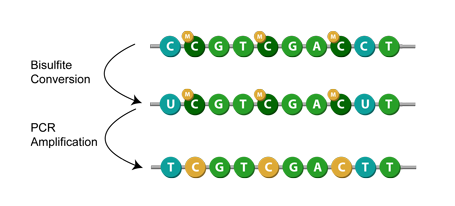
Bisulfite conversion is a chemical reaction that modifies unmethylated cytosines into uracil, leaving methylated cytosines unchanged. This allows for the identification of methylation patterns across the genome when combined with sequencing techniques such as bisulfite sequencing.
Epigentek offers specialized kits and services to support a wide range of bisulfite sequencing applications. For researchers interested in comprehensive DNA methylation analysis, the Whole Genome Bisulfite Sequencing (WGBS) Service provides in-depth coverage of the entire genome, detecting methylation at both CpG and non-CpG sites. If your research focuses on specific genomic regions, the Reduced Representation Bisulfite Sequencing (RRBS) Service offers a cost-effective solution by concentrating on CpG-rich areas of the genome. Additionally, Epigentek’s Targeted Bisulfite Sequencing Service is ideal for analyzing specific genomic regions, allowing for precise validation of differentially methylated areas. These services are designed to deliver high-quality data tailored to your specific research needs.
Bisulfite Conversion Kits
Several kits are available for bisulfite conversion, each tailored to different research needs. Some popular kits include:
Basic Bisulfite Conversion Kit: Ideal for standard methylation analysis.
Fast Bisulfite Conversion Kit: Suitable for high-throughput environments.
Whole Genome Bisulfite Sequencing Kit: Designed for comprehensive genome-wide studies.
Cost of Bisulfite Sequencing
The cost of bisulfite sequencing can vary depending on the scale of the project. Whole genome bisulfite sequencing tends to be more expensive due to its comprehensive nature, whereas targeted or reduced representation bisulfite sequencing offers a more cost-effective approach.
Frequently Asked Questions
How does bisulfite sequencing work?
Bisulfite sequencing involves treating DNA with sodium bisulfite, converting unmethylated cytosines into uracil. After PCR amplification and sequencing, methylation patterns can be determined by comparing the treated and untreated sequences.
What is the difference between bisulfite sequencing and bisulfite conversion?
Bisulfite conversion refers to the chemical process that modifies DNA, while bisulfite sequencing is the method used to analyze the methylation patterns after conversion.
What are the benefits of reduced representation bisulfite sequencing?
Reduced representation bisulfite sequencing (RRBS) allows for a cost-effective and targeted approach to study methylation by focusing on CpG-rich regions of the genome, reducing the complexity and data size compared to whole genome bisulfite sequencing.