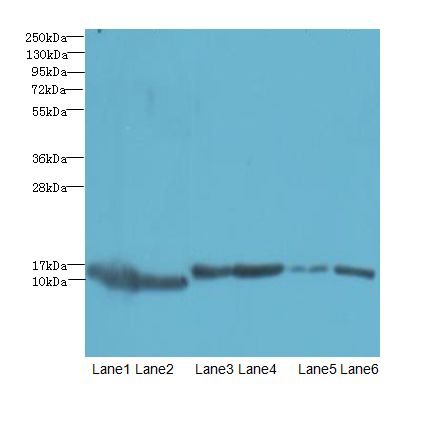
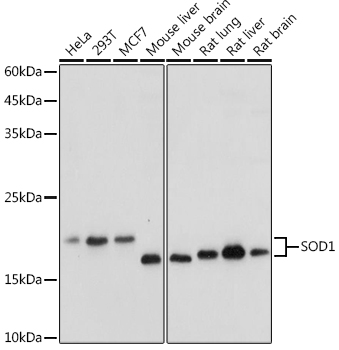
BackgroundThe protein encoded by this gene binds copper and zinc ions and is one of two isozymes responsible for destroying free superoxide radicals in the body. The encoded isozyme is a soluble cytoplasmic protein, acting as a homodimer to convert naturally-occuring but harmful superoxide radicals to molecular oxygen and hydrogen peroxide. The other isozyme is a mitochondrial protein. In addition, this protein contains an antimicrobial peptide that displays antibacterial, antifungal, and anti-MRSA activity against E. coli, E. faecalis, S. aureus, S. aureus MRSA LPV+, S. agalactiae, and yeast C. krusei. Mutations in this gene have been implicated as causes of familial amyotrophic lateral sclerosis. Rare transcript variants have been reported for this gene.
DescriptionSOD1 Monoclonal Antibody. Unconjugated. Raised in: Rabbit.
FormulationBuffer: PBS with 0.09% Sodium azide, 0.05% BSA, 50% glycerol, pH7.3.
SpecificityHuman
IsotypeIgG
Uniprot IDP00441
PurificationAffinity Purified
ImmunogenRecombinant protein (or fragment). Please contact EpigenTek for more information.
StorageStore at -20°C. Avoid freeze / thaw cycles.
Alternative NamesALS; SOD; ALS1; IPOA; STAHP; hSod1; HEL-S-44; homodimer; SOD1
ApplicationWB, IHC-P, ELISA; Recommended dilution: WB, 1:5000 - 1:20000; IHC-P, 1:50 - 1:200; ELISA, Recommended starting concentration is 1 µg/mL. Please optimize the concentration based on your specific assay requirements.