

LoadingLoading
  • Browse By Category

  • Products
  • Services
  • Support
  • Corporate
  • Back
  • Products

  • Antibodies
  • Instruments
  • Research Kits
  • Proteins & Enzymes
  • Peptides
  • Back
  • Antibodies

  • Primary Antibodies
  • Secondary Antibodies
  • Tag Antibodies
  • Antibody Panel Packs
  • Back
  • Primary Antibodies

  • Cell Structure & Function Antibodies
  • RNA Processing & Modification Antibodies
  • Chromatin & Transcription Antibodies
  • Other Primary Antibodies
  • Histone Modification Antibodies
  • Signal Transduction Antibodies
  • Metabolism Antibodies
  • Immunology & Inflammation Antibodies
  • COVID-19 Antibodies
  • DNA Methylation & Regulator Antibodies
  • Back
  • Cell Structure & Function Antibodies

  • DNA Damage & Repair Antibodies
  • Apoptosis & Cell Death Antibodies
  • Cell Cycle Antibodies
  • Cellular Structure Antibodies
  • Trafficking Antibodies
  • Back
  • RNA Processing & Modification Antibodies

  • RNA Methylation Antibodies
  • RNA Processing Antibodies
  • Back
  • Chromatin & Transcription Antibodies

  • DNA Replication & Transcription Antibodies
  • Chromatin Remodeling Antibodies
  • Cell Growth Antibodies
  • Development & Differentiation Antibodies
  • Back
  • Histone Modification Antibodies

  • Histone Methylation (Lysine) Antibodies
  • Histone Acetylation Antibodies
  • Histone Phosphorylation Antibodies
  • Ubiquitination & SUMOylation Antibodies
  • Histone Methylation (Arginine) Antibodies
  • Other Histone Methylation Antibodies
  • Other Histone Acetylation Antibodies
  • Histone Deacetylation Antibodies
  • Other Histone Antibodies
  • Back
  • Signal Transduction Antibodies

  • Cell Surface Receptor & Kinase Antibodies
  • Intracellular Kinase & Adaptor Protein Antibodies
  • Phosphatase Antibodies
  • Secreted Growth Factor Antibodies
  • Back
  • Metabolism Antibodies

  • Glucose Metabolism Antibodies
  • Lipid Metabolism Antibodies
  • Protein Metabolism Antibodies
  • Nucleotide Metabolism Antibodies
  • Back
  • Immunology & Inflammation Antibodies

  • Cell Marker & Receptor Antibodies
  • Cytokine Antibodies
  • Other Immunology Antibodies
  • Back
  • DNA Methylation & Regulator Antibodies

  • DNA Methylation Antibodies
  • DNA Regulator Antibodies
  • Back
  • Antibody Panel Packs

  • Histone Modification Antibody Panels
  • DNA Methylation Antibody Panels
  • Back
  • Instruments

  • Sonication Devices
  • Magnets & Sample Mixers
  • Back
  • Research Kits

  • DNA Methylation
  • Chromatin & Transcription
  • Histone Methylation
  • Histone Acetylation
  • Gene Editing & Silencing
  • Sample Preparation
  • DNA/RNA Damage & Repair
  • Library Preparation
  • RNA Methylation
  • Other Histone Modifications
  • COVID-19 Kits
  • Protein-RNA Interaction
  • Back
  • DNA Methylation

  • DNA Bisulfite Conversion
  • Global DNA Methylation Quantification
  • DNA Methyltransferase & Demethylase Assays
  • Methylated DNA Immunoprecipitation
  • Methylated DNA Amplification
  • Back
  • Chromatin & Transcription

  • Chromatin Immunoprecipitation
  • In Vitro Protein-DNA Interaction
  • Chromatin Accessibility
  • Back
  • Histone Methylation

  • Histone Methyltransferase Assay
  • Histone Methylation Quantification
  • Histone Demethylase Assay
  • Back
  • Histone Acetylation

  • Histone Acetyltransferase (HAT) Assay
  • Histone Deacetylase (HDAC) Assay
  • Histone Acetylation Quantification
  • Back
  • Sample Preparation

  • DNA Extraction
  • Nuclear Extraction
  • Chromatin Extraction
  • RNA Extraction
  • Histone Extraction
  • Whole Cell Extraction
  • Back
  • Library Preparation

  • DNA-based Library Preparation
  • RNA-based Library Preparation
  • Chromatin-based Library Preparation
  • Back
  • Other Histone Modifications

  • Sumoylation
  • Histone Phosphorylation Assay
  • Histone Citrullination
  • Back
  • Proteins & Enzymes

  • DNA Methylation/Demethylation Proteins
  • Methylated DNA Binding Proteins
  • Unmodified Histone Proteins
  • Chromatin Binding/Transcription Proteins
  • ADP Ribose Proteins
  • DNA Damage & Repair Proteins
  • Modified Histone Proteins
  • COVID-19 Proteins
  • Back
  • DNA Methylation/Demethylation Proteins

  • DNA Demethylation Proteins
  • DNA Methylation Proteins
  • Back
  • Modified Histone Proteins

  • Histone Methylation Proteins
  • Histone Demethylation Proteins
  • Histone Acetylation Proteins
  • Histone Deacetylation Proteins
  • Histone Phosphorylation Proteins
  • Histone Sumoylation Proteins
  • Back
  • Peptides

  • Histone Methylation Peptides
  • Histone Acetylation Peptides
  • Histone Phosphorylation Peptides
  • Back
  • Services

  • DNA-based NGS Services
  • Chromatin-based NGS Services
  • qPCR-based Services
  • ELISA-based Services
  • Back
  • DNA-based NGS Services

  • Reduced Representation Bisulfite Sequencing (RRBS)
  • Whole Genome Bisulfite Sequencing (WGBS)
  • Targeted Bisulfite Sequencing
  • Back
  • Chromatin-based NGS Services

  • ChIP Sequencing (Histone Modifications)
  • Back
  • qPCR-based Services

  • Methylation-Specific qPCR (MSP)
  • Back
  • ELISA-based Services

  • Global DNA 5-mC Quantification
  • Global DNA 5-hmC Quantification
  • Global RNA 5-mC Quantification
  • Global RNA m6A Quantification
  • Histone Modification Quantification
  • Back
  • Support

  • Technical Support
  • Quality Assurance
  • Resources
  • Back
  • Technical Support

  • Submit Support Ticket
  • Back
  • Quality Assurance

  • Epigentek Gurantee
  • Risk-Free Testing: Pioneer Program
  • Product Review Program
  • Back
  • Resources

  • Epigenetics Newsletter
  • Intro to Epigenetics
  • What is Epigenetics?
  • Back
  • Corporate

  • Company Information
  • Procurement
  • Communication
  • Back
  • Company Information

  • About Epigentek
  • Press Release
  • Career Opportunities
  • Back
  • Procurement

  • Ordering Information
  • New Lab Startup Program
  • Distributors & Resellers
  • Back
  • Communication

  • Contact Us
  • Customer Feedback Survey
  • Events Calendar
Epigentek Home
Cart (0)
Datasheet
Track
Account
  • Products

    Research Kits

    • DNA Methylation
      • Global DNA Methylation Quantification
      • DNA Bisulfite Conversion
      • Methylated DNA Immunoprecipitation
      • DNMT & DNA Demethylase Assay
      • Methylated DNA Amplification
    • RNA Methylation
      • Global RNA Methylation Quantification
      • Transcriptome-Specific RNA Methylation
      • RNA Methylation Activity/Inhibition
    • Chromatin & Transcription
      • Chromatin Immunoprecipitation
      • CUT&RUN-Fast and more
      • Chromatin Accessibility
      • In Vitro Protein-DNA Interaction
    • Histone Modification
      • Histone Methylation Quantification
      • Histone Methytransferase (HMT) Assay
      • Histone Demethylase (KDM) Assay
      • Histone Acetylation Quantification
      • Histone Acetylase (HAT) Assay
      • Histone Deacetylase (HDAC) Assay
      • Histone Citrullination
      • Histone Phosphorylation
      • Histone SUMOylation
    • Protein-RNA Interaction
    • DNA/RNA Damage & Repair
      • Oxidative Cell Damage
      • Oxidative DNA/RNA Damage
    • Gene Editing & Silencing
    • Library Preparation
      • DNA-Related Library Preparation
      • RNA-Related Library Preparation
      • Chromatin-Related Library Preparation
    • Sample Preparation
      • DNA Extraction
      • RNA Extraction
      • Chromatin Extraction
      • Histone Extraction
      • Nuclear Extraction
      • Whole Cell Extraction

    Antibodies

    • Epigenetics & Chromatin
      • DNA Methylation & Demethylation
      • Histone Modification
      • Chromatin Remodeling
      • Transcription & Nuclear Regulation
    • Cancer, Cell Cycle & Cell Death
      • Cell Cycle & Proliferation
      • Apoptosis, Autophagy & Cell Death
      • DNA Damage & Repair
      • Oncogenes & Tumor Suppressors
      • Cancer Signaling & Tumor Biology
    • Signal Transduction
      • Receptors & Cell Surface Signaling
      • Kinases & Adaptor Proteins
      • Phosphatases & Regulatory Proteins
      • Growth Factors & Secreted Signaling
      • Major Pathway Signaling
      • GTPase, Calcium & Second Messengers
    • Cell Biology & Cellular Processes
      • Cytoskeleton & Cell Structure
      • Membrane, Adhesion & ECM
      • Protein Trafficking & Vesicle Biology
      • Proteostasis, Ubiquitin & SUMO
      • General Cellular Proteins
    • Immunology & Inflammation
      • Immune Cell Markers & Receptors
      • Cytokines, Chemokines & Receptors
      • Adaptive Immunity & Immune Regulation
      • Inflammation & NF-kB Signaling
      • Infectious Disease & Viral Response
    • Metabolism & Mitochondria
      • Glucose & Energy Metabolism
      • Lipid & Steroid Metabolism
      • Amino Acid & Protein Metabolism
      • Nucleotide Metabolism
      • Mitochondria & Oxidative Phosphorylation
      • Oxidative Stress & Detoxification
    • RNA Biology & Gene Expression
      • RNA Processing & Splicing
      • RNA Modification & Epitranscriptomics
      • Translation & Ribosome Biology
      • Transcription Factors & Gene Regulation
      • General Gene Expression Regulators
    • Neuroscience
      • Neuronal Markers & Neurodevelopment
      • Glial Markers & Myelination
      • Synaptic Signaling & Neurotransmission
      • Neurodegeneration & Brain Disease
    • Developmental & Stem Cell Biology
      • Pluripotency & Stem Cell Markers
      • Differentiation & Lineage Markers
    • Cardiovascular & Angiogenesis
      • Angiogenesis & VEGF Signaling
      • Endothelial & Vascular Markers
      • Cardiac & Smooth Muscle

    • Secondary Antibodies
    • Tag Antibodies
    • Antibody Panel Packs
      • Histone Modification Panel
      • DNA Methylation Panel

    Proteins & Enzymes

    • DNA Methylation
      • DNA Methylation
      • DNA Demethylation
    • Modified Histones
      • Histone Methylation
      • Histone Demethylation
      • Histone Acetylation
      • Histone Deacetylation
      • Histone Phosphorylation
      • Histone SUMOylation
    • Unmodified Histones
    • Methylated DNA Binding
    • ADP Ribose
    • Chromatin Binding/Transcription
    • DNA Damage & Repair

    Peptides

    • Histone Methylation
    • Histone Acetylation/Deacetylation
    • Histone Phosphorylation

    Instruments

    • Sonication Devices
    • Magnets & Sample Mixers
  • Services

    DNA-based NGS Services

    • Reduced Representation Bisulfite Sequencing (RRBS)
    • Whole Genome Bisulfite Sequencing (WGBS)

    Chromatin-based NGS Services

    • ChIP-Seq

    ELISA-based Services

    • Global DNA 5-mC Quantification
    • Global DNA 5-hmC Quantification
    • Global RNA m6A Quantification
    • Global RNA 5-mC Quantification
    • Histone Modification Quantification
    RRBS Services
  • Support

    Technical Support

    • Submit Support Ticket
    • Download Datasheet

    Resource Bulletins

    • DNA Methylation
    • RNA Methylation
    • Chromatin Remodeling
    • Histone Modifications
    • Gene Editing
    • Miscellaneous
    • Weekly Research Showcase
  • Ordering

    Procurement

    • Ordering Info & Return Policy
    • Distributors & Resellers
    • Request a Quote
    • Application Guarantee

    Promotions

    • Current Promotional Offers
    • New Lab Startup Program
    • Risk-Free Testing: Pioneer Program
    • Rewards Program
    • Product Review Program

    Company Information

    • About Us
    • Corporate Sustainability
    • Press Releases
    • Events Calendar
    • Career Opportunities
    • Contact Us
EpiGentek Guarantee
   Home  »  Recombinant Rabbit Monoclonal Antibodies 
  Quick Order      Quote Lookup
Single B-cell derived. Recombinantly produced.

Recombinant Rabbit Monoclonal Antibodies

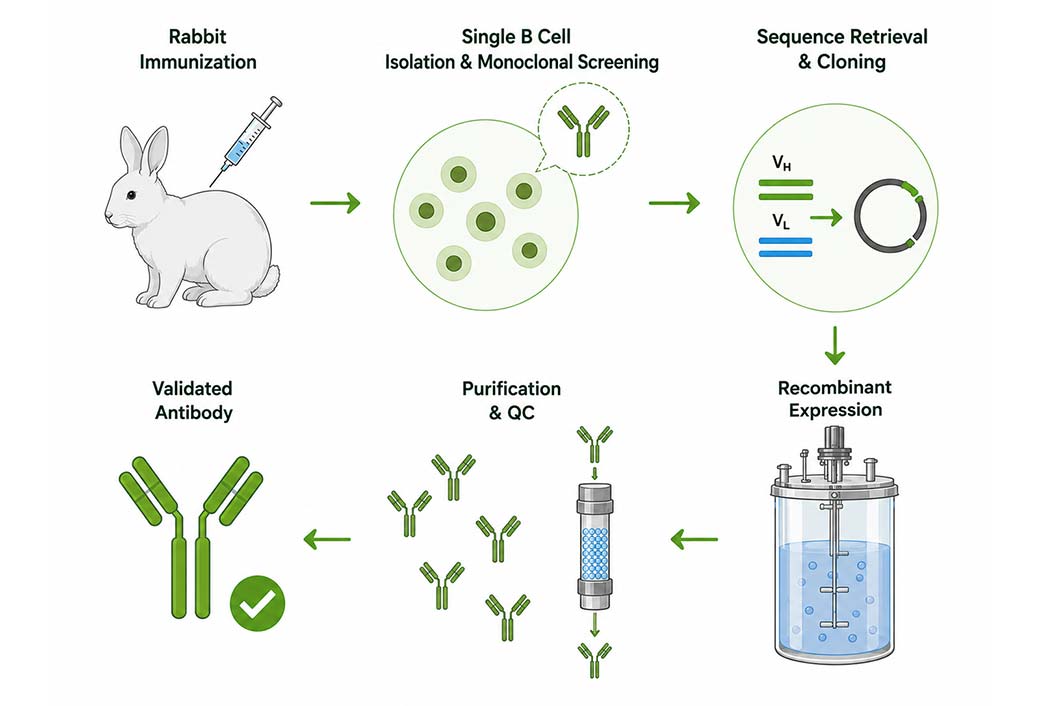
Single B-cell discovery captures antibody genes directly from individual antigen-specific rabbit B cells, preserving natural heavy- and light-chain pairing before the selected sequence is locked into recombinant production.

Browse recombinant antibodies Ask a Scientist
Single B-cell isolation and sequence-defined recombinant rabbit monoclonal antibody production workflow

Turn a stronger discovery process into clearer experimental data

Single B-cell discovery better preserves natural antibody pairing and expands the candidate pool for screening by affinity, specificity, background, and usable signal. Selected clones then move into sequence-defined recombinant production for supported applications including Western blot, immunofluorescence, immunohistochemistry, flow cytometry, immunoprecipitation, and ChIP.

Representative single B-cell clone discovery graphic

Faithful clone capture

Recover naturally paired antibody genes directly from individual antigen-specific B cells, preserving more of the immune response for screening.

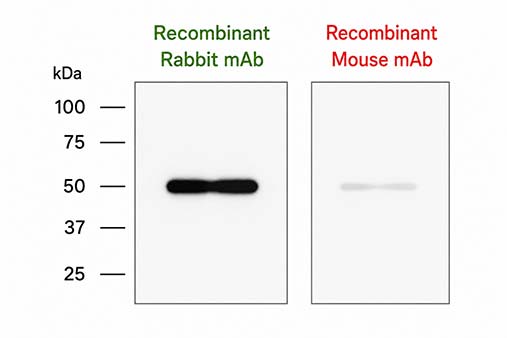
Representative antibody assay screening data

Selection built around assay performance

Evaluate affinity, specificity, background, and usable signal before selecting a clone for supported research applications.

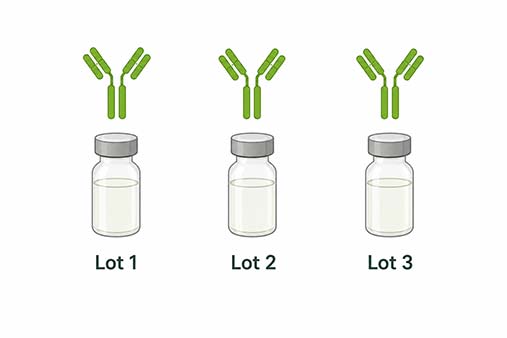
Representative sequence-defined recombinant antibody production graphic

Defined clone for long-term use

Move the selected sequence into recombinant production for repeat studies and dependable future supply without continued hybridoma maintenance.

Compare technology advantages

Comparison point
Single B-cell isolation
Traditional hybridoma fusion
Clone capture
Single B-cell isolation Natural heavy- and light-chain pairingAntibody genes are recovered from the same individual B cell, preserving the pairing selected in vivo.
Traditional hybridoma fusion Fusion creates a selection bottleneckPotentially valuable B cells can be lost when they do not fuse, survive, or expand efficiently.
Clone diversity
Single B-cell isolation Broader access to useful clonesDirect screening is not limited to cells that successfully fuse, survive, and grow as hybridomas.
Traditional hybridoma fusion Available diversity may be narrowerThe final pool is biased toward clones compatible with the fusion and cell-culture process.
Clone continuity
Single B-cell isolation Sequence-defined from the beginningThe selected clone can move directly into recombinant expression for durable identity and future continuity.
Traditional hybridoma fusion Cell-line maintenance adds riskLong-term dependence on a living hybridoma can introduce drift, mutation, or loss of productivity.
Assay flexibility
Single B-cell isolation More flexibility for demanding assaysGreater candidate diversity can improve the chance of finding high-affinity, low-background clones and complementary antibody pairs.
Traditional hybridoma fusion Additional work may be neededSequence recovery, recombinant conversion, and renewed screening can be required to secure long-term reproducibility.
Assay criterion
Single B-cell isolation
Traditional hybridoma fusion
LOD / sensitivity potential
Single B-cell isolation Ultra-highSelects for native, ultra-tight affinity bonds.
Traditional hybridoma fusion VariableUnnatural chain pairing can weaken binding strength.
Sandwich assay pairing
Single B-cell isolation EasyVast clonal diversity provides countless epitope combinations.
Traditional hybridoma fusion DifficultHeavily restricted to common, dominant epitopes.
Cross-reactivity / matrix effects
Single B-cell isolation MinimizedHigh-throughput sorting filters out background binding.
Traditional hybridoma fusion Higher riskProne to generic, non-specific binding anomalies.
Comparison point
The recombinant rabbit advantage
Where recombinant mouse can be limiting
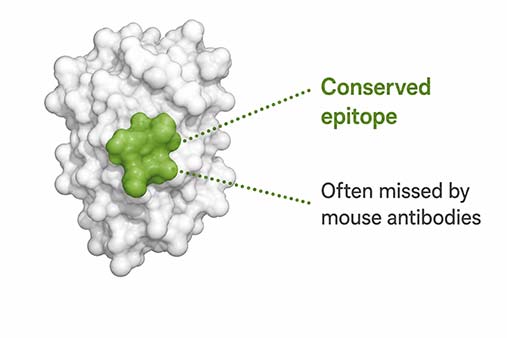
Epitope access
The recombinant rabbit advantage Recognize more challenging epitopesRabbit immune diversity can uncover clones against conserved proteins, small antigens, and subtle modifications that may be harder to distinguish in mouse systems.
Where recombinant mouse can be limiting Narrower access to conserved targetsMouse immune tolerance can make some highly conserved mammalian proteins and subtle epitope differences more difficult to target.
Signal potential
The recombinant rabbit advantage Generate stronger, cleaner signalHigh-affinity rabbit clones can improve target detection and support lower working concentrations when matched to the assay.
Where recombinant mouse can be limiting Less headroom for weak-signal assaysWhen affinity or sensitivity is the bottleneck, a rabbit-derived clone may provide a more effective route to a usable signal window.
Clone continuity
The recombinant rabbit advantage Keep the exact clone over timeSequence-defined recombinant production protects clone identity and supports dependable lot-to-lot continuity.
Where recombinant mouse can be limiting Recombinant consistency alone is not enoughA defined sequence preserves the selected clone, but it does not expand the biological diversity of the original mouse immune response.

Browse by research area

Epigenetics & Chromatin Cancer, Cell Cycle & Cell Death Signal Transduction Cell Biology & Cellular Processes Immunology & Inflammation Metabolism & Mitochondria RNA Biology & Gene Expression Neuroscience Developmental & Stem Cell Biology Cardiovascular & Angiogenesis

Ready to use a single B-cell-derived recombinant antibody?

Explore available targets or contact our technical team for help selecting a recombinant rabbit monoclonal antibody for your application, species, and sample type.

Browse recombinant antibodies Contact support
Company
About Epigentek
Press Releases
Events Calendar
Corporate Sustainability
Career Opportunities
What Is Epigenetics?
Contact Us
Ordering
Ordering Info & Return Policy
Distributors & Resellers

Support
Technical Support
Download Datasheets
Resource Bulletins
Promotions & Offers
Current Promotions
New Lab Startup Program
Risk-Free Testing: Pioneer Program
Rewards Program
Product Reviews
Application Guarantee
Sign Up For Exclusive Offers
Request a Quote
Stay Informed


Terms & Conditions | Privacy Policy | Site Map
Copyright © EpigenTek Group Inc. All rights reserved.
  • Stay Informed:
Terms & Conditions | Privacy Policy Copyright © 2020 EpiGentek