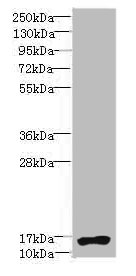
Routine cell or tissue lysate Western blot protocol For most 20-100 kDa targets in whole-cell lysate or tissue lysate. Use this workflow when: You are detecting a typical 20-100 kDa target in whole-cell lysate, nuclear extract, cytoplasmic extract, or tissue lysate. Optimize first: Sample quality, protein normalization, transfer consistency, antibody dilution, blocking buffer, and exposure time. Before you start Confirm the expected molecular weight and the antibody host species before starting. Prepare fresh protease inhibitors in cold lysis buffer. Plan 10-30 ug total protein per lane as the starting load. Include a positive control, negative control when available, and a validated loading control or total protein stain. Protocol 1Prepare and clarify the sample Wash cells or tissue material with cold PBS when appropriate. Lyse on ice with cold lysis buffer containing fresh inhibitors. Incubate on ice for 10-30 minutes with occasional mixing. Clarify at 12,000-16,000 x g for 10-20 minutes at 4°C. Transfer only the clear supernatant to a fresh tube. If lysate is viscous, shear DNA before loading. 2Quantify, normalize, and denature Measure protein concentration before adding reducing sample buffer. Normalize all samples to the same concentration. Add 4X Laemmli sample buffer to 1X final concentration. Heat at 95°C for 5 minutes, then briefly centrifuge before loading. 3Run SDS-PAGE Use a 10-12% gel or 4-12% gradient gel for most routine targets. Load ladder, positive control, negative control, and test samples. Run the stacking gel at 60-80 V, then the resolving gel at 100-150 V. Stop when the dye front approaches the bottom or the target range is separated. 4Transfer to membrane Use 0.45 um PVDF or nitrocellulose for routine targets. For wet transfer, start around 100 V for 60-90 minutes at 4°C, or use validated semi-dry settings. Stain the membrane with Ponceau S before blocking to confirm transfer and lane consistency. Correct uneven transfer before changing antibody conditions. 5Block, probe, detect, and normalize Block with 5% non-fat dry milk in TBST unless the antibody datasheet recommends another blocker. Incubate NR2C2AP Polyclonal Antibody according to the datasheet, or test 1:500 to 1:2,000 if no starting dilution is available. Wash 3 x 5-10 minutes, incubate secondary antibody, then wash again. Capture non-saturated exposures and normalize to total protein or a validated loading control. Controls to include Positive lysate or purified protein that is known to contain the target. Negative lysate, knockout, knockdown, untreated, or low-expression sample when available. Loading control such as GAPDH, beta-actin, tubulin, or a total protein stain. Short and long exposures to avoid relying on a saturated image. Reference notes If the band is weak in every lane, check transfer and positive control before increasing antibody concentration. If all lanes are high background, reduce antibody concentration and increase wash stringency before changing sample prep. If lanes smear, reduce sample load, clarify lysate, and check salt, nucleic acid, lipid, or detergent interference.