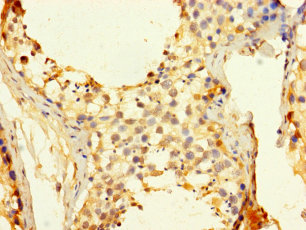
Cultured cell IF/ICC protocol Use this workflow for fluorescent antibody staining of adherent or suspension cells on coverslips, chamber slides, or imaging plates. Use this format when: Detecting protein localization, nuclear markers, cytoplasmic proteins, histone marks, signaling proteins, or cell morphology in cultured cells.Optimize first: Fixation method, permeabilization strength, blocking buffer, primary antibody dilution, and imaging exposure. 1 Plate cellsSeed cells onto sterile coverslips, chamber slides, or imaging plates so they reach 50-80 percent confluence on staining day. For coverslips in a 24-well plate, use enough medium to fully cover the cells. 2 Fix cellsRemove medium and gently rinse once with PBS. Add 4 percent paraformaldehyde in PBS for 10-15 minutes at room temperature. For some cytoskeletal, membrane, or epitope-sensitive targets, compare with cold methanol fixation for 5-10 minutes at -20 degrees C. 3 Wash and permeabilizeWash 3 times with PBS, 5 minutes each. Permeabilize with 0.1-0.3 percent Triton X-100 in PBS for 5-10 minutes at room temperature. For nuclear histone or chromatin targets, 0.2-0.5 percent Triton X-100 can be tested. For membrane targets, reduce or omit detergent. 4 Block nonspecific bindingAdd blocking buffer, such as 1-5 percent BSA or 5 percent normal serum in PBS with 0.05-0.1 percent Tween-20. Incubate 30-60 minutes at room temperature. Use serum from the host species of the secondary antibody when practical. 5 Add primary antibodyDilute CDC25C Polyclonal Antibody in blocking buffer. Start with the datasheet-recommended IF/ICC dilution or test 1:100, 1:250, and 1:500. Add enough volume to cover the sample, such as 100-200 uL per coverslip or 50-100 uL per chamber well. Incubate 1 hour at room temperature or overnight at 4 degrees C in a humidified chamber. 6 Wash after primary antibodyWash 3 times with PBS or PBST, 5 minutes each, using gentle rocking. Do not allow cells to dry. 7 Add fluorescent secondary antibodyDilute fluorophore-conjugated secondary antibody in blocking buffer, commonly 1:500-1:1000. Add enough volume to cover the cells and incubate 45-60 minutes at room temperature protected from light. 8 Counterstain and mountWash 3 times. Add DAPI or another nuclear counterstain for 5 minutes if desired, then wash once. Mount coverslips with antifade mounting medium and cure according to the mountant instructions. 9 Image and document settingsAcquire images using the same exposure, laser power, gain, and offset for samples that will be compared. Include no-primary and secondary-only controls to evaluate background. Fixation choiceParaformaldehyde preserves morphology well. Methanol can improve some cytoskeletal or nuclear epitopes but may disrupt membrane morphology.AutofluorescenceIf background is high, reduce fixation time, improve washing, test a different blocking buffer, or switch fluorophores.
Tissue immunofluorescence protocol Use this workflow for fluorescent antibody staining of frozen, fixed frozen, or FFPE tissue sections. Use this format when: Detecting spatial protein expression in tissue sections with fluorescence rather than chromogenic IHC.Optimize first: Section type, antigen retrieval, autofluorescence control, permeabilization, antibody dilution, and mounting medium. 1 Prepare sectionsUse 4-8 um tissue sections mounted on charged slides. Air dry frozen sections for 10-20 minutes. For FFPE sections, deparaffinize through xylene and graded ethanol, then rehydrate to water. 2 Fix or retrieve antigenFor frozen sections, fix with cold acetone for 10 minutes or 4 percent paraformaldehyde for 10-15 minutes depending on the target. For FFPE sections, perform heat-induced antigen retrieval in citrate buffer pH 6.0 or Tris-EDTA pH 9.0 for 10-20 minutes, then cool 20 minutes. 3 Reduce autofluorescence if neededFor tissue with high autofluorescence, treat with an autofluorescence quenching reagent or freshly prepared 0.1 percent sodium borohydride for 5-10 minutes, followed by thorough PBS washes. Choose the method compatible with your fluorophores. 4 Permeabilize and blockPermeabilize with 0.1-0.3 percent Triton X-100 in PBS for 5-10 minutes if intracellular or nuclear access is needed. Block 30-60 minutes with 5 percent normal serum or 1-5 percent BSA in PBS. 5 Add primary antibodyDilute CDC25C Polyclonal Antibody in blocking buffer. Start with the datasheet-recommended tissue IF dilution or test 1:100, 1:250, and 1:500. Apply 100-200 uL per section, cover with parafilm or use a humidified chamber, and incubate 1-2 hours at room temperature or overnight at 4 degrees C. 6 Wash and add secondary antibodyWash 3 times for 5 minutes each in PBS or PBST. Add fluorophore-conjugated secondary antibody diluted 1:500-1:1000. Incubate 45-60 minutes at room temperature protected from light. 7 Counterstain and mountWash 3 times. Add DAPI if desired. Mount with antifade medium and coverslip carefully to avoid bubbles. 8 Image sectionsUse identical microscope settings for comparative samples. Include no-primary controls and known positive tissue when available. Tissue handlingDo not let sections dry after rehydration or blocking begins.RetrievalSome epitopes require retrieval for FFPE tissue but not frozen tissue. Test pH 6 and pH 9 retrieval when starting a new antibody.
Multiplex IF/ICC protocol Use this workflow to detect two or more targets in the same cells or tissue section using spectrally distinct antibodies. Use this format when: Comparing colocalization, marker identity, signaling state, or target expression in the same sample.Optimize first: Host species compatibility, fluorophore separation, antibody order, blocking, cross-reactivity controls, and exposure settings. 1 Plan antibody panelChoose primary antibodies from different host species when possible. Match secondary antibodies to non-overlapping fluorophores. Avoid fluorophores with heavy spectral overlap unless spectral unmixing is available. 2 Fix, permeabilize, and blockPrepare the sample using the IF/ICC or tissue IF fixation and blocking conditions appropriate for the most sensitive target. Use enough blocking buffer to reduce nonspecific secondary antibody binding. 3 Add primary antibody mixPrepare a master mix containing each primary antibody at its optimized dilution. Include CDC25C Polyclonal Antibody if it is one of the targets in the panel. Start with single-stain optimized dilutions before combining antibodies. Incubate 1 hour at room temperature or overnight at 4 degrees C. 4 Wash thoroughlyWash 3 times for 5 minutes each with PBS or PBST. Extend washes to 5-10 minutes when background or cross-channel signal is high. 5 Add secondary antibody mixAdd cross-adsorbed secondary antibodies diluted in blocking buffer, commonly 1:500-1:1000. Incubate 45-60 minutes protected from light. 6 Counterstain and mountWash 3 times. Add nuclear counterstain if needed, then mount with antifade medium compatible with all fluorophores. 7 Acquire controlsImage single-color controls, no-primary controls, and full-stain samples using consistent settings. Use single-color controls to identify bleed-through or compensation needs. Same-species primariesIf two primary antibodies share the same host species, use directly conjugated primaries, sequential staining with blocking, Fab fragments, or tyramide signal amplification when appropriate.ColocalizationDo not call colocalization from overexposed images. Keep all channels below saturation.
Phospho/PTM IF protocol Use this workflow for phosphorylation, acetylation, methylation, ubiquitination, or other modification-specific antibody staining. Use this format when: Detecting transient signaling or post-translational modifications in cells or tissue.Optimize first: Sample timing, inhibitor use, fixation speed, permeabilization, antibody dilution, and positive or negative treatment controls. 1 Prepare treated and control samplesPlan untreated, stimulated, inhibited, knockdown, or positive control samples before staining. For phospho targets, add phosphatase inhibitors during washes or lysis-related steps where applicable and fix quickly after treatment. 2 Fix rapidlyRemove medium and rinse briefly with warm PBS when needed. Fix with 4 percent paraformaldehyde for 10-15 minutes at room temperature, or use methanol fixation for targets known to work better with alcohol fixation. 3 Permeabilize for nuclear or intracellular accessWash 3 times. Use 0.1-0.3 percent Triton X-100 for 5-10 minutes. For histone or chromatin PTMs, test 0.2-0.5 percent Triton X-100 and consider a short pre-extraction step only if compatible with morphology and the target. 4 BlockBlock 45-60 minutes with 1-5 percent BSA in PBS or TBS. For phospho-specific antibodies, BSA is often preferred over milk because milk can contain phosphoproteins that increase background. 5 Add primary antibodyDilute CDC25C Polyclonal Antibody in blocking buffer. Start with the datasheet-recommended IF dilution or test 1:100, 1:250, and 1:500. Incubate overnight at 4 degrees C for low-abundance PTMs or weak signals. 6 Wash and detectWash 3 times for 5 minutes. Add fluorophore-conjugated secondary antibody at 1:500-1:1000 for 45-60 minutes protected from light. Wash 3 times. 7 Mount and imageCounterstain if needed, mount with antifade medium, and image positive and negative controls with the same settings. For signal quantification, avoid saturated pixels and analyze the same cellular compartment across samples. PTM specificityUse inhibitor, stimulation, peptide competition, knockdown, or known positive/negative controls when available to support modification-specific interpretation.Blocking bufferIf background is high, compare BSA, serum, fish gelatin, or commercial antibody diluent.