LoadingLoading
  • Browse By Category

  • Products
  • Services
  • Support
  • Corporate
  • Back
  • Products

  • Antibodies
  • Instruments
  • Research Kits
  • Proteins & Enzymes
  • Peptides
  • Back
  • Antibodies

  • Primary Antibodies
  • Secondary Antibodies
  • Tag Antibodies
  • Antibody Panel Packs
  • Back
  • Primary Antibodies

  • Cell Structure & Function Antibodies
  • RNA Processing & Modification Antibodies
  • Chromatin & Transcription Antibodies
  • Other Primary Antibodies
  • Histone Modification Antibodies
  • Signal Transduction Antibodies
  • Metabolism Antibodies
  • Immunology & Inflammation Antibodies
  • COVID-19 Antibodies
  • DNA Methylation & Regulator Antibodies
  • Back
  • Cell Structure & Function Antibodies

  • DNA Damage & Repair Antibodies
  • Apoptosis & Cell Death Antibodies
  • Cell Cycle Antibodies
  • Cellular Structure Antibodies
  • Trafficking Antibodies
  • Back
  • RNA Processing & Modification Antibodies

  • RNA Methylation Antibodies
  • RNA Processing Antibodies
  • Back
  • Chromatin & Transcription Antibodies

  • DNA Replication & Transcription Antibodies
  • Chromatin Remodeling Antibodies
  • Cell Growth Antibodies
  • Development & Differentiation Antibodies
  • Back
  • Histone Modification Antibodies

  • Histone Methylation (Lysine) Antibodies
  • Histone Acetylation Antibodies
  • Histone Phosphorylation Antibodies
  • Ubiquitination & SUMOylation Antibodies
  • Histone Methylation (Arginine) Antibodies
  • Other Histone Methylation Antibodies
  • Other Histone Acetylation Antibodies
  • Histone Deacetylation Antibodies
  • Other Histone Antibodies
  • Back
  • Signal Transduction Antibodies

  • Cell Surface Receptor & Kinase Antibodies
  • Intracellular Kinase & Adaptor Protein Antibodies
  • Phosphatase Antibodies
  • Secreted Growth Factor Antibodies
  • Back
  • Metabolism Antibodies

  • Glucose Metabolism Antibodies
  • Lipid Metabolism Antibodies
  • Protein Metabolism Antibodies
  • Nucleotide Metabolism Antibodies
  • Back
  • Immunology & Inflammation Antibodies

  • Cell Marker & Receptor Antibodies
  • Cytokine Antibodies
  • Other Immunology Antibodies
  • Back
  • DNA Methylation & Regulator Antibodies

  • DNA Methylation Antibodies
  • DNA Regulator Antibodies
  • Back
  • Antibody Panel Packs

  • Histone Modification Antibody Panels
  • DNA Methylation Antibody Panels
  • Back
  • Instruments

  • Sonication Devices
  • Magnets & Sample Mixers
  • Back
  • Research Kits

  • DNA Methylation
  • Chromatin & Transcription
  • Histone Methylation
  • Histone Acetylation
  • Gene Editing & Silencing
  • Sample Preparation
  • DNA/RNA Damage & Repair
  • Library Preparation
  • RNA Methylation
  • Other Histone Modifications
  • COVID-19 Kits
  • Protein-RNA Interaction
  • Back
  • DNA Methylation

  • DNA Bisulfite Conversion
  • Global DNA Methylation Quantification
  • DNA Methyltransferase & Demethylase Assays
  • Methylated DNA Immunoprecipitation
  • Methylated DNA Amplification
  • Back
  • Chromatin & Transcription

  • Chromatin Immunoprecipitation
  • In Vitro Protein-DNA Interaction
  • Chromatin Accessibility
  • Back
  • Histone Methylation

  • Histone Methyltransferase Assay
  • Histone Methylation Quantification
  • Histone Demethylase Assay
  • Back
  • Histone Acetylation

  • Histone Acetyltransferase (HAT) Assay
  • Histone Deacetylase (HDAC) Assay
  • Histone Acetylation Quantification
  • Back
  • Sample Preparation

  • DNA Extraction
  • Nuclear Extraction
  • Chromatin Extraction
  • RNA Extraction
  • Histone Extraction
  • Whole Cell Extraction
  • Back
  • Library Preparation

  • DNA-based Library Preparation
  • RNA-based Library Preparation
  • Chromatin-based Library Preparation
  • Back
  • Other Histone Modifications

  • Sumoylation
  • Histone Phosphorylation Assay
  • Histone Citrullination
  • Back
  • Proteins & Enzymes

  • DNA Methylation/Demethylation Proteins
  • Methylated DNA Binding Proteins
  • Unmodified Histone Proteins
  • Chromatin Binding/Transcription Proteins
  • ADP Ribose Proteins
  • DNA Damage & Repair Proteins
  • Modified Histone Proteins
  • COVID-19 Proteins
  • Back
  • DNA Methylation/Demethylation Proteins

  • DNA Demethylation Proteins
  • DNA Methylation Proteins
  • Back
  • Modified Histone Proteins

  • Histone Methylation Proteins
  • Histone Demethylation Proteins
  • Histone Acetylation Proteins
  • Histone Deacetylation Proteins
  • Histone Phosphorylation Proteins
  • Histone Sumoylation Proteins
  • Back
  • Peptides

  • Histone Methylation Peptides
  • Histone Acetylation Peptides
  • Histone Phosphorylation Peptides
  • Back
  • Services

  • DNA-based NGS Services
  • Chromatin-based NGS Services
  • qPCR-based Services
  • ELISA-based Services
  • Back
  • DNA-based NGS Services

  • Reduced Representation Bisulfite Sequencing (RRBS)
  • Whole Genome Bisulfite Sequencing (WGBS)
  • Targeted Bisulfite Sequencing
  • Back
  • Chromatin-based NGS Services

  • ChIP Sequencing (Histone Modifications)
  • Back
  • qPCR-based Services

  • Methylation-Specific qPCR (MSP)
  • Back
  • ELISA-based Services

  • Global DNA 5-mC Quantification
  • Global DNA 5-hmC Quantification
  • Global RNA 5-mC Quantification
  • Global RNA m6A Quantification
  • Histone Modification Quantification
  • Back
  • Support

  • Technical Support
  • Quality Assurance
  • Resources
  • Back
  • Technical Support

  • Submit Support Ticket
  • Back
  • Quality Assurance

  • Epigentek Gurantee
  • Risk-Free Testing: Pioneer Program
  • Product Review Program
  • Back
  • Resources

  • Epigenetics Newsletter
  • Intro to Epigenetics
  • What is Epigenetics?
  • Back
  • Corporate

  • Company Information
  • Procurement
  • Communication
  • Back
  • Company Information

  • About Epigentek
  • Press Release
  • Career Opportunities
  • Back
  • Procurement

  • Ordering Information
  • New Lab Startup Program
  • Distributors & Resellers
  • Back
  • Communication

  • Contact Us
  • Customer Feedback Survey
  • Events Calendar
Epigentek Home
Cart (0)
Datasheet
Track
Account
  • Products

    Research Kits

    • DNA Methylation
      • Global DNA Methylation Quantification
      • DNA Bisulfite Conversion
      • Methylated DNA Immunoprecipitation
      • DNMT & DNA Demethylase Assay
      • Methylated DNA Amplification
    • RNA Methylation
      • Global RNA Methylation Quantification
      • Transcriptome-Specific RNA Methylation
      • RNA Methylation Activity/Inhibition
    • Chromatin & Transcription
      • Chromatin Immunoprecipitation
      • CUT&RUN-Fast and more
      • Chromatin Accessibility
      • In Vitro Protein-DNA Interaction
    • Histone Modification
      • Histone Methylation Quantification
      • Histone Methytransferase (HMT) Assay
      • Histone Demethylase (KDM) Assay
      • Histone Acetylation Quantification
      • Histone Acetylase (HAT) Assay
      • Histone Deacetylase (HDAC) Assay
      • Histone Citrullination
      • Histone Phosphorylation
      • Histone SUMOylation
    • Protein-RNA Interaction
    • DNA/RNA Damage & Repair
      • Oxidative Cell Damage
      • Oxidative DNA/RNA Damage
    • Gene Editing & Silencing
    • Library Preparation
      • DNA-Related Library Preparation
      • RNA-Related Library Preparation
      • Chromatin-Related Library Preparation
    • Sample Preparation
      • DNA Extraction
      • RNA Extraction
      • Chromatin Extraction
      • Histone Extraction
      • Nuclear Extraction
      • Whole Cell Extraction

    Antibodies

    • DNA Modification & Regulators
      • DNA Methylation
      • DNA Regulators
    • Histone Modification
      • Histone Methylation (Lysine)
      • Histone Methylation (Arginine)
      • Other Histone Methylation
      • Histone Acetylation
      • Histone Deacetylation
      • Other Histone Acetylation
      • Histone Phosphorylation
      • Ubiquitination & SUMOylation
      • Other Histone Antibodies
    • RNA Modification & Processing
      • RNA Methylation
      • RNA Processing
    • Chromatin & Transcription
      • Chromatin Remodeling
      • DNA Replication & Transcription
      • Cell Growth
      • Development & Differentiation
    • Cell Structure & Function
      • Cell Cycle
      • DNA Damage & Repair
      • Apoptosis & Cell Death
      • Cellular Structure
      • Trafficking
    • Signal Transduction
      • Cell Surface Receptor & Kinase
      • Intracellular Kinase & Adaptor Protein
      • Phosphatase
      • Secreted Growth Factor
    • Metabolism
      • Glucose Metabolism
      • Lipid Metabolism
      • Protein Metabolism
      • Nucleotide Metabolism
    • Immunology & Inflammation
      • Cell Marker & Receptor
      • Cytokine
      • Other Immunology Antibodies
    • Other Primary Antibodies

    • Secondary Antibodies
    • Tag Antibodies
    • Antibody Panel Packs
      • Histone Modification Panel
      • DNA Methylation Panel

    Proteins & Enzymes

    • DNA Methylation
      • DNA Methylation
      • DNA Demethylation
    • Modified Histones
      • Histone Methylation
      • Histone Demethylation
      • Histone Acetylation
      • Histone Deacetylation
      • Histone Phosphorylation
      • Histone SUMOylation
    • Unmodified Histones
    • Methylated DNA Binding
    • ADP Ribose
    • Chromatin Binding/Transcription
    • DNA Damage & Repair

    Peptides

    • Histone Methylation
    • Histone Acetylation/Deacetylation
    • Histone Phosphorylation

    Instruments

    • Sonication Devices
    • Magnets & Sample Mixers

    COVID-19 Assays

    • COVID-19 Kits
    • COVID-19 Antibodies
    • COVID-19 Proteins
  • Services

    DNA-based NGS Services

    • Reduced Representation Bisulfite Sequencing (RRBS)
    • Whole Genome Bisulfite Sequencing (WGBS)

    Chromatin-based NGS Services

    • ChIP-Seq

    ELISA-based Services

    • Global DNA 5-mC Quantification
    • Global DNA 5-hmC Quantification
    • Global RNA m6A Quantification
    • Global RNA 5-mC Quantification
    • Histone Modification Quantification
    RRBS Services
  • Support

    Technical Support

    • Submit Support Ticket
    • Download Datasheet

    Resource Bulletins

    • DNA Methylation
    • RNA Methylation
    • Chromatin Remodeling
    • Histone Modifications
    • Gene Editing
    • Miscellaneous
    • Weekly Research Showcase
  • Ordering

    Procurement

    • Ordering Info & Return Policy
    • Distributors & Resellers
    • Request a Quote
    • Application Guarantee

    Promotions

    • Current Promotional Offers
    • New Lab Startup Program
    • Risk-Free Testing: Pioneer Program
    • Rewards Program
    • Product Review Program

    Company Information

    • About Us
    • Corporate Sustainability
    • Press Releases
    • Events Calendar
    • Career Opportunities
    • Contact Us
 
EpiGentek Guarantee
   Home  »  Epigenetic Resources  »  Study Reveals Histone H3K9me2 & H3K79me3 as Potential Guardians Against Cancer 
  Quick Order      Quote Lookup

Study Reveals Histone H3K9me2 & H3K79me3 as Potential Guardians Against Cancer


Epigenetic changes involving modifications to DNA and histones play a pivotal role in controlling gene expression, shaping cellular identity, and governing cellular functions. These changes are central to processes like cell differentiation and reprogramming, enabling cells to transition between different functional states. Among these changes, histone modifications, particularly H3 methylation, are crucial regulators of gene activity. Some histone marks, like H3K4me3 and H3K79me2/3, activate genes, while others, like H3K27me3 and H3K9me2/3, repress gene activity. Enzymes known as histone-modifying enzymes (HMEs) add or remove these chemical marks on histones, ultimately influencing the cell's gene expression profile.

histone modification learn more

These epigenetic changes are not only fundamental in normal cellular processes but also have important implications in diseases like cancer. During the development of cancer (tumorigenesis), cells lose their distinctive characteristics and acquire properties similar to stem cells. This transformation is accompanied by altered histone modifications and DNA methylation patterns, highlighting a significant link between normal adult stem cells and cancer.

In a recent study published in the International Journal of Molecular Sciences, researchers delved into the H3 modifications occurring as neuroblastoma cells differentiate into osteoblasts (bone cells). They identified specific H3 methylation patterns critical to this process and observed differences in tissue samples from cancer patients compared to healthy tissue. Their findings suggest that the simultaneous presence of high levels of H3K9me2 and H3K79me3 could function as an epigenetic barrier against the development of cancer, offering a potential diagnostic marker.

In a previous study, the researchers demonstrated that human neuroblastoma cells can transform into osteoblasts in just five days. To understand the epigenetic changes underlying this process, they conducted a genome-wide analysis of various histone modifications during differentiation, including different forms of histone H3 methylation, acetylation, and phosphorylation. Using EpigenTek’s histone extraction kit (Cat # OP-0006), histone multiplex assay (Cat # P-3100) and DNA methylation ELISA assay (Cat # P-1030), they uncovered a strong correlation between these specific H3 marks and changes in DNA methylation, thus highlighting the role of chromatin remodeling in governing gene activity during cellular differentiation
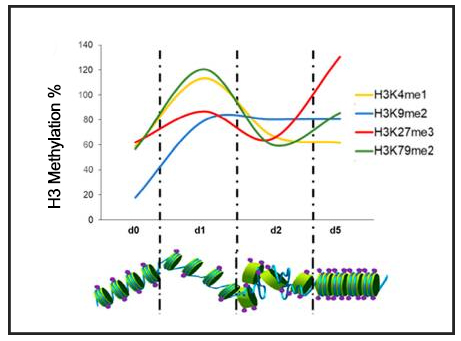

Graphical representation of overlapping relationship between H3 methylation changes (H3K4me1, H3K9me2, H3K27me3, H3K79me2) and global DNA methylation state, during differentiation. [Piro MC et. al. PMC10419041]

You May Also Want to Read:

  • Therapeutic Targeting of Histone Modifications: Insights from the Experts
  • Histone Modification Protocol
  • Histone Modification Enzymes: Exploring the Writers and Erasers

To expand the applicability of their findings to cancer, the researchers examined skin biopsy specimens from patients with basal cell carcinoma (basalioma), a common type of skin cancer. Using immunofluorescence analysis with specific antibodies, they compared the levels of distinct histone modifications, including H3K9me2 (Cat # A-4035), H3K27me3 (Cat # A-4039), H3K79me2 (Cat # A-4044), and H3K79me3 (Cat # A-4045) in both cancerous and healthy tissue regions. The striking differences in histone modification patterns suggest the potential utility of these epigenetic marks as indicators of cancerous tissue.
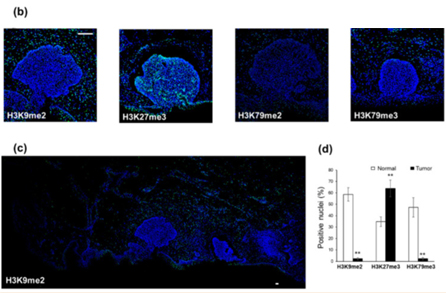


b) Immunostaining of basalioma biopsies with H3K9me2, H3K27me3, H3K79me2, and H3K79me3 antibodies. c) 4x magnification image of H3K9me2 antibody staining. d) Quantitative analysis of positive nuclei for H3K9me2, H3K27me3, and H3K79me3 from immunofluorescence images. [Piro MC et. al. PMC10419041]

Their investigation also encompassed other cancer types, such as head and neck tumors and urothelial bladder carcinoma. This extensive analysis consistently uncovered noteworthy modifications in histone patterns associated with cancer. Additionally, they identified robust correlations between specific histone marks, notably H3K9me2 and H3K79me3, within cancerous tissues.

Bioinformatics was used to gain a deeper understanding of the biological mechanisms underlying differences in H3 marks. The research team scrutinized 14 enzymes responsible for modifying H3K9 and H3K79 histone marks in cancer relative to normal tissues, with a focus on enzymes that write (methyltransferases), read, and erase (demethylases) histone marks. This approach sheds light on potential regulatory pathways that contribute to the observed patterns of histone modifications in cancer. It also supports the notion that elevated global levels of H3K9me2 and H3K79me3, present in normal differentiated cells but absent in malignancy, may play a role in safeguarding against the development of tumors.

Overall, the results from this study emphasize the significance of H3K9me2 and H3K79me3 as critical epigenetic factors that help preserve normal cell identity and act as protective measures against cancer development. When these epigenetic marks are downregulated in cancer tissues, it signifies a loss of cellular differentiation. The study observed that H3K27me3 levels exhibited variations depending on the type of tumor, suggesting it may not consistently serve as an epigenetic barrier. Nonetheless, the correlation between H3K9me2 and H3K79me3 underscores their combined role in maintaining cellular differentiation. These epigenetic marks may serve as valuable diagnostic indicators and potential targets for therapeutic interventions aimed at restoring a normal epigenome in cancer.

Source: Piro MC et. al. (July 2023). In Vivo Identification of H3K9me2/H3K79me3 as an Epigenetic Barrier to Carcinogenesis. Int J Mol Sci. 24(15).


Epigenetic Resources
  • DNA Damage & Repair
  • DNA Methylation»
  • RNA Methylation»
  • Chromatin Remodeling»
  • Histone Modifications»
  • Gene Editing
  • Miscellaneous
  • Weekly Research Showcase

Suggested Reads:

Enhancer Activation and H3K27ac in Cell-State Plasticity
m6A RNA Methylation in Cancer Immunity and Therapeutic Resistance
cfDNA Methylation in Liquid Biopsy Research: Where Global 5-mC, 5-hmC, Enrichment, and RRBS Readouts Fit
Understanding Open Chromatin Bias in CUT&RUN and CUT&Tag
Company
About Epigentek
Press Releases
Events Calendar
Corporate Sustainability
Career Opportunities
What Is Epigenetics?
Contact Us
Ordering
Ordering Info & Return Policy
Distributors & Resellers

Support
Technical Support
Download Datasheets
Resource Bulletins
Promotions & Offers
Current Promotions
New Lab Startup Program
Risk-Free Testing: Pioneer Program
Rewards Program
Product Reviews
Application Guarantee
Sign Up For Exclusive Offers
Request a Quote
Stay Informed


Terms & Conditions | Privacy Policy | Site Map
Copyright © EpigenTek Group Inc. All rights reserved.
  • Stay Informed:
Terms & Conditions | Privacy Policy Copyright © EpiGentek