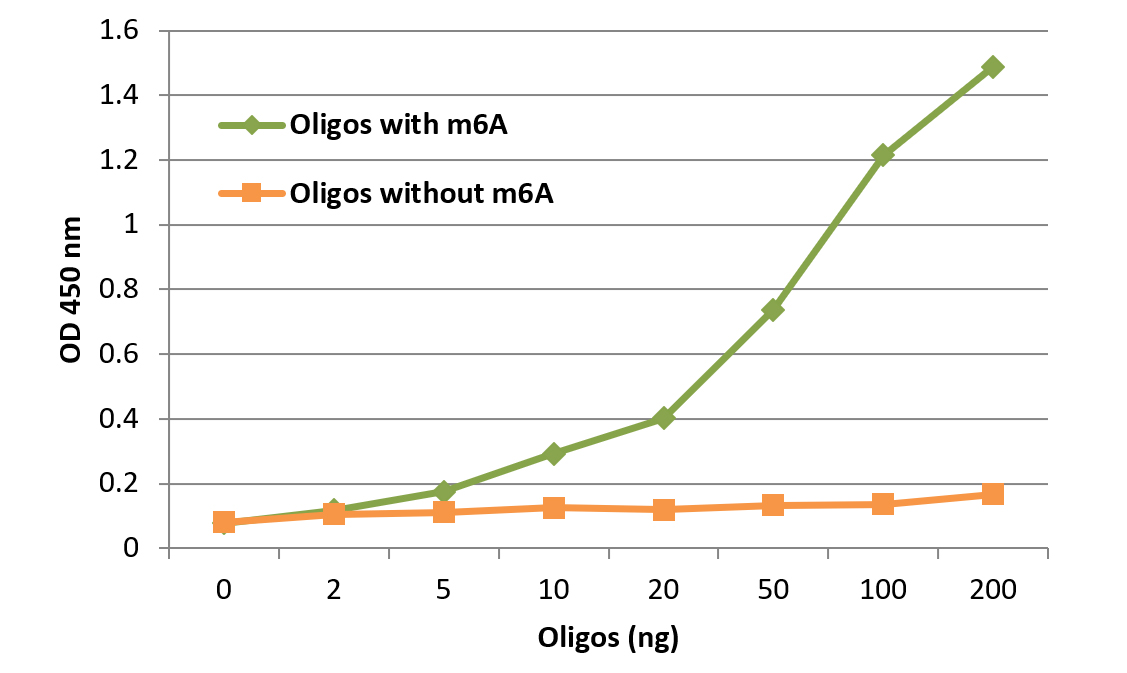
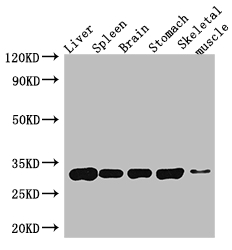
BackgroundDiscovered in the 1970s, m6A is the most prevalent internal modification in polyadenylated mRNAs and long non-coding RNAs (lncRNAs) in higher eukaryotes. m6A is widely conserved among eukaryotic species that range from yeast, plants, flies to mammals, as well as among viral RNAs with a nuclear phase. The m6A-based modification is associated with a well-defined RNA motif, RRACH (R: A/G, H: A/C/U). As a representative of the epitranscriptome, m6A mRNA modifications participate in many vital activities in the cell, including stem cell self-renewal and differentiation, mRNA transcription, alternative splicing, nuclear export, translation, degradation, and microRNA processing. These processes determine the expression or inactivation of specific genes, which is vital for growth and development. (PMID: 30416848; PMID: 24662220; PMID: 30429466)
DescriptionN6-methyladenosine / m6A Monoclonal Antibody. Unconjugated. Raised in: Mouse.
FormulationBuffer: PBS containing 50% glycerol, preserved with proclin300 or sodium azide, pH 7.3.
SpecificitySpecies independent
IsotypeIgG1, Kappa
PurificationAffinity Purified
ImmunogenChemical compounds corresponding to N6-methyladenosine / m6A.
StorageStore at -20°C. Avoid freeze / thaw cycles.
Alternative NamesN6-methyladenosine; m6A; N6-methyladenosine / m6A
ApplicationDB, ELISA; Recommended dilution: DB, 1:500 - 1:2000; ELISA, Recommended starting concentration is 1 µg/mL. Please optimize the concentration based on your specific assay requirements.