Background
Mediates the post-translational oxidative deamination of lysine residues on target proteins leading to the formation of deaminated lysine (allysine). When secreted in extracellular matrix, promotes cross-linking of extracellular matrix proteins by mediating oxidative deamination of peptidyl lysine residues in precursors to fibrous collagen and elastin. Acts as a regulator of sprouting angiogenesis, probably via collagen IV scaffolding. When nuclear, acts as a transcription corepressor and specifically mediates deamination of trimethylated 'Lys-4' of histone H3 (H3K4me3), a specific tag for epigenetic transcriptional activation. Involved in epithelial to mesenchymal transition (EMT) via interaction with SNAI1 and participates in repression of E-cadherin, probably by mediating deamination of histone H3. Also involved in E-cadherin repression following hypoxia, a hallmark of epithelial to mesenchymal transition believed to amplify tumor aggressiveness, suggesting that it may play a role in tumor progression. Acts as a regulator of chondrocyte differentiation, probably by regulating expression of factors that control chondrocyte differentiation.
Description
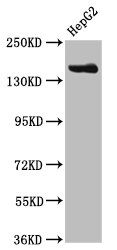
LOXL2 Recombinant Monoclonal Antibody [2E5]. Unconjugated. Raised in: HEK293F Cell.
Formulation
Buffer: Rabbit IgG in phosphate buffered saline, pH 7.4, 150mM NaCl, 0.02% sodium azide and 50% glycerol.
Specificity
Human, Mouse, Rat
Isotype
Rabbit IgG
Uniprot ID
Q9Y4K0
Purification
Affinity Chromatography
Immunogen
A synthesized peptide derived from human LOXL2
Storage
Upon receipt, store at -20°C or -80°C. Avoid repeated freeze.
Alternative Names
Lysyl oxidase homolog 2 (EC 1.4.3.13) (Lysyl oxidase-like protein 2) (Lysyl oxidase-related protein 2) (Lysyl oxidase-related protein WS9-14), LOXL2
Application
ELISA, WB, IHC, IF, FC; Recommended dilution: WB:1:500-1:5000, IHC:1:50-1:200, IF:1:20-1:200, FC:1:20-1:200
 Our single B-cell derived recombinant rabbit monoclonal antibodies have vastly improved reliability and reproducibility.
» 20% off with code
Our single B-cell derived recombinant rabbit monoclonal antibodies have vastly improved reliability and reproducibility.
» 20% off with code