SpeedRun One-Hour TET1 ELISA Kit (Colorimetric)
Epigenase 5mC-Hydroxylase TET Activity/Inhibition Assay Kit (Colorimetric)
TET1 Protein (Active)
EpiQuik Nuclear Extraction Kit
EpiQuik DNA Methyltransferase (DNMT) Activity/Inhibition Assay Kit
TUBA3E Polyclonal Antibody
The SpeedRun™ One-Hour TET1 ELISA Kit (Colorimetric) is a complete set of optimized reagents designed for measuring TET1 levels using nuclear extracts or purified TET1 proteins from a broad range of species, including human, mouse, and rabbit. Nuclear extracts can be prepared from a variety of sample types, including cultured cells and fresh or frozen tissues. The kit has the following advantages and features:
Background Information The TET family of 5mC hydroxylases includes TET1, TET2 and TET3. These TET proteins may promote DNA demethylation by binding to CpG-rich regions to prevent unwanted DNA methyltransferase activity, and by converting 5mC to 5hmC and further to 5-carboxylcytosine (5-caC) through hydroxylase activity. It was shown that genomic 5hmC level correlates to TET hydroxylase activity. In addition, TET1 was shown to have dual functions in transcription activation and repression by binding different target genes in ES cells. TET1 is also a fusion partner of the MLL gene in acute myeloid leukemia and is considered an oncoprotein. Thus, detecting oncoprotein TET enzymes such as TET1 would be important in benefiting cancer diagnostics and developing new target-based cancer therapeutics.
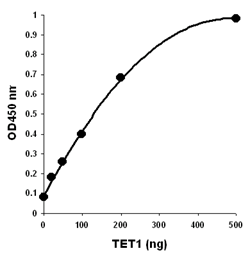
Principle & Procedure The kit contains all reagents necessary for the quantification of TET1 levels. In this assay, TET1 in nuclear extracts or purified protein samples is bound to strip wells using a high binding buffer. TET1 is detected using the TET1 Detection Complex and then quantified colorimetrically by reading the absorbance in a microplate spectrophotometer. The TET1 level is proportional to the OD intensity measured.
Starting Materials Input materials can be nuclear extracts or purified TET1 proteins. The amount of nuclear extract for each assay can range from 1 to 2 µg. The amount of purified TET1 protein can range from 1 to 50 ng, with an optimal range of 5 to 10 ng depending on protein purity.