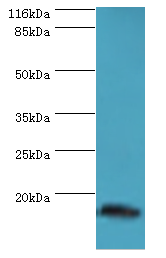
Background
This gene is a member of the septin family of nucleotide binding proteins, originally described in yeast as cell division cycle regulatory proteins. Septins are highly conserved in yeast, Drosophila, and mouse, and appear to regulate cytoskeletal organization. Disruption of septin function disturbs cytokinesis and results in large multinucleate or polyploid cells. This gene is highly expressed in brain and heart. Alternatively spliced transcript variants encoding different isoforms have been described for this gene. One of the isoforms (known as ARTS) is distinct; it is localized to the mitochondria, and has a role in apoptosis and cancer.
Description
Septin 4 Polyclonal Antibody. Unconjugated. Raised in: Rabbit.
Formulation
Buffer: PBS containing 50% glycerol, preserved with proclin300 or sodium azide, pH 7.3.
Specificity
Human, Mouse, Rat
Isotype
IgG
Uniprot ID
O43236
Purification
Affinity Purified
Immunogen
Recombinant protein (or fragment). Please contact EpigenTek for more information.
Storage
Store at -20°C. Avoid freeze / thaw cycles.
Alternative Names
H5; ARTS; MART; SEP4; CE5B3; SEPT4; PNUTL2; hucep-7; BRADEION; C17orf47; hCDCREL-2; Septin 4
Application
WB, IHC-P, IF/ICC, ELISA; Recommended dilution: WB, 1:1000; IHC-P, 1:200; IF/ICC, 1:100; ELISA, 1:1000-1:2000
 Our single B-cell derived recombinant rabbit monoclonal antibodies have vastly improved reliability and reproducibility.
» 20% off with code
Our single B-cell derived recombinant rabbit monoclonal antibodies have vastly improved reliability and reproducibility.
» 20% off with code