LoadingLoading
  • Browse By Category

  • Products
  • Services
  • Support
  • Corporate
  • Back
  • Products

  • Antibodies
  • Instruments
  • Research Kits
  • Proteins & Enzymes
  • Peptides
  • Back
  • Antibodies

  • Primary Antibodies
  • Secondary Antibodies
  • Tag Antibodies
  • Antibody Panel Packs
  • Back
  • Primary Antibodies

  • Cell Structure & Function Antibodies
  • RNA Processing & Modification Antibodies
  • Chromatin & Transcription Antibodies
  • Other Primary Antibodies
  • Histone Modification Antibodies
  • Signal Transduction Antibodies
  • Metabolism Antibodies
  • Immunology & Inflammation Antibodies
  • COVID-19 Antibodies
  • DNA Methylation & Regulator Antibodies
  • Back
  • Cell Structure & Function Antibodies

  • DNA Damage & Repair Antibodies
  • Apoptosis & Cell Death Antibodies
  • Cell Cycle Antibodies
  • Cellular Structure Antibodies
  • Trafficking Antibodies
  • Back
  • RNA Processing & Modification Antibodies

  • RNA Methylation Antibodies
  • RNA Processing Antibodies
  • Back
  • Chromatin & Transcription Antibodies

  • DNA Replication & Transcription Antibodies
  • Chromatin Remodeling Antibodies
  • Cell Growth Antibodies
  • Development & Differentiation Antibodies
  • Back
  • Histone Modification Antibodies

  • Histone Methylation (Lysine) Antibodies
  • Histone Acetylation Antibodies
  • Histone Phosphorylation Antibodies
  • Ubiquitination & SUMOylation Antibodies
  • Histone Methylation (Arginine) Antibodies
  • Other Histone Methylation Antibodies
  • Other Histone Acetylation Antibodies
  • Histone Deacetylation Antibodies
  • Other Histone Antibodies
  • Back
  • Signal Transduction Antibodies

  • Cell Surface Receptor & Kinase Antibodies
  • Intracellular Kinase & Adaptor Protein Antibodies
  • Phosphatase Antibodies
  • Secreted Growth Factor Antibodies
  • Back
  • Metabolism Antibodies

  • Glucose Metabolism Antibodies
  • Lipid Metabolism Antibodies
  • Protein Metabolism Antibodies
  • Nucleotide Metabolism Antibodies
  • Back
  • Immunology & Inflammation Antibodies

  • Cell Marker & Receptor Antibodies
  • Cytokine Antibodies
  • Other Immunology Antibodies
  • Back
  • DNA Methylation & Regulator Antibodies

  • DNA Methylation Antibodies
  • DNA Regulator Antibodies
  • Back
  • Antibody Panel Packs

  • Histone Modification Antibody Panels
  • DNA Methylation Antibody Panels
  • Back
  • Instruments

  • Sonication Devices
  • Magnets & Sample Mixers
  • Back
  • Research Kits

  • DNA Methylation
  • Chromatin & Transcription
  • Histone Methylation
  • Histone Acetylation
  • Gene Editing & Silencing
  • Sample Preparation
  • DNA/RNA Damage & Repair
  • Library Preparation
  • RNA Methylation
  • Other Histone Modifications
  • COVID-19 Kits
  • Protein-RNA Interaction
  • Back
  • DNA Methylation

  • DNA Bisulfite Conversion
  • Global DNA Methylation Quantification
  • DNA Methyltransferase & Demethylase Assays
  • Methylated DNA Immunoprecipitation
  • Methylated DNA Amplification
  • Back
  • Chromatin & Transcription

  • Chromatin Immunoprecipitation
  • In Vitro Protein-DNA Interaction
  • Chromatin Accessibility
  • Back
  • Histone Methylation

  • Histone Methyltransferase Assay
  • Histone Methylation Quantification
  • Histone Demethylase Assay
  • Back
  • Histone Acetylation

  • Histone Acetyltransferase (HAT) Assay
  • Histone Deacetylase (HDAC) Assay
  • Histone Acetylation Quantification
  • Back
  • Sample Preparation

  • DNA Extraction
  • Nuclear Extraction
  • Chromatin Extraction
  • RNA Extraction
  • Histone Extraction
  • Whole Cell Extraction
  • Back
  • Library Preparation

  • DNA-based Library Preparation
  • RNA-based Library Preparation
  • Chromatin-based Library Preparation
  • Back
  • Other Histone Modifications

  • Sumoylation
  • Histone Phosphorylation Assay
  • Histone Citrullination
  • Back
  • Proteins & Enzymes

  • DNA Methylation/Demethylation Proteins
  • Methylated DNA Binding Proteins
  • Unmodified Histone Proteins
  • Chromatin Binding/Transcription Proteins
  • ADP Ribose Proteins
  • DNA Damage & Repair Proteins
  • Modified Histone Proteins
  • COVID-19 Proteins
  • Back
  • DNA Methylation/Demethylation Proteins

  • DNA Demethylation Proteins
  • DNA Methylation Proteins
  • Back
  • Modified Histone Proteins

  • Histone Methylation Proteins
  • Histone Demethylation Proteins
  • Histone Acetylation Proteins
  • Histone Deacetylation Proteins
  • Histone Phosphorylation Proteins
  • Histone Sumoylation Proteins
  • Back
  • Peptides

  • Histone Methylation Peptides
  • Histone Acetylation Peptides
  • Histone Phosphorylation Peptides
  • Back
  • Services

  • DNA-based NGS Services
  • Chromatin-based NGS Services
  • qPCR-based Services
  • ELISA-based Services
  • Back
  • DNA-based NGS Services

  • Reduced Representation Bisulfite Sequencing (RRBS)
  • Whole Genome Bisulfite Sequencing (WGBS)
  • Targeted Bisulfite Sequencing
  • Back
  • Chromatin-based NGS Services

  • ChIP Sequencing (Histone Modifications)
  • Back
  • qPCR-based Services

  • Methylation-Specific qPCR (MSP)
  • Back
  • ELISA-based Services

  • Global DNA 5-mC Quantification
  • Global DNA 5-hmC Quantification
  • Global RNA 5-mC Quantification
  • Global RNA m6A Quantification
  • Histone Modification Quantification
  • Back
  • Support

  • Technical Support
  • Quality Assurance
  • Resources
  • Back
  • Technical Support

  • Submit Support Ticket
  • Back
  • Quality Assurance

  • Epigentek Gurantee
  • Risk-Free Testing: Pioneer Program
  • Product Review Program
  • Back
  • Resources

  • Epigenetics Newsletter
  • Intro to Epigenetics
  • What is Epigenetics?
  • Back
  • Corporate

  • Company Information
  • Procurement
  • Communication
  • Back
  • Company Information

  • About Epigentek
  • Press Release
  • Career Opportunities
  • Back
  • Procurement

  • Ordering Information
  • New Lab Startup Program
  • Distributors & Resellers
  • Back
  • Communication

  • Contact Us
  • Customer Feedback Survey
  • Events Calendar
Epigentek Home
Cart (0)
Datasheet
Track
Account
  • Products

    Research Kits

    • DNA Methylation
      • Global DNA Methylation Quantification
      • DNA Bisulfite Conversion
      • Methylated DNA Immunoprecipitation
      • DNMT & DNA Demethylase Assay
      • Methylated DNA Amplification
    • RNA Methylation
      • Global RNA Methylation Quantification
      • Transcriptome-Specific RNA Methylation
      • RNA Methylation Activity/Inhibition
    • Chromatin & Transcription
      • Chromatin Immunoprecipitation
      • CUT&RUN-Fast and more
      • Chromatin Accessibility
      • In Vitro Protein-DNA Interaction
    • Histone Modification
      • Histone Methylation Quantification
      • Histone Methytransferase (HMT) Assay
      • Histone Demethylase (KDM) Assay
      • Histone Acetylation Quantification
      • Histone Acetylase (HAT) Assay
      • Histone Deacetylase (HDAC) Assay
      • Histone Citrullination
      • Histone Phosphorylation
      • Histone SUMOylation
    • Protein-RNA Interaction
    • DNA/RNA Damage & Repair
      • Oxidative Cell Damage
      • Oxidative DNA/RNA Damage
    • Gene Editing & Silencing
    • Library Preparation
      • DNA-Related Library Preparation
      • RNA-Related Library Preparation
      • Chromatin-Related Library Preparation
    • Sample Preparation
      • DNA Extraction
      • RNA Extraction
      • Chromatin Extraction
      • Histone Extraction
      • Nuclear Extraction
      • Whole Cell Extraction

    Antibodies

    • DNA Modification & Regulators
      • DNA Methylation
      • DNA Regulators
    • Histone Modification
      • Histone Methylation (Lysine)
      • Histone Methylation (Arginine)
      • Other Histone Methylation
      • Histone Acetylation
      • Histone Deacetylation
      • Other Histone Acetylation
      • Histone Phosphorylation
      • Ubiquitination & SUMOylation
      • Other Histone Antibodies
    • RNA Modification & Processing
      • RNA Methylation
      • RNA Processing
    • Chromatin & Transcription
      • Chromatin Remodeling
      • DNA Replication & Transcription
      • Cell Growth
      • Development & Differentiation
    • Cell Structure & Function
      • Cell Cycle
      • DNA Damage & Repair
      • Apoptosis & Cell Death
      • Cellular Structure
      • Trafficking
    • Signal Transduction
      • Cell Surface Receptor & Kinase
      • Intracellular Kinase & Adaptor Protein
      • Phosphatase
      • Secreted Growth Factor
    • Metabolism
      • Glucose Metabolism
      • Lipid Metabolism
      • Protein Metabolism
      • Nucleotide Metabolism
    • Immunology & Inflammation
      • Cell Marker & Receptor
      • Cytokine
      • Other Immunology Antibodies
    • Other Primary Antibodies

    • Secondary Antibodies
    • Tag Antibodies
    • Antibody Panel Packs
      • Histone Modification Panel
      • DNA Methylation Panel

    Proteins & Enzymes

    • DNA Methylation
      • DNA Methylation
      • DNA Demethylation
    • Modified Histones
      • Histone Methylation
      • Histone Demethylation
      • Histone Acetylation
      • Histone Deacetylation
      • Histone Phosphorylation
      • Histone SUMOylation
    • Unmodified Histones
    • Methylated DNA Binding
    • ADP Ribose
    • Chromatin Binding/Transcription
    • DNA Damage & Repair

    Peptides

    • Histone Methylation
    • Histone Acetylation/Deacetylation
    • Histone Phosphorylation

    Instruments

    • Sonication Devices
    • Magnets & Sample Mixers

    COVID-19 Assays

    • COVID-19 Kits
    • COVID-19 Antibodies
    • COVID-19 Proteins
  • Services

    DNA-based NGS Services

    • Reduced Representation Bisulfite Sequencing (RRBS)
    • Whole Genome Bisulfite Sequencing (WGBS)

    Chromatin-based NGS Services

    • ChIP-Seq

    ELISA-based Services

    • Global DNA 5-mC Quantification
    • Global DNA 5-hmC Quantification
    • Global RNA m6A Quantification
    • Global RNA 5-mC Quantification
    • Histone Modification Quantification
    RRBS Services
  • Support

    Technical Support

    • Submit Support Ticket
    • Download Datasheet

    Resource Bulletins

    • DNA Methylation
    • RNA Methylation
    • Chromatin Remodeling
    • Histone Modifications
    • Gene Editing
    • Miscellaneous
    • Weekly Research Showcase
  • Ordering

    Procurement

    • Ordering Info & Return Policy
    • Distributors & Resellers
    • Request a Quote
    • Application Guarantee

    Promotions

    • Current Promotional Offers
    • New Lab Startup Program
    • Risk-Free Testing: Pioneer Program
    • Rewards Program
    • Product Review Program

    Company Information

    • About Us
    • Corporate Sustainability
    • Press Releases
    • Events Calendar
    • Career Opportunities
    • Contact Us
 
EpiGentek Guarantee
   Home  »  Epigenetic Resources  »  Improving MeRIP with CUT&RUN Technology 
  Quick Order      Quote Lookup

Improving MeRIP with CUT&RUN Technology


m6A: “The fifth RNA base”

N6-methyladenosine, or m6A, is the most common and abundant eukaryotic RNA modification, accounting for over 80% of all RNA methylation.  It can be found mainly in mRNA, but is also observed in non-coding species like tRNA, rRNA, and miRNA.  Through interactions with various binding proteins called “readers”, m6A affects virtually every facet of ribonucleic acid biology: structure, splicing, localization, translation, stability, and turnover [1].  Aside from this central role in RNA metabolism, m6A is a factor in other physiological processes such as cell differentiation, immunity, inflammation, and the circadian clock [2].  Abnormal m6A methylation has been implicated in diverse pathologies: diabetes, obesity, neurodegeneration, and cancer, to name a few.  The formation of m6A RNA appears to be a co-transcriptional event occurring early on in the RNA lifecycle and is mediated by a multi-protein methyltransferase complex.

rna methylation ELISA category learn more

Mapping the m6A epitranscriptome

Several methods are available for epitranscriptome-wide m6A mapping:

MeRIP-seq.

The development of methylated RNA immunoprecipitation sequencing (MeRIP-seq) was a landmark in the field of epitranscriptomics as it was the first method to detect m6A on a transcriptome-wide level [3].  MeRIP-seq couples m6A RNA immunoprecipitation with NGS, providing for the high-throughput localization of modified sites from enriched m6A-containing RNA fragments that have been precipitated by a specific antibody, reverse-transcribed, and sequenced. The fragment sizes generated during the random fragmentation step preceding immunoprecipitation limit the precise mapping of the m6A site to within a ~200 nt stretch.  The choice of antibody allows MeRIP-seq to be adapted toward the study of other modified RNA types (e.g., 5hmC RNA [4]).
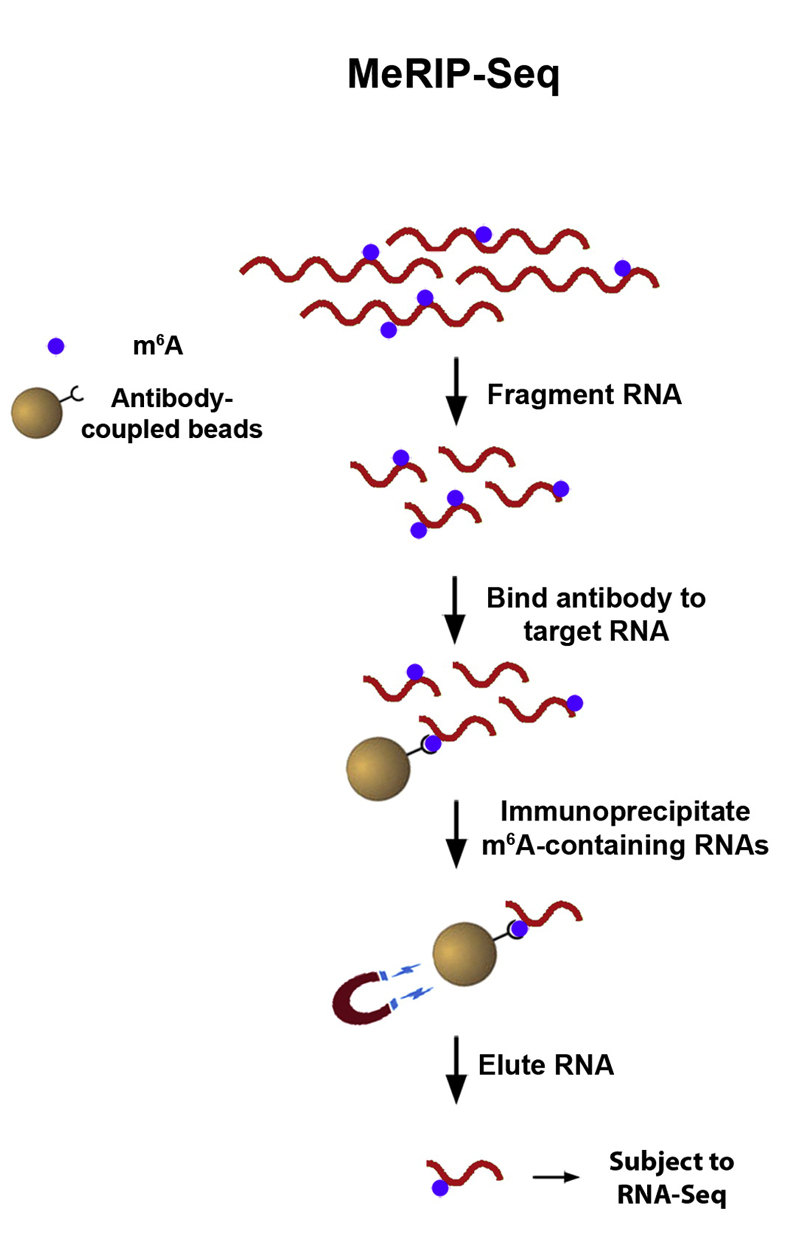
Schematic of the MeRIP-seq protocol-2

Schematic of the MeRIP-seq protocol [3].

miCLIP. 

m6A individual-nucleotide resolution crosslinking and immunoprecipitation (miCLIP) was developed to address the disadvantages associated with MeRIP-seq approaches regarding the mapping of m6A RNA sites at individual-nucleotide resolution [5].  The key feature of this method is the UV-crosslinking of immunoprecipitated RNA fragments to the capture antibody.  Antibody remnants at the crosslinking site on the RNA after Proteinase K treatment induce signature mutations (truncations and C→T transitions) during cDNA synthesis that can be identified by sequencing and used to more precisely map the specific m6A location.  These antibody-induced mutational signatures have also been successfully applied to the mapping of m6Am RNA modifications.

You May Also Want to Read:

  • Detecting m6A Methylase and Demethylase Activity
  • How CUT&RUN Helps Improve Methylated RNA Immunoprecipitation
  • High Quality Antibodies for your RNA Methylation Research Needs

PA-m6A-seq.

Photo-crosslinking-assisted m6A sequencing (PA-m6A-seq) is an alternative UV-based strategy that was fashioned for high-resolution (~23 nts) transcriptome-wide m6A mapping [6].  This method employs a photoreactive ribonucleoside crosslinker to induce a signature mutation for localizing m6A, akin to miCLIP.  The uridine analogue 4-thiouridine (4SU) is incorporated into sample RNA.  Full-length, unfragmented, 4SU-labeled RNA molecules are then immunoprecipitated with an anti-m6A antibody, and UV irradiation is applied to establish covalent crosslinks between m6A-bound antibody and neighboring 4SU.  Crosslinked RNA is digested with RNase T1 to yield ~30 nt-long fragments that are further processed for library preparation and sequencing, whereby crosslink-generated T→C transitions adjacent to the m6A sites can be identified.

eTAM-seq.

Evolved TadA-assisted N6-methyladenosine sequencing (eTAM-seq) is the latest addition to the researcher’s m6A profiling toolbox [7].  eTAM-seq detects and quantifies m6A via global adenosine deamination, a process that converts all unmethylated A into I, which is subsequently read as G, while m6A remains unaffected.  The A-to-I conversion is facilitated by a distinctive variant (TadA8.20) of the E. coli TadA enzyme that maintains RNA integrity and thus minimizes sample loss to a greater extent when compared with harsher chemical deamination.  Given the novelty of this enzyme-assisted sequencing technology and lack of in-depth characterization, several concerns still require attention, including time-consuming protocol; sensitivity (eTAM-seq is less sensitive to lowly methylated A sites); enzyme accessibility (eTAM-seq may not be applicable for highly structured RNA, and has high sequence bias); enzyme specificity (the TadA8.20 deaminase may not convert non-m6A adenosine modifications); and high cost.  eTAM-seq is currently not available commercially.

Cutting through the background noise

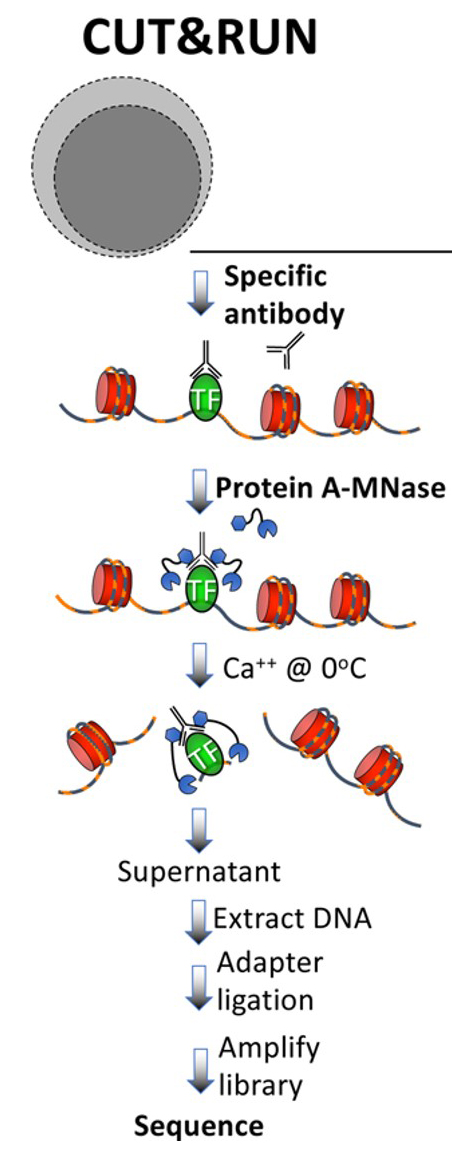
Cleavage under targets and release using nuclease (CUT&RUN) is a recent innovation in the study of protein/DNA interactions, designed to tackle the limitations of the popular ChIP-seq technique, namely, the need for a large amount of starting material, long protocol time, and limited resolution. This novel method, which is performed in situ on intact cells without fixation, entails cleavage of chromatin at specific sites by a unique fusion protein and the subsequent, direct capture of protein-DNA complexes. The fusion protein consists of: 1) a cleavage domain (e.g., micrococcal nuclease, or MNase); and 2) a protein A/G (pAG) domain that binds to an antibody against the protein of interest.
Schematic of the MeRIP-seq protocol-1

Schematic of the CUT&RUN protocol [8].

During the procedure, the antibody specifically captures the target protein.  The pAG-MNase fusion protein then binds to the antibody and cleaves the chromatin at the protein-DNA interaction site, resulting in the release of the protein-DNA complex from the chromatin.  The CUT&RUN method eliminates interference from crosslinking and yields shorter-length DNA fragments, allowing for reduced background signals.

MeRIP with CUT&RUN for increased sensitivity

Established methods used for epitranscriptome-wide m6A mapping like MeRIP-seq, PA-m6A-seq, and miCLIP have either been widely used but are unable to achieve high resolution in m6A profiling; or improve the profiling resolution but suffer from poor reproducibility and a complicated process. In particular, they are time-consuming (>2 days) and costly.

To address these issues, EpigenTek has pioneered an improved method: cleavage under target and recover using nuclease for m6A enrichment (CUT&RUN m6A MeRIP) [9-18].  This innovative approach, the first of its kind, combines the advantages of MeRIP-seq and miCLIP with CUT&RUN technology for higher enrichment, lower input, reduced background, and a faster, more streamlined procedure. CUT&RUN m6A MeRIP uses a state-of-the-art RNA cleavage enzyme mix to simultaneously fragment immunocaptured RNA and cleave/remove any RNA sequences in both ends of the target m6A-containing sequences without affecting RNA regions occupied by the antibody.  Short RNA fragments are consequently generated only bound with anti-m6A antibody.  True target m6A-enriched regions can therefore be reliably identified, and high-resolution mapping achieved.
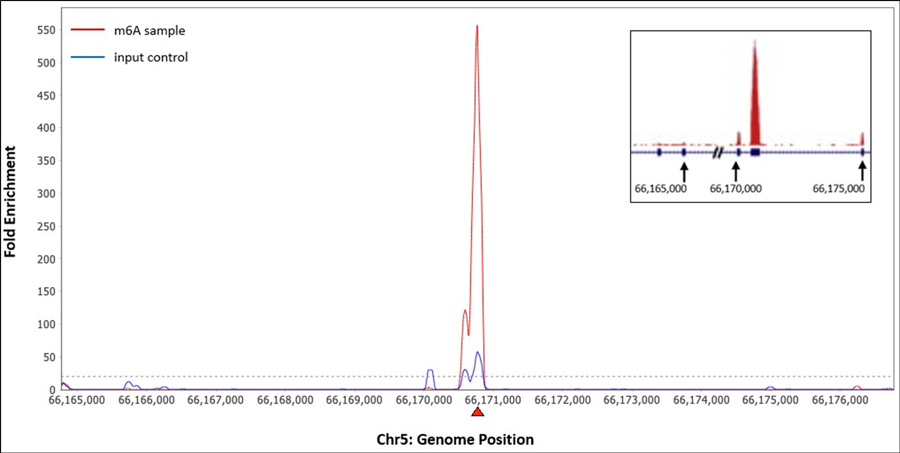
m6A peak distribution

The m6A peak distribution from samples processed with CUT&RUN m6A MeRIP correlates well with expected regions as shown in published data (Inset; see Ref 3).


References:

  1. Zaccara S, Ries RJ, Jaffrey SR. Reading, writing and erasing mRNA methylation. Nat Rev Mol Cell Biol. 2019;20(10):608-624. doi:10.1038/s41580-019-0168-5
  2. Hastings MH. m(6)A mRNA methylation: a new circadian pacesetter. Cell. 2013;155(4):740-741. doi:10.1016/j.cell.2013.10.028
  3. Meyer KD, Saletore Y, Zumbo P, Elemento O, Mason CE, Jaffrey SR. Comprehensive analysis of mRNA methylation reveals enrichment in 3' UTRs and near stop codons. Cell. 2012;149(7):1635-1646. doi:10.1016/j.cell.2012.05.003
  4. Delatte B, Wang F, Ngoc LV, et al. RNA biochemistry. Transcriptome-wide distribution and function of RNA hydroxymethylcytosine. Science. 2016;351(6270):282-285. doi:10.1126/science.aac5253
  5. Linder B, Grozhik AV, Olarerin-George AO, Meydan C, Mason CE, Jaffrey SR. Single-nucleotide-resolution mapping of m6A and m6Am throughout the transcriptome. Nat Methods. 2015;12(8):767-772. doi:10.1038/nmeth.3453
  6. Chen K, Lu Z, Wang X, et al. High-resolution N(6) -methyladenosine (m(6) A) map using photo-crosslinking-assisted m(6) A sequencing. Angew Chem Int Ed Engl. 2015;54(5):1587-1590. doi:10.1002/anie.201410647
  7. Xiao YL, Liu S, Ge R, et al. Transcriptome-wide profiling and quantification of N6-methyladenosine by enzyme-assisted adenosine deamination [published online ahead of print, 2023 Jan 2]. Nat Biotechnol. 2023;10.1038/s41587-022-01587-6. doi:10.1038/s41587-022-01587-6
  8. Kaya-Okur HS, Janssens DH, Henikoff JG, Ahmad K, Henikoff S. Efficient low-cost chromatin profiling with CUT&Tag. Nat Protoc. 2020;15(10):3264-3283. doi:10.1038/s41596-020-0373-x
  9. Pan XY, Bi YH, Cheng M, et al. METTL3 facilitates hepatic fibrosis progression via m6A-YTHDF2 dependent silencing of GPR161. Preprint. bioRxiv. 2021; 2021.12.15.472749. Published 2021 Dec 15. doi:10.1101/2021.12.15.472749
  10. Huang J, Sun W, Wang Z, et al. FTO suppresses glycolysis and growth of papillary thyroid cancer via decreasing stability of APOE mRNA in an N6-methyladenosine-dependent manner. J Exp Clin Cancer Res. 2022;41(1):42. Published 2022 Jan 28. doi:10.1186/s13046-022-02254-z
  11. Zhou T, Chen G, Chen M, et al. Direct Full-Length RNA Sequencing Reveals an Important Role of Epigenetics During Sexual Reversal in Chinese Soft-Shelled Turtle. Front Cell Dev Biol. 2022;10:876045. Published 2022 Mar 25. doi:10.3389/fcell.2022.876045
  12. Ji X, Sun W, Lv C, et al. ALKBH5-induced circRNA NRIP1 promotes glycolysis in thyroid cancer cells by targeting the miR-541-5p/PKM2 and miR-3064-5p/PKM2 axes. Preprint. Res Sq. 2022;rs.3.rs-1493404. Published 2022 Apr 4. doi:10.21203/rs.3.rs-1493404/v1
  13. Chen YH, Jiang T, Fan BY, et al. Transcriptome-wide N6-methyladenosine methylome profiling of Bombyx mori reveals a potential mechanism of epigenetic regulation on diapause. Preprint. Res Sq. 2022;rs.3.rs-1561012. Published 2022 Apr 18. doi:10.21203/rs.3.rs-1561012/v1
  14. Xu C, Huang H, Zhang M, et al. Methyltransferase-Like 3 Rescues the Amyloid-beta protein-Induced Reduction of Activity-Regulated Cytoskeleton Associated Protein Expression via YTHDF1-Dependent N6-Methyladenosine Modification. Front Aging Neurosci. 2022;14:890134. Published 2022 Apr 25. doi:10.3389/fnagi.2022.890134
  15. Wang X, Lu X, Wang P, et al. SRSF9 promotes colorectal cancer progression via stabilizing DSN1 mRNA in an m6A-related manner. J Transl Med. 2022;20(1):198. Published 2022 May 4. doi:10.1186/s12967-022-03399-3


Epigenetic Resources
  • DNA Damage & Repair
  • DNA Methylation»
  • RNA Methylation»
  • Chromatin Remodeling»
  • Histone Modifications»
  • Gene Editing
  • Miscellaneous
  • Weekly Research Showcase

Suggested Reads:

Enhancer Activation and H3K27ac in Cell-State Plasticity
m6A RNA Methylation in Cancer Immunity and Therapeutic Resistance
cfDNA Methylation in Liquid Biopsy Research: Where Global 5-mC, 5-hmC, Enrichment, and RRBS Readouts Fit
Understanding Open Chromatin Bias in CUT&RUN and CUT&Tag
Company
About Epigentek
Press Releases
Events Calendar
Corporate Sustainability
Career Opportunities
What Is Epigenetics?
Contact Us
Ordering
Ordering Info & Return Policy
Distributors & Resellers

Support
Technical Support
Download Datasheets
Resource Bulletins
Promotions & Offers
Current Promotions
New Lab Startup Program
Risk-Free Testing: Pioneer Program
Rewards Program
Product Reviews
Application Guarantee
Sign Up For Exclusive Offers
Request a Quote
Stay Informed


Terms & Conditions | Privacy Policy | Site Map
Copyright © EpigenTek Group Inc. All rights reserved.
  • Stay Informed:
Terms & Conditions | Privacy Policy Copyright © EpiGentek