 Our single B-cell derived recombinant rabbit monoclonal antibodies have vastly improved reliability and reproducibility.




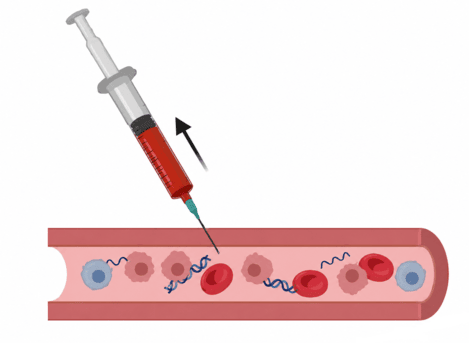
Cell-free DNA, or cfDNA, has become an important analyte in liquid biopsy research because it can carry genetic and epigenetic information from multiple tissues into blood and other body fluids. In cancer research, cfDNA methylation is especially useful because methylation patterns can reflect tissue origin, cell state, tumor-associated epigenetic remodeling, and disease biology even when mutation abundance is low.
The challenge is that "cfDNA methylation" is not one readout. A global 5-mC or 5-hmC assay, a MeDIP or hMeDIP enrichment experiment, and reduced representation bisulfite sequencing, or RRBS, answer different research questions. Choosing the right method depends on whether the goal is screening, candidate marker follow-up, hydroxymethylation analysis, or CpG-level discovery.
EpigenTek's DNA methylation portfolio covers several points in this workflow, including global 5-mC and 5-hmC quantification, bisulfite conversion, 5-mC and 5-hmC antibody-based enrichment support, and RRBS library preparation. The practical question is how to use these tools in a study design without asking one assay to do the job of another.
Choose this readout if...
-
Use global 5-mC if you need a fast, broad readout of total DNA methylation content. It is useful for sample screening, group comparison, and deciding whether deeper methylation profiling is warranted. It does not identify methylated loci.
-
Use global 5-hmC if the study is focused on hydroxymethylation, TET-linked biology, tissue-specific regulatory signal, or cancer-associated loss or redistribution of 5-hmC. It is complementary to 5-mC, not a substitute for it.
-
Use MeDIP or hMeDIP if you want to enrich methylated or hydroxymethylated DNA fragments before candidate-region analysis. This approach can bridge global assays and sequencing, but input amount and fragment size must be considered carefully for cfDNA.
-
Use bisulfite conversion if the downstream assay needs methylation-dependent sequence conversion, such as MS-PCR, MS-HRM, pyrosequencing, targeted bisulfite sequencing, or RRBS.
-
Use RRBS if the goal is CpG-resolution profiling across CpG-rich regions. It is more information-rich than a global assay and more discovery-oriented than a single-locus assay, but cfDNA input, fragmentation, conversion loss, and library complexity must be planned up front.
Why methylation is useful in cfDNA liquid biopsy research
Most cfDNA in plasma comes from normal hematopoietic and other non-tumor sources. Tumor-derived cfDNA can be a small fraction of total cfDNA, especially in early-stage disease or low-burden settings. Methylation can help because tissue- and cell-type-specific methylation patterns are distributed across many genomic regions, giving researchers more biological features to interrogate than a small set of sequence variants alone.
Recent reviews of liquid biopsy technologies emphasize that sensitivity, accessibility, and prospective validation remain major challenges across cfDNA applications [1]. Methylation is one of several complementary cfDNA signals, alongside mutations, copy number alterations, fragmentomics, nucleosome patterns, and multi-omics approaches.
For methylation specifically, cfDNA studies often focus on two patterns. The first is altered 5-mC, including promoter hypermethylation, CpG island methylation, tissue-specific methylation, and broad hypomethylation. The second is altered 5-hmC, which can reflect TET-related oxidation of 5-mC and is often associated with regulatory regions and tissue-specific gene activity.
Global 5-mC: A fast look at total methylation burden
5-methylcytosine, or 5-mC, is the canonical DNA methylation mark. In many cancer biology studies, global DNA hypomethylation and focal promoter hypermethylation are both relevant. A global 5-mC assay gives a bulk measurement of methylated cytosine content across the DNA sample. This makes it useful for comparing cohorts, checking broad epigenetic shifts, or triaging samples before moving into targeted or sequencing-based analysis.
The important limitation is that global 5-mC does not reveal where methylation occurs. A difference in total 5-mC does not identify a tumor suppressor promoter, a CpG island, or a tissue-of-origin marker. It should be treated as a broad methylation phenotype.
For broad 5-mC screening, EpigenTek's MethylFlash Global DNA Methylation (5-mC) ELISA Easy Kit provides a plate-based readout of total 5-mC from isolated DNA, including DNA prepared from plasma, serum, or body fluid samples.
Global 5-hmC: A distinct readout for hydroxymethylation biology
5-hydroxymethylcytosine, or 5-hmC, is produced through TET-mediated oxidation of 5-mC. It is biologically distinct from 5-mC and should be measured separately when hydroxymethylation is central to the research question.
In cfDNA research, 5-hmC has gained attention because it can carry tissue-specific and cancer-associated information. A 2025 Communications Biology study analyzed 5-hmC distribution in tumor tissues, normal tissues, and cfDNA from cancer and non-cancer subjects [2]. The study included tumor tissues from 217 cases, normal tissues from 50 cases, and cfDNA from 1009 cancer and 1678 non-cancer subjects across breast, colon, lung, ovarian, and pancreatic cancers. It reported extensive redistribution of 5-hmC in early-stage tumors, decreased global 5-hmC abundance across tumors, and tissue-specific differential hydroxymethylation regions that improved cfDNA-based cancer prediction. A tissue-of-tumor-origin model trained on tissue-specific 5-hmC regions reached 85.2% accuracy.
For hydroxymethylation-focused studies, EpigenTek's MethylFlash Global DNA Hydroxymethylation (5-hmC) ELISA Easy Kit provides a complementary plate-based readout of total 5-hmC from isolated DNA.
MeDIP and hMeDIP: Enriching modified DNA fragment
Global assays are useful, but they compress the methylome into one number. Enrichment methods add a region-focused layer by pulling down DNA fragments that contain a modified base. MeDIP enriches 5-mC-containing DNA fragments using an anti-5-mC antibody. It can be useful when researchers want to test candidate methylated regions or enrich modified fragments before downstream analysis. hMeDIP enriches 5-hmC-containing DNA fragments and is useful when the question is specifically about hydroxymethylation. This matters because standard bisulfite methods do not cleanly distinguish 5-mC from 5-hmC in routine workflows.
EpigenTek supports these enrichment-style workflows with the 5-Methylcytosine (5-mC) Monoclonal Antibody [33D3] for 5-mC and the EpiQuik Hydroxymethylated DNA Immunoprecipitation (hMeDIP) Kit or 5-Hydroxymethylcytosine (5-hmC) Monoclonal Antibody [HMC/4D9] for 5-hmC. For cfDNA studies, enrichment should be selected only when DNA input and fragment-size requirements are compatible with the available sample.
Bisulfite conversion: The bridge to locus-specific methylation analysis
Bisulfite conversion remains a core method for many methylation assays. It converts unmethylated cytosines to uracil while 5-mC remains protected, allowing methylation state to be read through PCR or sequencing. This is the basis for methylation-specific PCR, methylation-specific qPCR, MS-HRM, pyrosequencing, targeted bisulfite sequencing, and RRBS. For conversion-dependent workflows, EpigenTek's BisulFlash DNA Modification Kit supports downstream methylation assays.
This makes bisulfite conversion a practical fit when the researcher already has defined target regions or plans a sequencing-based methylation workflow. It should not be confused with a global assay or an enrichment assay; it is a conversion step that enables downstream methylation readouts.
RRBS: CpG-resolution profiling for discovery and follow-up
RRBS enriches CpG-rich genomic regions and uses bisulfite sequencing to measure methylation at single-CpG resolution. It provides more genomic context than a global 5-mC assay and more discovery potential than a single-locus assay.
RRBS can be valuable for identifying differentially methylated regions, narrowing candidate biomarkers, and connecting broad methylation shifts to specific CpG-rich regions. However, cfDNA requires careful method selection. A Nature Communications study developing cfMethyl-Seq noted that conventional RRBS can enrich CpG-rich regions from intact genomic DNA, but cfDNA is already fragmented, so standard RRBS size selection can fail to enrich CpG-dense regions effectively [3]. The same study showed that cfMethyl-Seq enriched CpG islands more than 12-fold over WGBS and, in 408 individuals, achieved 80.7% sensitivity at 97.9% specificity for cancer detection, with tissue-of-origin accuracy of 89.1%.
A 2026 Frontiers method comparison also emphasized that selecting the right analytical method is critical for limited cfDNA [4]. In that study, enzymatic methylation sequencing provided broader coverage, while bisulfite-based methods showed higher conversion rates, lower costs, better coverage of functional regions, and stronger reproducibility; cfRRBS offered the best balance of cost, accuracy, and reproducibility among the compared methods. For CpG-resolution reduced-representation profiling, EpigenTek's EpiNext RRBS Library Fast Kit supports RRBS library preparation for Illumina sequencing. In cfDNA studies, input amount and library complexity should be assessed before committing limited samples.
A staged cfDNA methylation workflow
A practical cfDNA methylation study can be organized in stages:
-
Start with sample quality and input planning. Confirm cfDNA quantity, fragment distribution, and whether enough DNA is available for the intended assay.
-
Use global 5-mC and/or 5-hmC for broad screening. This helps identify cohort-level differences and conserve samples before sequencing.
-
Use MeDIP or hMeDIP selectively. Enrichment is most useful when candidate regions or modified-base enrichment are central to the question and DNA input is sufficient.
-
Use bisulfite conversion for locus-specific confirmation. This is appropriate for MS-PCR, MS-HRM, pyrosequencing, targeted bisulfite sequencing, and other conversion-dependent assays.
-
Use RRBS for CpG-level discovery or higher-resolution follow-up. RRBS is best used when the study needs region-level mapping and has sufficient input and sequencing resources.
Product selector for cfDNA methylation research planning
| Research Need | Relevant Product | Product Fit | Key Planning Note |
|---|---|---|---|
| Global 5-mC screening | MethylFlash Global DNA Methylation (5-mC) ELISA Easy Kit | Quantifies total 5-mC from isolated DNA | Compatible with plasma, serum, and body fluid DNA. Input is 5 to 200 ng, with 100 ng recommended. |
| Global 5-hmC screening | MethylFlash Global DNA Hydroxymethylation (5-hmC) ELISA Easy Kit | Quantifies total 5-hmC from isolated DNA | Compatible with plasma, serum, and body fluid DNA. Input is 20 to 200 ng, with 100 ng recommended. |
| 5-mC antibody workflows | 5-Methylcytosine (5-mC) Monoclonal Antibody [33D3] | Supports MeDIP-style 5-mC enrichment and detection workflows | Suitable for MeDIP at 0.5 to 1 ug per reaction. |
| 5-hmC antibody workflows | 5-Hydroxymethylcytosine (5-hmC) Monoclonal Antibody [HMC/4D9] | Supports 5-hmC detection and hMeDIP workflows | Suitable for ELISA, dot blot, and hMeDIP applications. |
| 5-hmC enrichment | EpiQuik Hydroxymethylated DNA Immunoprecipitation (hMeDIP) Kit | Enriches 5-hmC-containing DNA fragments for hMeDIP-PCR or hMeDIP-chip | Uses 0.1 to 1 ug DNA per reaction, with 0.5 ug optimal, so cfDNA input feasibility should be checked. |
| Bisulfite conversion | BisulFlash DNA Modification Kit | Supports conversion for MS-PCR, MS-HRM, pyrosequencing, deep sequencing, and related workflows | Input is 0.2 ng to 1 ug, with 50 to 200 ng recommended. Short targets are preferred after conversion. |
| CpG-resolution discovery | EpiNext RRBS Library Fast Kit | Prepares RRBS libraries for Illumina sequencing | Uses 10 to 400 ng DNA, with 200 ng recommended. cfDNA input and library complexity should be assessed before sequencing. |
cfDNA methylation research works best when the readout matches the question. Global 5-mC and 5-hmC assays help researchers screen broad methylation and hydroxymethylation changes. MeDIP and hMeDIP add modified-fragment enrichment for region-focused follow-up when input allows. Bisulfite conversion enables locus-specific and sequencing-based methylation assays. RRBS provides CpG-resolution discovery across CpG-rich regions, but requires careful input and library planning for cfDNA.
For liquid biopsy research, the strongest strategy is usually staged: screen globally, follow up selectively, then sequence when the study needs genomic location and CpG-level resolution. This approach preserves limited cfDNA while producing data that can move from broad epigenetic signal to candidate biomarker insight.
References
- Landon BV, Annapragada AV, Niknafs N, Velculescu VE, Anagnostou V. Liquid biopsies across the cancer care continuum. Nat Med. 2025;31(12):4006-4021. doi:10.1038/s41591-025-04093-9. View article
- Xue Y, Ning Y, Friedl V, et al. 5-hydroxymethylcytosine analysis reveals stable epigenomic changes in tumor tissue that enable cancer detection in cell-free DNA. Commun Biol. 2025;8(1):1613. Published 2025 Nov 19. doi:10.1038/s42003-025-09017-4. View article
- Stackpole ML, Zeng W, Li S, et al. Cost-effective methylome sequencing of cell-free DNA for accurately detecting and locating cancer. Nat Commun. 2022;13(1):5566. Published 2022 Sep 29. doi:10.1038/s41467-022-32995-6. View article
- Ezegbogu M, Stockwell PA, Reid G, Brockway B, Kumar R, Rodger E, Chatterjee A. Comparison of enzymatic and bisulfite-based methods for sequencing-based cell-free DNA methylation profiling. Front Epigenet Epigenom. 2026;3:1693925. doi:10.3389/freae.2025.1693925. View article