LoadingLoading
  • Browse By Category

  • Products
  • Services
  • Support
  • Corporate
  • Back
  • Products

  • Antibodies
  • Instruments
  • Research Kits
  • Proteins & Enzymes
  • Peptides
  • COVID-19 Assays
  • Back
  • Antibodies

  • Primary Antibodies
  • Secondary Antibodies
  • Tag Antibodies
  • Antibody Panel Packs
  • Back
  • Primary Antibodies

  • DNA Methylation Antibodies
  • Cell Structure & Function Antibodies
  • RNA Processing & Modification Antibodies
  • Chromatin & Transcription Antibodies
  • Other Primary Antibodies
  • Histone Modification Antibodies
  • Signal Transduction Antibodies
  • Metabolism Antibodies
  • Immunology & Inflammation Antibodies
  • Back
  • Cell Structure & Function Antibodies

  • DNA Damage & Repair Antibodies
  • Apoptosis & Cell Death Antibodies
  • Cell Cycle Antibodies
  • Cellular Structure Antibodies
  • Trafficking Antibodies
  • Back
  • Chromatin & Transcription Antibodies

  • DNA Replication & Transcription Antibodies
  • Chromatin Remodeling Antibodies
  • Cell Growth Antibodies
  • Development & Differentiation Antibodies
  • Back
  • Histone Modification Antibodies

  • Histone Methylation (Lysine) Antibodies
  • Histone Acetylation Antibodies
  • Histone Phosphorylation Antibodies
  • Ubiquitination & SUMOylation Antibodies
  • Histone Methylation (Arginine) Antibodies
  • Other Histone Methylation Antibodies
  • Other Histone Acetylation Antibodies
  • Histone Deacetylation Antibodies
  • Other Histone Antibodies
  • Back
  • Signal Transduction Antibodies

  • Cell Surface Receptor & Kinase Antibodies
  • Intracellular Kinase & Adaptor Protein Antibodies
  • Phosphatase Antibodies
  • Secreted Growth Factor Antibodies
  • Back
  • Metabolism Antibodies

  • Glucose Metabolism Antibodies
  • Lipid Metabolism Antibodies
  • Protein Metabolism Antibodies
  • Nucleotide Metabolism Antibodies
  • Back
  • Immunology & Inflammation Antibodies

  • Cell Marker & Receptor Antibodies
  • Cytokine Antibodies
  • Other Immunology Antibodies
  • Back
  • Antibody Panel Packs

  • Histone Modification
  • DNA Methylation
  • Back
  • Instruments

  • Sonication Devices
  • Magnets & Sample Mixers
  • Back
  • Research Kits

  • DNA Methylation
  • Chromatin & Transcription
  • Histone Methylation
  • Acetylation & Deacetylation
  • Gene Editing & Silencing
  • Sample Preparation
  • DNA Damage & Repair
  • Next Generation Sequencing
  • RNA Methylation
  • Other Histone Modifications
  • Back
  • DNA Methylation

  • DNA Bisulfite Conversion
  • DNA Methylation Quantification
  • DNA Methyltransferase & Demethylase Assays
  • Methylated DNA Immunoprecipitation
  • Methylated DNA Amplification
  • Back
  • Chromatin & Transcription

  • General Chromatin Immunoprecipitation
  • In Vitro Protein-DNA Interaction
  • Methyl-Histone Chromatin IP
  • Acetyl-Histone Chromatin IP
  • Methyl-DNA Binding Protein ChIP
  • Chromatin Analysis
  • Back
  • Histone Methylation

  • Histone Methyltransferase Assay
  • Histone Methylation Quantification
  • Histone Demethylase Assay
  • Back
  • Acetylation & Deacetylation

  • Histone Acetyltransferase (HAT) Assay
  • Histone Deacetylase (HDAC) Assay
  • Histone Acetylation Quantification
  • Back
  • Sample Preparation

  • DNA Preparation
  • Protein Preparation
  • Chromatin Preparation
  • RNA Preparation
  • Back
  • Other Histone Modifications

  • Sumoylation
  • Histone Phosphorylation Assay
  • Histone Citrullination
  • Back
  • Proteins & Enzymes

  • DNA Methylation/Demethylation Proteins
  • Methylated DNA Binding Proteins
  • Unmodified Histone Proteins
  • Chromatin Binding/Transcription Proteins
  • ADP Ribose Proteins
  • DNA Damage & Repair Proteins
  • Modified Histone Proteins
  • Back
  • DNA Methylation/Demethylation Proteins

  • DNA Demethylation Proteins
  • DNA Methylation Proteins
  • Back
  • Modified Histone Proteins

  • Histone Methylation Proteins
  • Histone Demethylation Proteins
  • Histone Acetylation Proteins
  • Histone Deacetylation Proteins
  • Histone Phosphorylation Proteins
  • Histone Sumoylation Proteins
  • Back
  • Peptides

  • Histone Methylation Peptides
  • Histone Acetylation Peptides
  • Histone Phosphorylation Peptides
  • Back
  • COVID-19 Assays

  • COVID-19 Kits
  • COVID-19 Antibodies
  • COVID-19 Proteins
  • Back
  • Services

  • DNA-based NGS Services
  • Chromatin-based NGS Services
  • qPCR-based Services
  • ELISA-based Services
  • Back
  • DNA-based NGS Services

  • Reduced Representation Bisulfite Sequencing (RRBS)
  • Whole Genome Bisulfite Sequencing (WGBS)
  • Targeted Bisulfite Sequencing
  • Back
  • Chromatin-based NGS Services

  • ChIP Sequencing (Histone Modifications)
  • Back
  • qPCR-based Services

  • Methylation-Specific qPCR (MSP)
  • Back
  • ELISA-based Services

  • Global DNA 5-mC Quantification
  • Global DNA 5-hmC Quantification
  • Global RNA 5-mC Quantification
  • Global RNA m6A Quantification
  • Histone Modification Quantification
  • Back
  • Support

  • Technical Support
  • Quality Assurance
  • Resources
  • Back
  • Technical Support

  • Submit Support Ticket
  • Back
  • Quality Assurance

  • Epigentek Gurantee
  • Risk-Free Testing: Pioneer Program
  • Product Review Program
  • Back
  • Resources

  • Epigenetics Newsletter
  • Intro to Epigenetics
  • What is Epigenetics?
  • Back
  • Corporate

  • Company Information
  • Procurement
  • Communication
  • Back
  • Company Information

  • About Epigentek
  • Press Release
  • Career Opportunities
  • Back
  • Procurement

  • Ordering Information
  • New Lab Startup Program
  • Distributors & Resellers
  • Back
  • Communication

  • Contact Us
  • Customer Feedback Survey
  • Events Calendar
Epigentek Home
Cart (0)
Datasheet
Track
Account
  • Products

    Research Kits

    • DNA Methylation
      • Global DNA Methylation Quantification
      • DNA Bisulfite Conversion
      • Methylated DNA Immunoprecipitation
      • DNMT & DNA Demethylase Assay
      • Methylated DNA Amplification
    • RNA Methylation
      • Global RNA Methylation Quantification
      • Transcriptome-Specific RNA Methylation
      • RNA Methylation Activity/Inhibition
    • Chromatin & Transcription
      • Chromatin Immunoprecipitation
      • CUT&RUN-Fast and more
      • Chromatin Accessibility
      • In Vitro Protein-DNA Interaction
    • Histone Modification
      • Histone Methylation Quantification
      • Histone Methytransferase (HMT) Assay
      • Histone Demethylase (KDM) Assay
      • Histone Acetylation Quantification
      • Histone Acetylase (HAT) Assay
      • Histone Deacetylase (HDAC) Assay
      • Histone Citrullination
      • Histone Phosphorylation
      • Histone SUMOylation
    • Protein-RNA Interaction
    • DNA/RNA Damage & Repair
      • Oxidative Cell Damage
      • Oxidative DNA/RNA Damage
    • Gene Editing & Silencing
    • Library Preparation
      • DNA-Related Library Preparation
      • RNA-Related Library Preparation
      • Chromatin-Related Library Preparation
    • Sample Preparation
      • DNA Extraction
      • RNA Extraction
      • Chromatin Extraction
      • Histone Extraction
      • Nuclear Extraction
      • Whole Cell Extraction

    Antibodies

    • DNA Modification & Regulators
      • DNA Methylation
      • DNA Regulators
    • Histone Modification
      • Histone Methylation (Lysine)
      • Histone Methylation (Arginine)
      • Other Histone Methylation
      • Histone Acetylation
      • Histone Deacetylation
      • Other Histone Acetylation
      • Histone Phosphorylation
      • Ubiquitination & SUMOylation
      • Other Histone Antibodies
    • RNA Modification & Processing
      • RNA Methylation
      • RNA Processing
    • Chromatin & Transcription
      • Chromatin Remodeling
      • DNA Replication & Transcription
      • Cell Growth
      • Development & Differentiation
    • Cell Structure & Function
      • Cell Cycle
      • DNA Damage & Repair
      • Apoptosis & Cell Death
      • Cellular Structure
      • Trafficking
    • Signal Transduction
      • Cell Surface Receptor & Kinase
      • Intracellular Kinase & Adaptor Protein
      • Phosphatase
      • Secreted Growth Factor
    • Metabolism
      • Glucose Metabolism
      • Lipid Metabolism
      • Protein Metabolism
      • Nucleotide Metabolism
    • Immunology & Inflammation
      • Cell Marker & Receptor
      • Cytokine
      • Other Immunology Antibodies
    • Other Primary Antibodies

    • Secondary Antibodies
    • Tag Antibodies
    • Antibody Panel Packs
      • Histone Modification Panel
      • DNA Methylation Panel

    Proteins & Enzymes

    • DNA Methylation
      • DNA Methylation
      • DNA Demethylation
    • Modified Histones
      • Histone Methylation
      • Histone Demethylation
      • Histone Acetylation
      • Histone Deacetylation
      • Histone Phosphorylation
      • Histone SUMOylation
    • Unmodified Histones
    • Methylated DNA Binding
    • ADP Ribose
    • Chromatin Binding/Transcription
    • DNA Damage & Repair

    Peptides

    • Histone Methylation
    • Histone Acetylation/Deacetylation
    • Histone Phosphorylation

    Instruments

    • Sonication Devices
    • Magnets & Sample Mixers

    COVID-19 Assays

    • COVID-19 Kits
    • COVID-19 Antibodies
    • COVID-19 Proteins
  • Services

    DNA-based NGS Services

    • Reduced Representation Bisulfite Sequencing (RRBS)
    • Whole Genome Bisulfite Sequencing (WGBS)

    Chromatin-based NGS Services

    • ChIP-Seq

    ELISA-based Services

    • Global DNA 5-mC Quantification
    • Global DNA 5-hmC Quantification
    • Global RNA m6A Quantification
    • Global RNA 5-mC Quantification
    • Histone Modification Quantification
    RRBS Services
  • Support

    Technical Support

    • Submit Support Ticket
    • Download Datasheet

    Resource Bulletins

    • DNA Methylation
    • RNA Methylation
    • Chromatin Remodeling
    • Histone Modifications
    • Gene Editing
    • Miscellaneous
    • Weekly Research Showcase
  • Ordering

    Procurement

    • Ordering Info & Return Policy
    • Distributors & Resellers
    • Request a Quote
    • Application Guarantee

    Promotions

    • Current Promotional Offers
    • New Lab Startup Program
    • Risk-Free Testing: Pioneer Program
    • Rewards Program
    • Product Review Program

    Company Information

    • About Us
    • Corporate Sustainability
    • Press Releases
    • Events Calendar
    • Career Opportunities
    • Contact Us
 
EpiGentek Guarantee
   Home  »  Epigenetic Resources  »  Benchtop Tips to Improve the Reliability and Consistency of Bisulfite Conversion Assays 
  Quick Order      Quote Lookup

Benchtop Tips to Improve the Reliability and Consistency of Bisulfite Conversion Assays


DNA Methylation is an essential epigenetic modification whereby a methyl group is added to the 5th carbon of cytosine, typically in CpG dinucleotides. This process is crucial for regulating gene expression, imprinting, and maintaining genome stability. One of the most widely used methods to study DNA methylation is Bisulfite Conversion, a chemical assay that differentiates between methylated and unmethylated cytosines via treatment with sodium bisulfite. In this reaction, unmethylated cytosines are converted to uracil, while methylated cytosines (5-methylcytosine or 5-mC) remain unchanged.

Despite its utility, bisulfite conversion is a delicate procedure prone to several complications that can lead to incomplete conversion, DNA degradation, or inaccurate results. The following are considerations and tips to improve the reliability and consistency of bisulfite conversion assays in the lab, ensuring accurate methylation assessment.

Sensitivity of the Bisulfite Reagent to Temperature and Light
Sodium bisulfite is sensitive to both temperature and light, which can lead to reagent decay and reduced conversion efficiency if not handled properly. Store sodium bisulfite in dark, cool conditions (ideally below 4°C) to prevent decomposition. Avoid prolonged exposure to light and confirm reagents are fresh.
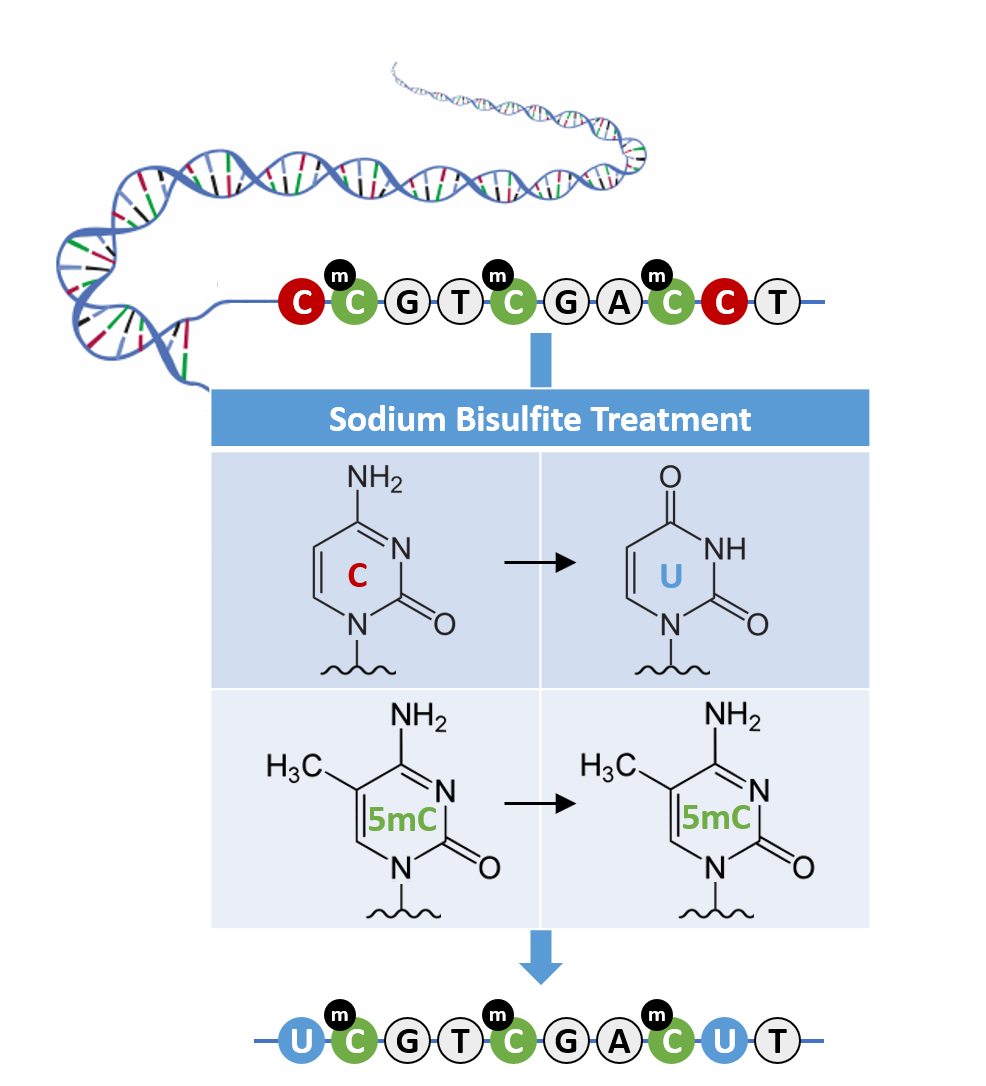
Bisulfite Conversion Process
×
Bisulfite Conversion Process

Importance of DNA Denaturation
The effectiveness of bisulfite conversion is contingent on the DNA being single-stranded, as sodium bisulfite can only react with unpaired cytosines. Denaturation is a critical step that ensures the DNA is fully single-stranded before bisulfite treatment. For thermal denaturation, preheat the DNA to 95°C for 5–10 minutes to facilitate total denaturation before adding sodium bisulfite. For chemical denaturation, use denaturing agents like NaOH to keep the DNA in a single-stranded state during the conversion process.

Effect of GC Content and Secondary Structure on Conversion Efficiency
GC-rich regions and strong secondary structures in the DNA template can hinder bisulfite conversion, leading to incomplete conversion of unmethylated cytosines. GC content affects the denaturation and accessibility of cytosines, and these factors must be considered when designing the conversion protocol. Increase the bisulfite reaction time for GC-rich samples to promote complete conversion. Prolonging the reaction allows more time for bisulfite to penetrate secondary structures.

Minimizing DNA Degradation
Sodium bisulfite treatment is harsh and can degrade DNA, especially if the sample is already fragmented or of poor quality. Degradation can occur due to chemical and thermal factors in the course of the conversion procedure, reducing DNA yield and affecting downstream analysis. Always start with purified, high-quality DNA that is not fragmented. Use an appropriate input amount (generally around 500 ng to 2 µg, depending on the downstream application) to make certain enough DNA remains after bisulfite conversion. Lowering the reaction temperature or shortening the bisulfite treatment time can minimize degradation while still promoting complete conversion.

Controlling Reaction Temperature
Temperature plays a crucial role in the efficiency and specificity of bisulfite conversion. Inadequate or excessive temperature can either slow the reaction or cause DNA degradation. The ideal temperature for bisulfite conversion is typically between 50°C and 65°C, depending on the DNA template and the bisulfite concentration. Higher temperatures (closer to 65°C) can improve the conversion of tough regions but also raise the chance of degradation. Adjust according to your template characteristics. Employ a thermal cycler to maintain precise temperature control and allow for gradual denaturation and conversion cycles, providing consistency across reactions.

Avoiding Inappropriate Conversion
One of the key challenges in bisulfite conversion is inappropriate deamination, where 5-methylcytosine is mistakenly deaminated and converted to thymine. This leads to inaccurate methylation data, as methylated cytosines are incorrectly interpreted as unmethylated. Use optimized reaction conditions that deter 5-mC deamination. Adjusting the concentration of sodium bisulfite, reaction time, and temperature can reduce unwanted deamination. Fresh and high-purity sodium bisulfite helps in maintaining the specificity of the reaction. Degraded or old reagents increase the risk of inappropriate conversion.

Effect of Assay Conditions on Post-Conversion Fragment Sizes
Bisulfite treatment can fragment DNA, affecting the size of DNA available for downstream applications like PCR, cloning, or sequencing. Proper management of the reaction conditions can minimize excessive fragmentation and preserve DNA integrity. Run gel electrophoresis or perform a DNA quality check after conversion to assess the extent of fragmentation. If necessary, adjust bisulfite concentration and reaction time to reduce fragmentation. Shortened fragments may require adjustments to PCR primers or amplification parameters, so be mindful of these considerations when planning downstream analysis.

Desulphonation and DNA Cleanup
Post-conversion desulphonation is necessary to remove sulphonate groups from the converted cytosines. Furthermore, residual bisulfite and salts must be thoroughly removed to avert interference with downstream applications, such as PCR or sequencing. Use a robust desulphonation and cleanup protocol to fully remove residual bisulfite and salts. This may involve multiple washes with an ethanol-based buffer. Consider using commercial bisulfite conversion kits that have optimized desulphonation and cleanup steps built into their protocols for higher consistency and yield.

Quick, Simple, and Reliable Bisulfite Conversion Assays
As the leading developer and provider of innovative technologies and products for epigenetics-related research, Epigentek has created a comprehensive suite of Bisulfite Conversion kits for your research needs. These kits are whole sets of optimized reagents for fast and convenient DNA modification from a variety of sources, such as isolated genomic DNA, cells, tissues, blood, and other biological fluids. The modified DNA obtained with these kits is compatible with the most common downstream applications, including PCR, microarrays, and sequencing.


Epigenetic Resources
  • DNA Damage & Repair
  • DNA Methylation»
  
  • Global DNA Methylation Quantification
  
  • DNA Bisulfite Conversion
  
  • Methylated DNA Immunoprecipitation (MeDIP)
  
  • DNMT & DNA Demethylase Assay
  • RNA Methylation»
  • Chromatin Remodeling»
  • Histone Modifications»
  • Gene Editing
  • Miscellaneous
  • Weekly Research Showcase

Suggested Reads:

m6A RNA Methylation in Cancer Immunity and Therapeutic Resistance
cfDNA Methylation in Liquid Biopsy Research: Where Global 5-mC, 5-hmC, Enrichment, and RRBS Readouts Fit
Understanding Open Chromatin Bias in CUT&RUN and CUT&Tag
Unlocking Rapid Chromatin Profiling with CUT&LUNCH Technology
Company
About Epigentek
Press Releases
Events Calendar
Corporate Sustainability
Career Opportunities
What Is Epigenetics?
Contact Us
Ordering
Ordering Info & Return Policy
Distributors & Resellers

Support
Technical Support
Download Datasheets
Resource Bulletins
Promotions & Offers
Current Promotions
New Lab Startup Program
Risk-Free Testing: Pioneer Program
Rewards Program
Product Reviews
Application Guarantee
Sign Up For Exclusive Offers
Request a Quote
Stay Informed


Terms & Conditions | Privacy Policy | Site Map
Copyright © EpigenTek Group Inc. All rights reserved.
  • Stay Informed:
Terms & Conditions | Privacy Policy Copyright © EpiGentek