Epigentek Home

Product Categories
Related Products

EpiQuik Chromatin Immunoprecipitation (ChIP) Kit


Base Product #: P-2002              Availability: Discontinued (see alternative)
Share:
Displaying 1 to 3 (of 3 products) Result Pages:  1 
 Catalog No.+   Product Name   Select Qty.   Price 
 P-2002-1  EpiQuik Chromatin Immunoprecipitation (ChIP) Kit (24 reactions)   $228.00 
 P-2002-2  EpiQuik Chromatin Immunoprecipitation (ChIP) Kit (48 reactions)   $369.00 
 P-2002-3  EpiQuik Chromatin Immunoprecipitation (ChIP) Kit (96 reactions)   $559.00 
Product Overview


We recommend using a newer version of this product: ChromaFlash One-Step ChIP Kit


The EpiQuik™ Chromatin Immunoprecipitation (ChIP) Kit is a convenient package of tools that allows the experimenter to perform chromatin immunoprecipitation (ChIP) at extraordinarily rapid speeds and consistency, superior to all other current ChIP methods available. The kit is ready-to-use and provides all the essential components needed to carry out a successful ChIP experiment. The EpiQuik™ ChIP kits are suitable for combining the specificity of immunoprecipitation with qualitative and quantitative PCR, MS-PCR, DNA sequencing, and southern blot, as well as DNA microarray.

WHY CHOOSE THE EPIQUIK™ CHROMATIN IMMUNOPRECIPITATION (CHIP) KIT?

  • The number one fastest procedure available. The entire procedure can be completed within an amazingly short 5 hour period with superb results.
  • The ChIP procedure has been drastically simplified -- extremely short and easy to follow.
  • Strip microwell format makes the assay flexible: manual or high throughput.
  • Columns for DNA purification are included: save tremendous amounts of time and reduce unnecessary physical labor.
  • Compatible with all DNA amplification-based approaches.
  • Achieves very reliable and consistent assay conditions.
Product Details

This kit includes a positive control antibody (RNA polymerase II), a negative control normal mouse IgG, and GAPDH primers that can be used as a positive control to demonstrate the efficacy of the kit reagents and protocol. RNA polymerase II is considered to be enriched in the GAPDH gene promoter that is expected to be undergoing transcription in most growing mammalian cells and can be immunoprecipitated by RNA polymerase II but not by normal mouse IgG.

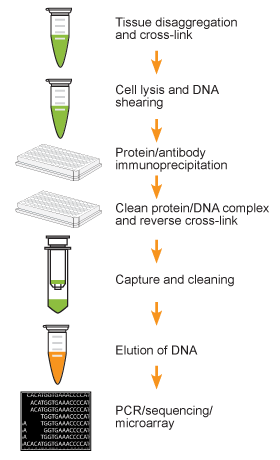
In this ChIP, cells are cross-linked with formaldehyde and chromatin is extracted. The chromatin is then sheared and added into the microwell immobilized with affinity antibodies. Cross-linked DNA is released from antibody-captured protein-DNA complex, reversed and purified through the specifically designed Fast-Spin Column. Eluted DNA can be used for various down-stream applications.

SCHEMATIC PROCEDURE: COMPARATIVE OVERVIEW:
Product Components

CP1 (Wash Buffer)
CP2 (Antibody Buffer)
CP3A (Lysis Buffer)
CP3B (Lysis Buffer)
CP4 (ChIP Dilution Buffer)
CP5 (DNA Release Buffer)
CP6 (Reverse Buffer)
CP7 (Binding Buffer)
CP8 (Elution Buffer)
Protease Inhibitor Cocktail (100X)*
Normal Mouse IgG (1 mg/ml)*
Anti-RNA Polymerase II (1mg/ml)*
Proteinase K (10 mg/ml)*
Control Primer (GAPDH)
     Forward (20 µM)*
     Reverse (20 µM)*
8-Well Assay Strips (with Frame)
8-Well Strip Caps
F-Spin Column
F-Collection Tube
User Guide

* Spin the solution down to the bottom before use.

Frequently Asked Q's

1. Can IP be overnight?
Yes.

2. Is there any background DNA by mouse IgG IP?
Yes, a little < 2 ng.

3. Can any species Ab can be used for the IP?
Yes, if it is an IgG antibody.

4. Can kit P-2002 be used for frozen tissues?
Yes, but it is not as good as fresh samples.

5. How much volume of elution should be added into PCR reaction?
2 µl.

6. Are cell extracts containing 1%SDS compatible with CP4?
No, the SDS concentration in IP solution should be less than 0.1%.

7. Why is there no difference of CT values between the negative control and samples?
A. Increase washing time by one.
B. Check if antibody is chip grade.
C. There is no enrichment on the promoter.

8. Why is the difference between negative control and positive control not significant?
A. For conventional PCR, reduce PCR cycles to 35-36 or optimize the PCR cycles.
B. Increase washing time by one additional wash.

User Guide & MSDS

[User Guide]*
*Always use the actual User Guide that shipped with your product. Is the above file locked? You can also request user guides by emailing info@epigentek.com along with your contact information and institution name.

[Material Safety Data Sheet]
Product Citations

Zhang, Y. et. al. (May 2013). The oncoprotein HBXIP upregulates PDGFB via activating transcription factor Sp1 to promote the proliferation of breast cancer cells. Biochem Biophys Res Commun. 434(2):305-10. PubMed Abstract

Hanzu, FA. et. al. (April 2013). Histone demethylase KDM1A represses inflammatory gene expression in preadipocytes. Obesity (Silver Spring). PubMed Abstract

D'Amici, S. et. al. (April 2013). TNFa Modulates Fibroblast Growth Factor Receptor 2 Gene Expression through the pRB/E2F1 Pathway: Identification of a Non-Canonical E2F Binding Motif. PLoS One. 8(4):e61491. PubMed Abstract

Siles, L. et. al. (April 2013). ZEB1 Imposes a Temporary Stage-Dependent Inhibition of Muscle Gene Expression and Differentiation via CtBP-Mediated Transcriptional Repression. Mol Cell Biol. 33(7):1368-82. PubMed Abstract

Algamas-Dimantov, A. et. al. (April 2013). Epigenetic control of HNF-4α in colon carcinoma cells affects MUC4 expression and malignancy. Cell Oncol (Dordr). 36(2):155-67. PubMed Abstract

Ejarque, M. et. al. (March 2013). Neurogenin3 cooperates with Foxa2 to autoactivate its own expression. J Biol Chem. Epub ahead of print. PubMed Abstract

Chiarella, S. et. al. (March 2013). Nucleophosmin mutations alter its nucleolar localization by impairing G-quadruplex binding at ribosomal DNA. Nucleic Acids Res. 41(5):1464-8. PubMed Abstract

Mikami, N. et. al. (March 2013). Calcitonin Gene-Related Peptide and Cyclic Adenosine 5'-Monophosphate/Protein Kinase A Pathway Promote IL-9 Production in Th9 Differentiation Process. J Immunol. Epub ahead of print. PubMed Abstract

Latrasse, D. et. al. (January 2013). Dual function of MIPS1 as a metabolic enzyme and transcriptional regulator. Nucleic Acids Res. Epub ahead of print. PubMed Abstract

Xu, F. et. al. (January 2013). The oncoprotein HBXIP up-regulates Skp2 via activating transcription factor E2F1 to promote proliferation of breast cancer cells. Cancer Lett. Epub ahead of print. PubMed Abstract

You, X. et. al. (January 2013). Hepatitis B virus X protein upregulates Lin28A/Lin28B through Sp- 1/c-Myc to enhance the proliferation of hepatoma cells. Oncogene. Epub ahead of print. PubMed Abstract

Yue, L. et. al. (December 2012). The Oncoprotein HBXIP Activates Transcriptional Coregulatory Protein LMO4 via Sp1 to Promote Proliferation of Breast Cancer Cells. Carcinogenesis. Epub ahead of print. PubMed Abstract

Pelascini, LP. et. al. (December 2012). Histone Deacetylase Inhibition Activates Transgene Expression from Integration- Defective Lentiviral Vectors in Dividing and Non-Dividing Cells. Hum Gene Ther. Epub ahead of print. PubMed Abstract

Gao, H. et. al. (November 2012). Hypoxia Response Element (HRE)-directed Transcriptional Regulation of the Rat Lysyl Oxidase Gene in Response to Cobalt and Cadmium. Toxicol Sci. Epub ahead of print. PubMed Abstract

Mancini, M. et. al. (August 2012). Cytoplasmatic compartmentalization by Bcr-Abl promotes TET2 loss-of-function in chronic myeloid leukemia. J. Cell Biochem. 113(8) :2765-74. PubMed Abstract

Mikami, N. et. al. (July 2012). Calcitonin gene-related peptide enhances experimental autoimmune encephalomyelitis by promoting Th17 cell functions. Int Immunol. Epub ahead of print. PubMed Abstract

Du, Y. et. al. (July 2012). Elevation of Highly Up- regulated in Liver Cancer (HULC) by Hepatitis B Virus X Protein Promotes Hepatoma Cell Proliferation via Down-regulating p18. J. Biol Chem. 287(31):26302-11. PubMed Abstract

Liu, S. et. al. (June 2012). The oncoprotein HBXIP uses two pathways to up-regulate S100A4 in promotion of growth and migration of breast cancer cells. J. Biol Chem. Epub ahead of print. PubMed Abstract

Morillo, SM. et. al. (May 2012). NGF-induced cell cycle reentry in newborn neurons is triggered by p38MAPK- dependent E2F4 phosphorylation. Mol Cell Biol. Epub ahead of print. PubMed Abstract

Noda, S. et. al. (May 2012). Constitutive activation of c-Abl/protein kinase C-δ/Fli1 pathway in dermal fibroblasts derived from patients with localized scleroderma. Br J Dermatol. Epub ahead of print. PubMed Abstract

Mancini, M. et. al. (April 2012). Gadd45a transcriptional induction elicited by the Aurora kinase inhibitor MK-0457 in Bcr-Abl-expressing cells is driven by Oct-1 transcription factor. Leuk Res. Epub ahead of print. PubMed Abstract

Mahan, AL. et. al. (March 2012). Epigenetic modulation of homer1a transcription regulation in amygdala and hippocampus with pavlovian fear conditioning. J Neurosci. 32(13):4651-9. PubMed Abstract

Meng, F. et. al. (March 2012). HSF1 regulates the expression of the TRPV1 gene in the PO/AH region of rat hypothalamus during LPS-induced fever. Exp Physiol. Epub ahead of print. PubMed Abstract

Yamamura, S. et. al. (January 2012). MicroRNA-34a Modulates c-Myc Transcriptional Complexes to Suppress Malignancy in Human Prostate Cancer Cells. PLoS One. 7(1):e29722. PubMed Abstract

Yamamura, S. et. al. (January 2012). MicroRNA-34a suppresses malignant transformation by targeting c-Myc transcriptional complexes in human renal cell carcinoma. Carcinogenesis. Epub ahead of print. PubMed Abstract

Endo, T. et. al. (September 2011). Thyroid-specific gene expression in chondrocytes. Biochem Biophys Res Commun. Epub. PubMed Abstract

Li, W. et. al. (August 2011). DNA methylation and histone modifications regulate de novo shoot regeneration in Arabidopsis by modulating WUSCHEL expression and auxin signaling. PLoS Genet. 7(8):e1002243. PubMed Abstract

Pasha, Z. et. al. (August 2011). Efficient Non-Viral Reprogramming of Myoblasts to Stemness with a Single Small Molecule to Generate Cardiac Progenitor Cells. PLoS One. 6(8):e23667. PubMed Abstract

Cho, YH. et. al. (July 2011). Identification of transcriptional regulatory elements required for the Mup2 expression in circadian clock mutant mice. Biochem Biophys Res Commun. 410(4):834-40. PubMed Abstract

Kashif, M. et. al. (June 2011). p45NF-E2 represses Gcm1 in trophoblast cells to regulate syncytium formation, placental vascularization and embryonic growth. Development. 138(11):2235-47. PubMed Abstract

Kazumori, H. et. al. (May 2011). Roles of Kruppel-like factor 4 in oesophageal epithelial cells in Barrett's epithelium development. Gut. 60(5): 608-17. PubMed Abstract 

Garaud, S. et. al. (April 2011). CD5 promotes IL-10 production in chronic lymphocytic leukemia B cells through STAT3 and NFAT2 activation. J Immunol. 186(8): 4835-44. PubMed Abstract

Nocchi, L. et. al. (April 2011). Thrombomodulin Is Silenced in Malignant Mesothelioma by a Poly(ADP-ribose) Polymerase-1-mediated Epigenetic Mechanism. J Biol Chem. 286(22): 19478-88. Full PDF Article

Hu, N. et. al. (February 2011). miR-520b regulates migration of breast cancer cells through targeting hepatitis B X-interacting protein and interleukin-8. J Biol Chem. Epub ahead of print. PubMed Abstract

Kazumori, H. et. al. (December 2010). Roles of Kruppel-like factor 4 in oesophageal epithelial cells in Barrett's epithelium development. GUT. Epub ahead of print. PubMed Abstract

Yamada, N. et. al. (November 2010). Expression of MUC5AC, an early marker of pancreatobiliary cancer, is regulated by DNA methylation in the distal promoter region in cancer cells. Journal of Hepato-Biliary-Pancreatic Sciences. 17(6): 844-54. PubMed Abstract

Kavek, E. et. al. (October 2010). Analysis of the Wnt/B-catenin/TCF4 pathway using SAGE, genome-wide microarray and promoter analysis: Identification of BRI3 and HSF2 as novel targets. Cellular Signalling. 22(10): 1523-35. PubMed Abstract

Musri, M. M. et. al. (September 2010). Histone demethylase LSD1 regulates adipogenesis. J Biol Chem. 285(39): 30034-41. Full PDF Article

Yamaguchi, T. et. al. (August 2010). Cortisol is involved in temperature-dependent sex determination in the Japanese flounder. Endocrinology. 151(8): 3900-8. PubMed Abstract

Sanchez-Tillo, E. et. al. (June 2010). ZEB1 represses E-cadherin and induces an EMT by recruiting the SWI/SNF chromatin-remodeling protein BRG1. Oncogene. 29(24): 3490-500. PubMed Abstract

Subkhankulova, T. et. al. (June 2010). Bmi1 directly represses p21(Waf1/Cip1) in Shh-induced proliferation of cerebellar granule cell progenitors. Molecular and Cellular Neuroscience. 45(2): 151-62. PubMed Abstract

Aoki, T. et. al. (April 2010). Ets-1 promotes the progression of cerebral aneurysm by inducing the expression of MCP-1 in vascular smooth muscle cells. Gene Therapy. 17(9): 1117-23. PubMed Abstract 

Chung, S. et. al. (April 2010). Glutaredoxin1 regulates cigarette smoke-mediated lung inflammation through differential modulation of I{kappa}B kinases in mice: impact on histone acetylation. Am J Physiol Lung Cell Mol Physiol. 299(2): L192-203. PubMed Abstract

Hu, B. et. al. (July 2010). Epigenetic Regulation of Myofibroblast Differentiation by DNA Methylation. American Journal of Pathology. 177(1): 21-8. PubMed Abstract

Bianconcini, A. et. al. (November 2009). Transcriptional activity of the murine retinol-binding protein gene is regulated by a multiprotein complex containing HMGA1, p54 nrb/NonO, protein-associated splicing factor (PSF) and steroidogenic factor 1 (SF1)/liver receptor homologue 1 (LRH-1). Int. J. Biochem. Cell Biol. 41(11): 2189-203. PubMed Abstract

Zhang, L. et. al. (September 2009). Thyrotropin receptor activation increases hyaluronan production in preadipocyte fibroblasts: contributory role in hyaluronan accumulation in thyroid dysfunction. J. Biol. Chem. 284(39): 26447-55. PubMed Abstract

Dandrea, M. et. al. (September 2009). MeCP2/H3meK9 are involved in IL-6 gene silencing in pancreatic adenocarcinoma cell lines. Nucleic Acids Research. 37(20): 6681-90.  Full PDF Article

Garaud, S. et. al. (May 2009). IL-6 modulates CD5 expression in B cells from patients with lupus by regulating DNA methylation. The Journal of Immunology. 182(9): 5623-32. PubMed Abstract

Romanelli, M. G. et. al. (March 2009). Characterization and functional analysis of cis-acting elements of the human farnesyl diphosphate synthetase (FDPS) gene 5' flanking region. Genomics. 93(3): 227-34. PubMed Abstract

Fabre, S. et. al. (September 2008). FOXO1 Regulates L-Selectin and a Network of Human T Cell Homing Molecules Downstream of Phosphatidylinositol 3-Kinase. Journal of Immunol. 181(5): 2980-9. PubMed Abstract

Mora-Lapez, F. et. al. (August 2008). Transcription of PRDM1, the master regulator for plasma cell differentiation, depends on an SP1/SP3/EGR-1 GC-box. Eur J Immunol. 38(8): 2316-24. PubMed Abstract

Cheetham, S. et. al. (June 2008). SPARC promoter hypermethylation in colorectal cancers can be reversed by 5-Aza-2'deoxycytidine to increase SPARC expression and improve therapy response. British Journal of Cancer. 98(11): 1810-9. PubMed Abstract

Yamada, N. et. al. (April 2008). MUC1 expression is regulated by DNA methylation and histone H3 lysine 9 modification in cancer cells. Cancer Res. 68(8): 2708-16. PubMed Abstract

Ulleras, E. et. al. (March 2008). NFAT but not NF-κB is critical for transcriptional induction of the pro-survival gene A1 following IgE receptor activation in mast cells. Blood. 111(6): 3081-9. PubMed Abstract

Venteclef, N. et. al. (February 2008). Regulation of anti-atherogenic apolipoprotein M gene expression by the orphan nuclear receptor LRH-1. J. Biol. Chem. 283(7): 3694-701. PubMed Abstract

Liu, D. X. et. al. (November 2007). Transcriptional activation of p53 by Pitx1. Cell Death & Differentiation. 14(11): 1893-907. PubMed Abstract

Mora-Lopez, F. et. al. (November 2007). Human BSAP and BLIMP1 conform an autoregulatory feedback loop. Blood. 110(9): 3150-7. PubMed Abstract

Sakurai, T. et. al. (November 2007). Functional roles of Fli-1, a member of the Ets family of transcription factors, in human breast malignancy. Cancer Science. 98(11): 1775-84. PubMed Abstract

Teng, Y. et. al. (November 2007). AS1411 alters the localization of a complex containing protein arginine methyltransferase 5 and nucleolin. Cancer Research. 67(21): 10491-500. PubMed Abstract

Gao, S. et. al. (June 2007). Cloning and characterization of the rat lysyl oxidase genepromoter: Identification of core promoter elements andfunctional nuclear factor I binding sites.J. Biol. Chem. 282(35): 25322-37. PubMed Abstract

Venteclef, N. et. al. (February 2007). Interleukin-1 receptor antagonist induction as an additional mechanism for liver receptor homolog-1 to negatively regulate the hepatic acute phase response. J. Biol. Chem. 282(7): 4393-9. Full PDF Article

Epigentek is an epigenetics company that specializes in epigenetic kits, antibodies, reagents, and services for epigenetic research in DNA methylation, histone modification, and chromatin studies.

Copyright © 2013 Epigentek Group Inc. All rights reserved.
Epigentek, the Epigentek logo, and the "Complete Solutions For Epigenetics" slogan are trademarks of Epigentek Group Inc.