Epigentek Home

Product Categories
Related Products

EpiQuik DNA Methyltransferase (DNMT) Activity/Inhibition Assay Kit


Base Product #: P-3001              Availability: Usually Ships In 1-2 Days
Share:
Displaying 1 to 2 (of 2 products) Result Pages:  1 
 Catalog No.+   Product Name   Select Qty.   Price 
 P-3001-1  EpiQuik DNA Methyltransferase (DNMT) Activity/Inhibition Assay Kit (48 assays)   $299.00 
 P-3001-2  EpiQuik DNA Methyltransferase (DNMT) Activity/Inhibition Assay Kit (96 assays)   $499.00 
Product Overview


We recommend using a newer version of this product: EpiQuik DNMT Activity/Inhibition Assay Ultra Kit (Colorimetric)


The EpiQuik™ DNA Methyltransferase Activity/Inhibition Assay Kit is a complete set of optimized buffers and reagents that allows the experimenter to measure DNA methyltransferase activity or inhibition at extremely fast speeds. The kit is ready-to-use and provides all the essential components needed to carry out a successful DNMT activity/inhibition experiment without the need for radioactivity or any special equipment. The EpiQuik™ DNA Methyltransferase Activity/Inhibition Assay Kit is suitable for measuring DNMT activity/inhibition from a broad range of species including mammalian cells/tissues, plants, and bacteria.

WHY CHOOSE THE EPIQUIK™ DNA METHYLTRANSFERASE ACTIVITY/INHIBITION ASSAY KIT?

  • Very rapid procedure, which can be completed within 3 hours.
  • Safe and innovative colorimetric assay without radioactivity, extraction, and chromatography.
  • Strip microplate format makes the assay flexible: manual or high throughput analysis.
  • Extremely simple, reliable, and consistent assay conditions.
Product Details

The EpiQuik™ DNA Methyltransferase Activity/Inhibition Assay Kit is designed for measuring total DNMT activity (de novo, maintenance). In an assay with this kit, the unique cytosine-rich DNA substrate is stably coated on the strip wells. These wells are specifically treated to have a high DNA absorption ability. DNMT enzymes transfer a methyl group to cytosine from Adomet to methylate DNA substrate. The methylated DNA can be recognized with an anti-5-methylcytosine antibody. The ratio or amount of methylated DNA, which is proportional to enzyme activity, can then be colorimetrically quantified through an ELISA-like reaction.


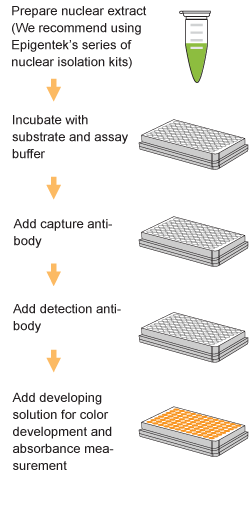
SCHEMATIC PROCEDURE:


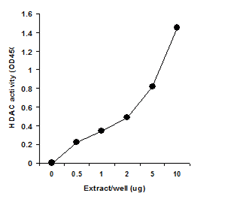
Analysis of DNMT activity in Hela nuclear extract.


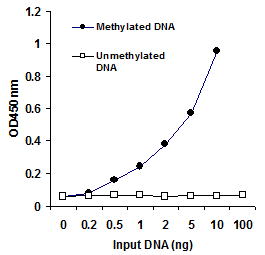
HSC-3 cells were incubated with/without zebularine (220 mM) for 48 hours. Nuclear proteins were extracted and total DNMT activity was measured.
Product Components

M1 (10X Wash Buffer)
M2 (DNMT Assay Buffer)
M3 (Adomet, 8 mM)*
M4 (DNMT Positive Control)*
M5 (Capture Antibody)*
M6 (Detection Antibody, 200 µg/ml)*
M7 (Developing Solution)
M8 (Stop Solution)
8-Well Substrate-Coated Strip (with Frame)
User Guide

*For maximum recovery of the products, centrifuge the original vial after thawing prior to opening the cap.

Frequently Asked Q's

1. Can protein extracts from frozen tissue stored at -80°C be used with this kit?
No, protein extracts should be used from fresh tissue.

2. What is the minimum amount of Dnmt protein required for a successful assay?
The minimum amount of DNMT protein is about 0.2 µg for a successful assay.

3. Do I have to do all the assays at once with the kit or can I do them in portions?
Yes, you can do them in portions by using only the reagent amounts you need, including diluting M5 and M6 as needed.

4. How do you aspirate the washing solution from the wells?
By using pipette tips.

5. How long can M5 and M6 be stored for after dilution?
1 or 2 days.

6. Can this kit distinguish Dnmt1 and Dnmt3a/3b?
The P-3001 kit cannot distinguish between Dnmt1 and Dnmt3a/3b. It will work well with both enzymes.

7. How are the wells coated?
The wells are coated with a proprietary Dnmt binding substance (high affinity).

8. Is there any reason why I cannot start with recombinant DNMT1, incubate with my inhibitors, and then use this to proceed with the assay?
This kit is suitable for measuring Dnmt activity of both cell extract and recombinant Dnmts (including Dnmt1) in the absence or presence of inhibitors. The capture mAb included in this kit is against converted (methylated) substrate.

User Guide & MSDS

[User Guide]*
*Always use the actual User Guide that shipped with your product. Is the above file locked? You can also request user guides by emailing info@epigentek.com along with your contact information and institution name.

[Material Safety Data Sheet]
Product Citations

Fang, J. et. al. (January 2012). Epigenetic Changes Mediated by MicroRNA miR29 Activate Cyclooxygenase 2 and Lambda-1 Interferon Production during Viral Infection. J Virol. 86(2):1010-20. PubMed Abstract

Begum, G. et. al. (January 2012). Epigenetic changes in fetal hypothalamic energy regulating pathways are associated with maternal undernutrition and twinning. FASEB J. Epub ahead of print. PubMed Abstract

Cho, HM. et. al. (December 2011). Expression of Na+-K+ -2Cl- cotransporter 1 is epigenetically regulated during postnatal development of hypertension. Am J Hypertens. 24(12):1286-93. PubMed Abstract

Fang, J. et. al. (November 2011). Epigenetic Changes Mediated by miR29 Activate Cyclooxygenase-2 and Interferon-?1 Production during Viral Infection.J Virol. Epub ahead of print. PubMed Abstract

Yamamura, Y. et. al. (October 2011). TNF-a inhibits aquaporin 5 expression in human salivary gland acinar cells via suppression of histone H4 acetylation. J Cell Mol Med. 141(8):1464-8. PubMed Abstract

Pasha, Z. et. al. (August 2011). Efficient Non-Viral Reprogramming of Myoblasts to Stemness with a Single Small Molecule to Generate Cardiac Progenitor Cells. PLoS One. 6(8) :e23667. PubMed Abstract

Geyer, K. et. al. (August 2011). Cytosine methylation regulates oviposition in the pathogenic blood fluke Schistosoma mansoni. Nat Commun. 2:424. PubMed Abstract

Nandakumar, V. et. al. (April 2011). Aberrant DNA hypermethylation patterns lead to transcriptional silencing of tumor suppressor genes in UVB-exposed skin and UVB-induced skin tumors of mice. Carcinogenesis. 32(4): 597-604. PubMed Abstract

Nocchi, L. et. al. (April 2011). Thrombomodulin Is Silenced in Malignant Mesothelioma by a Poly(ADP-ribose) Polymerase-1-mediated Epigenetic Mechanism. J Biol Chem. 286(22): 19478-88. Full PDF Article

Shi, Y. Y. et. al. (April 2011). Diet and Cell Size Both Affect Queen-Worker Differentiation through DNA Methylation in Honey Bees (Apis mellifera, Apidae). PLoS One. 6(4): e18808. PubMed Abstract

Tang, B. et. al. (April 2011). Interleukin-6 expression was regulated by epigenetic mechanisms in response to influenza virus infection or dsRNA treatment. Mol Immunol. 48(8): 1001-8. PubMed Abstract

Jin, Y. et. al. (March 2011). Homocysteine levels impact directly on epigenetic reprogramming in astrocytes. Neurochem Int. Epub ahead of print. PubMed Abstract

Meeran, S. M. et. al. (March 2011). A Novel Prodrug of Epigallocatechin-3-gallate: Differential Epigenetic hTERT Repression in Human Breast Cancer Cells. Cancer Prev Res (Phila). Epub ahead of print. PubMed Abstract

Yue, X. et. al. (March 2011). Induction of cyclooxygenase-2 expression by hepatitis B virus depends on demethylation-associated recruitment of transcription factors to the promoter. Virol J. 8:118. PubMed Abstract

Yang, I. et. al. (February 2011). Fused-core silica column ultra-performance liquid chromatography-ion trap tandem mass spectrometry for determination of global DNA methylation status. Biochem Anal. 409(1): 138-43. PubMed Abstract

Nandakumar, V. et. al. (January 2011). (-)-Epigallocatechin-3-gallate reactivates silenced tumor suppressor genes, Cip1/p21 and p16INK4a, by reducing DNA methylation and increasing histones acetylation in human skin cancer cells. CarcinogenesisEpub ahead of print. PubMed Abstract

Tolg, C. et. al. (January 2011). Uropathogenic E. coli infection provokes epigenetic downregulation of CDKN2A (p16INK4A) in uroepithelial cells. Lab InvestEpub ahead of print. PubMed Abstract

Chen, W. et. al. (December 2010). Grainyhead-like 2 Enhances the Human Telomerase Reverse Transcriptase Gene Expression by Inhibiting DNA Methylation at the 5'-CpG Island in Normal Human Keratinocytes. J Biol Chem. 285(52): 40852-63. PubMed Abstract

Li, W. et. al. (November 2010). IL-32: a host proinflammatory factor against influenza viral replication is upregulated by aberrant epigenetic modifications during influenza A virus infection. J Immunol. 185(9): 5056-65. PubMed Abstract

Liu, J. B. et. al. (November 2010). Effect of maternal folic acid supplementation on hepatic one-carbon unit associated gene expressions in newborn piglets. Molecular Biology Reports. Epub ahead of print. PubMed Abstract

Hicks, S. D. et. al. (September 2010). Ethanol-induced methylation of cell cycle genes in neural stem cells. Journal of Neurochemistry. 114(6): 1767-80. PubMed Abstract

Montes de Oca, A. et. al. (September 2010). High-phosphate-induced calcification is related to SM22α promoter methylation in vascular smooth muscle cells. J Bone Miner Res. 25(9): 1996-2005. PubMed Abstract

Skowronski, K. et. al. (August 2010).Ischemia dysregulates DNA methyltransferases and p16INK4a methylation in human colorectal cancer cells. Epigenetics. 5(6):547-56. PubMed Abstract

Pandey, M. et. al. (June 2010). Promoter demethylation and chromatin remodeling by green tea polyphenols leads to re-expression of GSTP1 in human prostate cancer cells. International Journal of Cancer. 126(11): 2520-33. PubMed Abstract

Li, Y. et. al. (May 2010). Glucose restriction can extend normal cell lifespan and impair precancerous cell growth through epigenetic control of hTERT and p16 expression. FASEB J. 24(5): 1442-53. PubMed Abstract

Song, Y. et. al. (May 2010). Arabidopsis DNA methyltransferase AtDNMT2 associates with histone deacetylase AtHD2s activity. Biochemical and Biophysical Research Communications. 396(2): 187-192. PubMed Abstract

Xiang, H. et. al. (May 2010). Single base–resolution methylome of the silkworm reveals a sparse epigenomic map. Nature Biotechnology. 28(5): 516–520. PubMed Abstract

You, H. et. al. (May 2010). Epigenetic regulation of cancer stem cell marker CD133 by transforming growth factor-beta. Hepatology. 51(5): 1635-44. PubMed Abstract

Kastl, L. et. al. (April 2010). Effects of decitabine on expression of selected endogenous control genes in human breast cancer cells. Mol Cell Probes. 24(2): 87-92. PubMed Abstract

Montes de Oca, A. et. al. (March 2010). High phosphate-induced calcification is related to SM22alpha promoter methylation in Vascular Smooth Muscle Cells. Journal of Bone and Mineral Research. 25(9): 1996-2005. PubMed Abstract

Sheikh, K. D. et. al. (March 2010). Fluorescent epigenetic small molecule induces expression of the tumor suppressor ras-association domain family 1A and inhibits human prostate xenograft. J Med Chem. 53(6): 2376-82. PubMed Abstract

Duthie, S. J. et. al. (January 2010). Folate deficiency alters hepatic and colon MGMT and OGG-1 DNA repair protein expression in rats but has no effect on genome-wide DNA methylation. Cancer Prev Res. 3(1): 92-100. PubMed Abstract

Majid, S. et. al. (January 2010). Genistein reverses hypermethylation and induces active histone modifications in tumor suppressor gene B-Cell translocation gene 3 in prostate cancer. Cancer. 116(1): 66-76. PubMed Abstract

Watson, J. A. et. al. (October 2009). Generation of an epigenetic signature by chronic hypoxia in prostate cells. Human Molecular Genetics. 18(19): 3594-604. PubMed Abstract

Ding, L. et. al. (June 2009). Camptothecin-induced cell proliferation inhibition and apoptosis enhanced by DNA methyltransferase inhibitor, 5-aza-2'-deoxycytidine. Biol Pharm Bull. 32(6):1105-8. Full PDF Article

Gaymes, T. J. et. al. (May 2009). Inhibitors of poly ADP-ribose polymerase (PARP) induce apoptosis of myeloid leukemic cells: potential for therapy of myeloid leukemia and myelodysplastic syndromes. Haematologica. 94(5): 638-46. Full PDF Article

Majid, S. et. al. (April 2009). BTG3 tumor suppressor gene promoter demethylation, histone modification and cell cycle arrest by genistein in renal cancer. Carcinogenesis. 30(4): 662-70. PubMed Abstract

Zampieri, M. et. al. (March 2009). Parp1 localizes within the Dnmt1 promoter and protects its unmethylated state by its enzymatic activity. PLoS ONE. 4(3): e4717. Full PDF Article

Zampieri, M. et. al. (March 2009). Inhibitors of poly ADP-ribose polymerase (PARP) induce apoptosis of myeloid leukemic cells: potential for therapy of myeloid leukemia and myelodysplastic syndromes. PLoS ONE. 4(3): e4717. Full PDF Article

Liao, Y. J. et. al. (February 2009). Characterization of a glycine N-methyltransferase gene knockout mouse model for hepatocellular carcinoma: Implications of the gender disparity in liver cancer susceptibility. International Journal of Cancer. 124(4): 816-26. PubMed Abstract

Wang, X. et. al. (January 2009). RAF may induce cell proliferation through hypermethylation of tumor suppressor gene promoter in gastric epithelial cells. Cancer Sci. 100(1): 117-25. PubMed Abstract

Lim, S.O. et. al. (December 2008). Epigenetic changes induced by reactive oxygen species in hepatocellular carcinoma: methylation of the E-cadherin promoter. Gastroenterology. 135(6): 2128-40. PubMed Abstract

Guastafierro, T. et. al. (August 2008). CCCTC-binding Factor Activates PARP-1 Affecting DNA Methylation Machinery. J Biol Chem. 283(32): 21873-21880. PubMed Abstract

Gravina, G. L. et. al. (May 2008). Chronic azacitidine treatment results in differentiating effects, sensitizes against bicalutamide in androgen-independent prostate cancer cells. The Prostate. 68(7): 793-801. PubMed Abstract

Marti­nez-Chantar, M. L. et. al. (April 2008). Loss of the Glycine N-Methyltransferase Gene Leads to Steatosis and Hepatocellular Carcinoma in Mice. The Prostate. 47(4): 1191-1199. PubMed Abstract

Suzuki, M. et. al. (March 2008). Zebularine-induced reduction in VEGF secretion by HIF-1α degradation in oral squamous cell carcinoma. Molecular Medicine Reports. 1: 465-471. Full PDF Article

Liu, C. et. al. (February 2008). Plasma S-adenosylhomocysteine is a better biomarker of atherosclerosis than homocysteine in apolipoprotein E-deficient mice fed high dietary methionine. The Journal of Nutrition. 138(2): 311-5. PubMed Abstract

Roll, J. D. et. al. (January 2008). DNMT3b overexpression contributes to a hypermethylator phenotype in human breast cancer cell lines. Molecular Cancer. 7: 15. Full PDF Article

Jagadeesh, S. et. al. (October 2007). Mahanine reverses an epigenetically silenced tumor suppressor gene RASSF1A in human prostate cancer cells. Biochemical & Biophysical Research Communications. 362(1): 212-7. PubMed Abstract

Miyazaki, T. et. al. (October 2007). E-cadherin gene promoter hypermethylation in H. pylori-induced enlarged fold gastritis. Helicobacter. 12(5): 523-531. PubMed Abstract

Paluszczak, J. et. al. (May 2007). Modulation of the activity of DNA methyltransferases by plant phenolic compounds. Zjazd Polskiego Towarzystwa Biochemicznego. Sympozjum E: P5.7. Science24 Abstract

Kodach, L. L. et. al. (2007). Lovastatin induces the demethylation of the Bone Morphogenetic Protein 2 promoter in colorectal cancer cell lines. The Role of the Bone Morphogenetic Protein Pathway in Colorectal Cancer. 2007: 115-28. Full PDF Article

Feedback Form
Epigentek is an epigenetics company that specializes in epigenetic kits, antibodies, reagents, and services for epigenetic research in DNA methylation, histone modification, and chromatin studies.

Copyright © 2012 Epigentek Group Inc. All rights reserved.
Epigentek, the Epigentek logo, and the "Complete Solutions For Epigenetics" slogan are trademarks of Epigentek Group Inc.