Background
Crucial player in the regulation of plasma cholesterol homeostasis. Binds to low-density lipid receptor family members: low density lipoprotein receptor (LDLR), very low density lipoprotein receptor (VLDLR), apolipoprotein E receptor (LRP1/APOER) and apolipoprotein receptor 2 (LRP8/APOER2), and promotes their degradation in intracellular acidic compartments. Acts via a non-proteolytic mechanism to enhance the degradation of the hepatic LDLR through a clathrin LDLRAP1/ARH-mediated pathway. May prevent the recycling of LDLR from endosomes to the cell surface or direct it to lysosomes for degradation. Can induce ubiquitination of LDLR leading to its subsequent degradation. Inhibits intracellular degradation of APOB via the autophagosome/lysosome pathway in a LDLR-independent manner. Involved in the disposal of non-acetylated intermediates of BACE1 in the early secretory pathway. Inhibits epithelial Na(+) channel (ENaC)-mediated Na(+) absorption by reducing ENaC surface expression primarily by increasing its proteasomal degradation. Regulates neuronal apoptosis via modulation of LRP8/APOER2 levels and related anti-apoptotic signaling pathways.
Description
PCSK9 Recombinant Monoclonal Antibody [7F2]. Unconjugated. Raised in: HEK293F Cell.
Formulation
Buffer: Rabbit IgG in phosphate buffered saline, pH 7.4, 150mM NaCl, 0.02% sodium azide and 50% glycerol.
Specificity
Human
Isotype
Rabbit IgG
Uniprot ID
Q8NBP7
Purification
Affinity Chromatography
Immunogen
A synthesized peptide derived from human PCSK9
Storage
Upon receipt, store at -20°C or -80°C. Avoid repeated freeze.
Alternative Names
Proprotein convertase subtilisin/kexin type 9 (EC 3.4.21.-) (Neural apoptosis-regulated convertase 1) (NARC-1) (Proprotein convertase 9) (PC9) (Subtilisin/kexin-like protease PC9), PCSK9, NARC1
Application
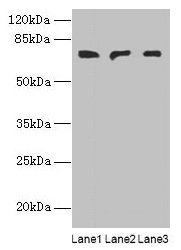
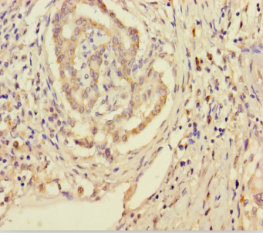
ELISA, WB, IHC; Recommended dilution: WB:1:500-1:5000, IHC:1:50-1:200
 Our single B-cell derived recombinant rabbit monoclonal antibodies have vastly improved reliability and reproducibility.
» 20% off with code
Our single B-cell derived recombinant rabbit monoclonal antibodies have vastly improved reliability and reproducibility.
» 20% off with code