Epigentek Home

Product Categories
Related Products

Methylamp DNA Modification Kit


Base Product #: P-1001              Availability: Discontinued (see alternative)
Share:
Displaying 1 to 2 (of 2 products) Result Pages:  1 
 Catalog No.+   Product Name   Select Qty.   Price 
 P-1001-1  Methylamp DNA Modification Kit (40 samples)   $108.00 
 P-1001-2  Methylamp DNA Modification Kit (80 samples)   $199.00 
Product Overview


 This product is no longer available in the United States. For a similar product, please see BisulFlash DNA Modification Kit


The Methylamp™ DNA Modification Kit is a complete set of essential components which enables the experimenter to perform DNA methylation analysis using Epigentek's uniquely simplified and streamlined bisulfite method. The entire procedure can be completed within a mere 1 hour and 55 minutes and produces far superior results than any competitor kits. The Methylamp™ DNA Modification Kit is suitable for MS-PCR, real time MS-PCR, methylation sequencing, and pyrosequencing, as well as methylation microarray.

WHY CHOOSE THE METHYLAMP™ DNA MODIFICATION KIT?

  • The fastest procedure available on the market, which can be completed within 1 hour and 55 minutes with consistent reaction conditions.
  • Completely converts unmethylated cytosine into uracil: modified DNA > 99.98%.
  • The lowest degradation of DNA in the modification process: more than 90% of DNA loss can be prevented.
  • The lowest requirement of starting DNA for modification: only 50 pg or 20 cells.
  • Extremely simple, reliable, and consistent modification conditions.
Product Details

The Methylamp™ DNA Modification Kit contains all reagents required for bisulfite conversion on a DNA sample. DNA is chemically denatured to allow bisulfite reagent to react specifically with single-stranded DNA, thereby deaminating cytosine and creating a uracil residue. The unique DNA protection reagents contained in the modification buffer can prevent the chemical and thermophilic degradation of DNA in the bisulfite treatment. The non-toxic modified DNA capture buffer enables DNA to bind tightly to the column filter, thus DNA cleaning can be carried out on the column to effectively remove residual sodium bisulfite and salts. Modified DNA can then be eluted and stably stored at -20°C for up to 2 months.

High throughput version also available. [Cat. # P-1008]
Fast DNA Modification version using heating process also available. [Cat. # P-1010]


SCHEMATIC PROCEDURE: COMPARATIVE OVERVIEW:


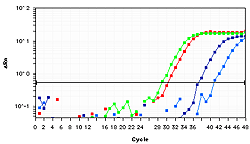
The different amounts of DNA isolated from a serum sample were chemically modified using the Methylamp™ DNA Modification Kit. Real time PCR was performed by using a pair of primers and a probe designed to amplify both methylated and unmethylated alleles of β-actin.
Product Components

KIT CONTENTS 40 samples
P-1001-1
80 samples
P-1001-2
R1 (DNA Denature) 0.25 ml 0.5 ml
R2 (DNA Modification) 4 vials 8 vials
R3 (DNA Modification) 5 ml 10 ml
R4 (Modified DNA Capture) 14 ml 28 ml
R5 (Modified DNA Cleaning) 3 ml 6 ml
R6 (Modified DNA Elution) 1 ml 2 ml
F-Spin Column 40 80
F-Collection Tube 40 80
User Guide 1 1
Frequently Asked Q's

1. What is difference between one-step DNA modification and two-step DNA modification?
In the one-step DNA modification, DNA is denatured by heating, which allows DNA denaturation and bisulfite modification to be carried out simultaneously. One-step DNA modification is suitable for the labs which are equipped with thermal cycler and requires simple and fast procedures for DNA modification. In the two-step DNA modification, DNA is denatured chemically followed by bisulfite treatment. It is suitable for general DNA modification using DNA isloated from various sources. Because one-step DNA modification may increase DNA degradation, a higher starting DNA amount may be required for one-step DNA modification than for two-step DNA modifcation.

2. How much starting DNA is required for DNA modification with this kit?
The starting DNA required for DNA modification can be as low as 50 pg. The signal of the modified DNA can be detected with real-time PCR.

3. Why are only 90 minutes required for the actual DNA modification?
With our unique modification composition, 90 minutes is sufficient for more than 99% C-T conversion while DNA degradation is greatly prevented. We have observed that increase in modification time did not significantly increase C-T conversion, while yield of modified DNA was significantly reduced most likely due to increased DNA degradation.

4. Can the modified DNA with this kit be stored for a long time?
The modified DNA generated with this kit can be stored for 2 months at -20°C. The modified DNA could be stored for as long as 6 months at -80°C.

5. Can the kit be used for modifying DNA from formalin-fixed and paraffin-embedded (FFPE) samples?
DNA extracted from FFPE samples is often fragmented. The kit can be used for FFPE samples as the modification solution included in the kit contains DNA stabilizing reagents that avoid a further fragmentation of DNA caused in modification process.

6. Do I need to extract the DNA from blood first?
Yes. DNA isolation from blood is required and then DNA can be used for modification with the kit.

7. How much DNA can the columns actually handle?
The optimal range of DNA that can be used for each sample in each modification is 1 ng to 1 µg. The column can maximally bind about 5 µg DNA.

8. Has anyone tried adding carrier DNA to their reactions when they use your kits?
We tested the carrier DNA together with the use of our kits and it only slightly increased yield of modified DNA.

9. When using this kit, can I start with cells or does the DNA have to be isolated first? Is there a product that efficiently recovers low amounts of DNA?
Yes. One can start with cells by using our Whole Cell Bisulfite Modification Kit (Cat. No. P-1016) or start with isolated DNA by using P-1001 or P-1010. We provide a DNA isolation enhancer for recovering low amounts of DNA. However, as mentioned above, it may only slightly increase the recovery of DNA.

10. How should I store the kit, -20°C or just 4°C? ?
The kit can be stored at room temperature for at least 6 months or at 2-8°C for one year from shipping date.

User Guide & MSDS

[User Guide]*
*Always use the actual User Guide that shipped with your product. Is the above file locked? You can also request user guides by emailing info@epigentek.com along with your contact information and institution name.

[Material Safety Data Sheet]
Product Citations

Wei, W. et. al. (May 2013). Codelivery of mTERT siRNA and paclitaxel by chitosan-based nanoparticles promoted synergistic tumor suppression. Biomaterials. 34(15):3912-23. PubMed Abstract

Gu, X. et. al. (April 2013). Oxidative stress induces DNA demethylation and histone acetylation in SH-SY5Y cells: potential epigenetic mechanisms in gene transcription in Aβ production. Neurobiol Aging. 34(4):1069-79. PubMed Abstract

Chang, S. et. al. (January 2013). Long interspersed nucleotide element-1 hypomethylation in folate-deficient mouse embryonic stem cells. J Cell Biochem. Epub ahead of print. PubMed Abstract

Pei, C. et. al. (November 2012). A High Frequency of MSH6 G268A Polymorphism and Survival Association in Glioblastoma. Int J Neurosci. Epub ahead of print. PubMed Abstract

Hagiwara, K. et. al. (November 2012). PROX1 overexpression inhibits protein kinase C beta II transcription through promoter DNA methylation. Genes Chromosomes Cancer. 51(11):1024-36. PubMed Abstract

Chaiwongkot, A. et. al. (October 2012). Differential methylation of E2 binding sites in episomal and integrated HPV 16 genomes in preinvasive and invasive cervical lesions. Int J Cancer. Epub ahead of print. PubMed Abstract

Ding, YB. et. al. (September 2012). 5-Aza-2'-deoxycytidine Leads to Reduced Embryo Implantation and Reduced Expression of DNA Methyltransferases and Essential Endometrial Genes. PLoS One. 7(9):e45364. PubMed Abstract

Zhang, GL. et. al. (September 2012). Exposure to bisphenol A results in a decline in mouse spermatogenesis. Reprod Fertil Dev. Epub ahead of print. Abstract

Shan, Z. et. al. (September 2012). Gadd45a inhibits cell migration and invasion by altering the global RNA expression. Cancer Biol Ther. 13(11):1112-22. PubMed Abstract

Sun, XF. et. al. (August 2012). Alteration in methylation pattern of oncogene Akt1 promoter region in bladder cancer. Mol Biol Rep. 39(5):5631-6. PubMed Abstract

Sun, XF. et. al. (August 2012). Methylation pattern of oncogene HRAS gene promoter region and its clinical relevance to urocystic tumorigenesis. Mol Biol Rep. 39(8):8431- 7. PubMed Abstract

Zhang, LJ. et. al. (August 2012). Expression and epigenetic dynamics of transcription regulator Lhx8 during mouse oogenesis. Gene. 506(1):1-9. PubMed Abstract

Long, C. et. al. (July 2012). Dietary Folate Deficiency in Pseudopregnant Mice Has No Effect on Homeobox A10 Promoter Methylation or Expression. Reprod Sci. Epub ahead of print. PubMed Abstract

Saito, A. et. al. (July 2012). Unfolded protein response, activated by OASIS family transcription factors, promotes astrocyte differentiation. Nat Commun. 3:967. PubMed Abstract

Zhi-Peng, Z. et. al. (July 2012). Growth of Mouse Oocytes to Maturity from Premeiotic Germ Cells In Vitro. PLoS One. Epub ahead of print. PubMed Abstract

Fan, D. et. al. (July 2012). IBM1, a JmjC domain-containing histone demethylase, is involved in the regulation of RNA-directed DNA methylation through the epigenetic control of RDR2 and DCL3 expression in Arabidopsis. Nucleic Acids Res. Epub ahead of print. PubMed Abstract

Zhang, HQ. et. al. (May 2012). Fetal exposure to bisphenol A affects the primordial follicle formation by inhibiting the meiotic progression of oocytes. Mol Biol Rep. 39(5):5651-7. PubMed Abstract

Zwi-Dantsis, L. et. al. (May 2012). Derivation and cardiomyocyte differentiation of induced pluripotent stem cells from heart failure patients. Eur Heart J. Epub ahead of print. PubMed Abstract

Cao, H. et. al. (March 2012). Characterization of Bovine Induced Pluripotent Stem Cells by Lentiviral Transduction of Reprogramming Factor Fusion Proteins. Int J Biol Sci. Epub ahead of print. PubMed Abstract

Duan, P. et. al. (February 2012). Effect of neuronal induction on NSE, Tau, and Oct4 promoter methylation in bone marrow mesenchymal stem cells. In Vitro Cell Dev Biol Anim. 48(4):251-8. PubMed Abstract

Xiao-Feng, S. et. al. (February 2012). DNA methylation of PTEN gene promoter region is not correlated with urocystic tumorigenesis. African Journal of Biotechnology. 11(16):3868-73. Full Text Article

Kang, KA. et. al. (January 2012). Epigenetic changes induced by oxidative stress in colorectal cancer cells: methylation of tumor suppressor RUNX3. Tumour Biol. Epub ahead of print. PubMed Abstract

Aydemir, F. et. al. (January 2012). Identification of Promoter Region Methylation Patterns of MGMT, CDKN2A, GSTP1, and THBS1 Genes in Intracranial Meningioma Patients. Genet Test Mol Biomarkers. Epub ahead of print. PubMed Abstract

Chao, HH. et. al. (December 2011). Bisphenol A exposure modifies methylation of imprinted genes in mouse oocytes via the estrogen receptor signaling pathway. Histochem Cell Biol. Epub ahead of print. PubMed Abstract

Guo, X. et. al. (October 2011). Epigenetic mechanisms of amyloid-ß production in anisomycin-treated SH-SY5Y cells. Neuroscience. 194:272-81.PubMed Abstract

Botti, E. et. al. (August 2011). Developmental factor IRF6 exhibits tumor suppressor activity in squamous cell carcinomas. Proc Natl Acad Sci U S A. 108(33):13710-5. PubMed Abstract

Hamanaka, S. et. al. (July 2011). Generation of Germline-Competent Rat Induced Pluripotent Stem Cells. PLoS One. 6(7): e22008. Full Text Article

Hizaki, K.et. al. (June 2011). Epigenetic inactivation of calcium-sensing receptor in colorectal carcinogenesis. Mod Patho. 24 (6):876-84 PubMed Abstract

Acun, T. et. al. (June 2011). SIP1 is downregulated in hepatocellular carcinoma by promoter hypermethylation. BMC Cancer. 11(1):223. PubMed Abstract

Wu, T. et. al. (May 2011). Reprogramming of trophoblast stem cells into pluripotent stem cells by oct4. Stem Cells. 29(5): 755-63. PubMed Abstract

Häfner, N. et. al. (April 2011). Hypermethylated DAPK in serum DNA of women with uterine leiomyoma is a biomarker not restricted to cancer. Gynecol Oncol. 121(1): 224-9. PubMed Abstract

Pan, B. et. al. (March 2011). DNA methylation of germ cell-specific basic helix-loop-helix (HLH) transcription factors, Sohlh2 and Figl{alpha} during gametogenesis. Mol Hum Reprod. Epub ahead of print. PubMed Abstract

Wu, T. et. al. (February 2011). Reprogramming of Trophoblast Stem Cells into Pluripotent Stem Cells by Oct4. Stem Cells. Epub ahead of print. PubMed Abstract

Brell, M. et. al. (January 2011). O6-Methylguanine-DNA methyltransferase protein expression by immunohistochemistry in brain and non-brain systemic tumours: systematic review and meta-analysis of correlation with methylation-specific polymerase chain reaction. BMC Cancer. 11(1): 35. Full PDF Article

Dyce, P. W. et. al. (January 2011). Analysis of oocyte-like cells differentiated from porcine fetal skin-derived stem cells. Stem Cells and Development. Epub ahead of print. PubMed Abstract

Rotkrua, P. et. al. (January 2011). MiR-9 down-regulates CDX2 expression in gastric cancer cells. Int J Cancer. Epub ahead of print. PubMed Abstract

Tarutani, Y. et. al. (August 2010). Trans-acting small RNA determines dominance relationships in Brassica self-incompatibility. Nature. 466(7309): 983-6. PubMed Abstract

Zhang, P. et. al. (July 2010). Murine folliculogenesis in vitro is stage-specifically regulated by insulin via the Akt signaling pathway. Histochem Cell Biol. 134(1): 75-82. PubMed Abstract

Zhao, S. et. al. (June 2010). Expression and methylation status of the Syk gene in cervical carcinoma. Archives of Gynecology and Obstetrics. Epub ahead of print. PubMed Abstract

Wang, L. et. al. (May 2010). Relation between hypomethylation of long interspersed nucleotide elements and risk of neural tube defects. Am J Clin Nutr. 91(5): 1359-67. PubMed Abstract

Zhao, Z. et. al. (May 2010). Depletion of DNMT3A suppressed cell proliferation and restored PTEN in hepatocellular carcinoma cell. Journal of Biomedicine and Biotechnology. 2010: 737535. PubMed Abstract

Gattazzo, C. et. al. (April 2010). Lack of expression of inhibitory KIR3DL1 receptor in patients with NK-type lymphoproliferative disease of granular lymphocytes. Haematologica. 95(10): 1722-9.  PubMed Abstract

Zhu, J. Q. et. al. (April 2010). Demethylation of LHR in dehydroepiandrosterone-induced mouse model of polycystic ovary syndrome. Mol Hum Reprod. 16(4): 260-6. PubMed Abstract

Wakefield, L. et. al. (February 2010). Characterisation of CpG methylation in the upstream control region of mouse Nat2: evidence for a gene-environment interaction in a polymorphic gene implicated in folate metabolism. Gene. 452(1): 16-21. PubMed Abstract

Wang, L. et. al. (February 2010). Relation between hypomethylation of long interspersed nucleotide elements and risk of neural tube defects. Am J Clin Nutr. Epub ahead of print. Full PDF Article

Zhao, Q. et. al. (February 2010). Generation of histocompatible androgenetic embryonic stem cells using spermatogenic cells. Stem Cells. 28(2): 229-39. Full PDF Article

Hagiwara, K. et. al. (January 2010). Aberrant DNA methylation of the p57KIP2 gene is a sensitive biomarker for detecting minimal residual disease in diffuse large B cell lymphoma. Leuk Res. 34(1): 50-4. PubMed Abstract

Hashimoto, Y. et. al. (January 2010). Involvement of epigenetically silenced microRNA-181c in gastric carcinogenesis. Carcinogenesis. 31(5): 777-84. PubMed Abstract

Ling, Y. et. al. (January 2010). Aberrant methylation of the THRB gene in tissue and plasma of breast cancer patients. Cancer Genet Cytogenet. 196(2): 140-5. PubMed Abstract

Rodriguez-Piza, I. et. al. (November 2009). Reprogramming of Human Fibroblasts to Induced Pluripotent Stem Cells under Xeno-free Conditions. Stem Cells. 28: 36–44. Full PDF Article

Katayama, Y. et. al. (October 2009). Helicobacter pylori causes runx3 gene methylation and its loss of expression in gastric epithelial cells, which is mediated by nitric oxide produced by macrophages. Biochem Biophys Res Commun. 388(3): 496-500. PubMed Abstract

Song, Z. et. al. (October 2009). Maternal imprinting during mouse oocyte growth in vivo and in vitro. Biochem Biophys Res Commun. 387(4): 800-5. PubMed Abstract

Zhu, J. Q. et. al. (October 2009). Demethylation of LHR in dehydroepiandrosterone-induced mouse model of polycystic ovary syndrome. Mol. Hum. Reprod. Advance Access. 16(4): 260-6. PubMed Abstract

Jenal, M. et. al. (June 2009). The Tumor Suppressor Gene Hypermethylated in Cancer 1 is Transcriptionally Regulated by E2F1. Molecular Cancer Research. 7(6): 916-22. PubMed Abstract

Yamaguchi, S. et. al. (June 2009). Homeobox gene HOPX is epigenetically silenced in human uterine endometrial cancer and suppresses estrogen-stimulated proliferation of cancer cells by inhibiting serum response factor. International Journal of Cancer. 124(11): 2577-88. PubMed Abstract

Aniagu, S. O. et. al. (February 2009). Changes in gene expression and assessment of DNA methylation in primary human hepatocytes and HepG2 cells exposed to the environmental contaminants-Hexabromocyclododecane and 17-beta oestradiol. Toxicology. 256(3): 143-51. PubMed Abstract

Liu, T. et. al. (January 2009). Increased gamma-tubulin expression and P16INK4A promoter methylation occur together in preinvasive lesions and carcinomas of the breast. Annals of Oncology. 20(3): 441-448. Full PDF Article

Karakoula, K. et. al. (November 2008). Real-time quantitative PCR analysis of pediatric ependymomas identifies novel candidate genes including TPR at 1q25 and CHIBBY at 22q12-q13. Genes Chromosomes Cancer. 47(11): 1005-22. PubMed Abstract

Ramirez, N. et. al. (November 2008). Epigenetic events in normal colonic mucosa surrounding colorectal cancer lesions. European Journal of Cancer. 44(17): 2689-95. PubMed Abstract

Cheng, C. K. et. al. (October 2008). Transcriptional repression of the RUNX3/AML2 gene by the t(8;21) and inv(16) fusion proteins in acute myeloid leukemia. Blood. 112(8): 3391-402. PubMed Abstract

Ushmorov, A. et. al. (October 2008). ABF-1 is frequently silenced by promoter methylation in follicular lymphoma, diffuse large B-cell lymphoma and Burkitt. Leukemia. 22(10): 1942-4.  PubMed Abstract

Wiley, C. D. et. al. (October 2008). Patterns of Hybrid Loss of Imprinting Reveal Tissue- and Cluster-Specific Regulation. PLoS ONE. 3(10): e3572. PubMed Abstract

Sanosaka, T. et. al. (August 2008). Identification of genes that restrict astrocyte differentiation of midgestational neural precursor cells. Neuroscience. 155(3): 780-8. PubMed Abstract

Sasai, K. et. al. (August 2008). Careful Exclusion of Non-neoplastic Brain Components is Required for an Appropriate Evaluation of O6-methylguanine-DNA Methyltransferase Status in Glioma: Relationship Between Immunohistochemistry and Methylation Analysis. Am J Surg Pathol. 32(8): 1220-7. PubMed Abstract

Kiang, X. et. al. (June 2008). Loss of methylation imprint of Snrpn in postovulatory aging mouse oocyte. Biochem Biophys Res Commun. 371(1): 16-21. PubMed Abstract

Torrisani, J. et. al. (June 2008). Identification of an upstream promoter of the human somatostatin receptor, hSSTR2, which is controlled by epigenetic modifications. Endocrinology. 149(6): 3137-47. PubMed Abstract

Shirohzu, H. et. al. (May 2008). Methylation of a conserved intronic CpG island of mouse SF-1 is associated with cell-specific expression of SF-1 in a culture system but not with tissue-specific expression. Biochemical and Biophysical Research Communications. 369(3): 862-7. PubMed Abstract

Britschgi, C. et. al. (April 2008). HIC1 tumour suppressor gene is suppressed in acute myeloid leukaemia and induced during granulocytic differentiation. Br J Haematol. 141(2): 179-87. PubMed Abstract

Torrisani, J. et. al. (March 2008). Identification of an Upstream Promoter of the Human Somatostatin Receptor, hSSTR2, Which Is Controlled by Epigenetic Modifications. Endocrinology. 149: 3137-3147. Full PDF Article

Olsson, M. et. al. (July 2007). Regulation and expression of human CYP7B1 in prostate: Overexpression of CYP7B1 during progression of prostatic adenocarcinoma. Prostate. 67(13): 1439-1446. PubMed Abstract

Cheng, S. H. et. al. (March 2007). 4q loss is potentially an important genetic event in MM tumorigenesis: identification of a tumor suppressor gene regulated by promoter methylation at 4q13.3, platelet factor 4. Blood. 109(5): 2089-99. PubMed Abstract

Tokita, T. et. al. (March 2007). Methylation status of the SOCS3 gene in human malignant melanomas. International Journal of Oncology. 30(3): 689-94. PubMed Abstract

Mizoguchi, Y. et. al. (January 2007). Steroid-Dependent ACTH-Produced Thymic Carcinoid: Regulation of POMC Gene Expression by Cortisol via Methylation of Its Promoter Region. Hormone Research. 67(5): 257-62. PubMed Abstract

Li, K. K. et. al. (December 2006). EMP3 overexpression is associated with oligodendroglial tumors retaining chromosome arms 1p and 19q. International Journal of Cancer. 120(4): 947-50. PubMed Abstract

Tong, Y. K. et. al. (December 2006). Noninvasive prenatal detection of fetal trisomy 18 by epigenetic allelic ratio analysis in maternal plasma: Theoretical and empirical considerations. Clinical Chemistry. 52(12): 2194-202. PubMed Abstract

Epigentek is an epigenetics company that specializes in epigenetic kits, antibodies, reagents, and services for epigenetic research in DNA methylation, histone modification, and chromatin studies.

Copyright © 2013 Epigentek Group Inc. All rights reserved.
Epigentek, the Epigentek logo, and the "Complete Solutions For Epigenetics" slogan are trademarks of Epigentek Group Inc.